Diyar Guldogan
11 July 2026•Update: 11 July 2026
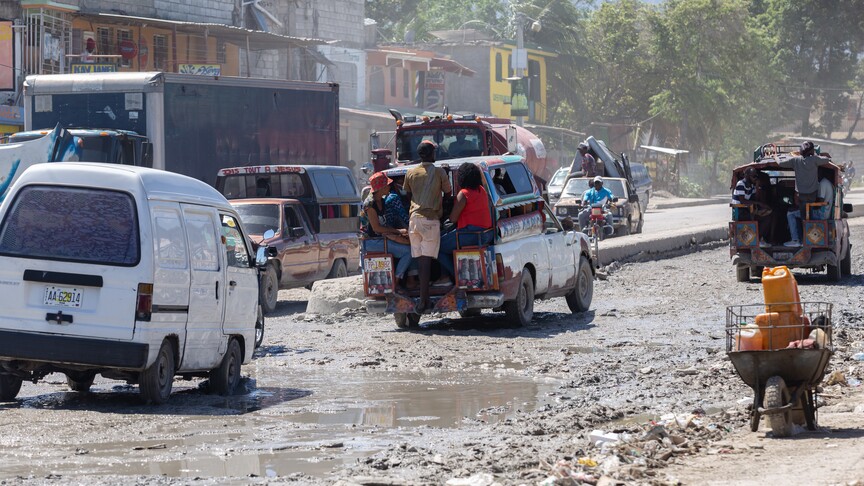
Humanitarian officials warned on Friday that Haiti's crisis is rapidly worsening, with more than half the country's population requiring assistance and violence driving a record 1.5 million people from their homes.
Norwegian Refugee Council Global Emergency Director Youri Saadallah and International Organization for Migration (IOM) humanitarian response chief Maria Moita described a humanitarian emergency marked by widespread displacement, collapsing public services and deteriorating living conditions.
"Haiti's crisis has become deeper, more complex, and more urgent," said Saadallah, virtually addressing a UN news briefing.
He said 6.4 million people, more than half of the population, require humanitarian assistance, while one in 10 public health facilities with inpatient capacity remains fully operational nationwide.
Saadallah, who recently visited Haiti as part of a humanitarian mission, said the conditions left a lasting impression.
"We regularly visit humanitarian crises around the world. Yet, what we saw in Haiti affected us deeply," he said. "The situation we witnessed is unacceptable."
'Safe space is almost non-existent in Haiti'
Moita said violence has displaced nearly 1.5 million people, the highest number ever recorded in Haiti.
"The second major message from our mission concerns displacement and migration," she said. "Nearly 1.5 million people are internally displaced. This is the highest number ever recorded on displacement in Haiti due to violence."
She said safe areas have become increasingly scarce as displacement sites overflow with families fleeing armed groups.
"Safe space is almost non-existent in Haiti," said Moita. "Displacement sites are extremely congested. There is no space to sleep or live with dignity."
Many displaced families are unable to return because armed groups continue to occupy their communities, and many homes have been destroyed, she added.
She stressed that simply relocating displaced people is not a sustainable solution.
"Their message was simple: they want safety, dignity and a future," said Moita. "Relocation alone is not the answer. People need pathways to safe, voluntary, and dignified solutions to return when conditions allow."
The officials urged the international community to increase support for Haiti as humanitarian needs continue to grow amid escalating violence and worsening displacement.