Maryam Ashalem de Andres
09 September 2026•Update: 09 September 2026
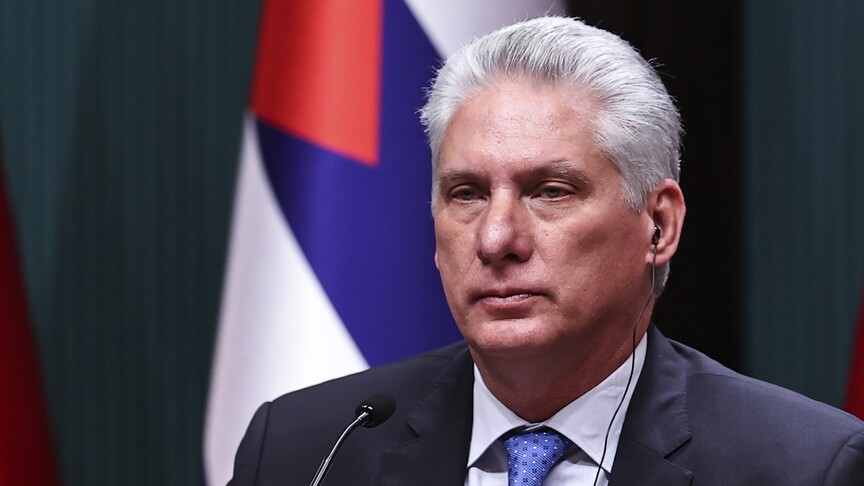
Cuban President Miguel Diaz-Canel said Tuesday that the island nation "will never again" be a colony of any "empire" after US President Donald Trump published a map depicting it and other territories under the US flag.
"Cuba knows well the meaning of having been a colony and neocolony of two empires," Diaz-Canel wrote on US social media company X, without explicitly referring to Trump's publication.
"The blood that has been shed for our independence, sovereignty and self-determination will not have been in vain, and we will defend them to the last consequences," he added.
Trump published the map Monday on his Truth Social platform. The image shows the colors of the US flag covering Mexico, Canada, Cuba, Greenland, Iceland and parts of the Caribbean and Central America.
Foreign Minister Bruno Rodriguez referred to the publication, responding sarcastically that the US government would leave its citizens "geographically disoriented."
"Soon they will not know in which gulf, lake, building, country, continent or planet they are," Rodriguez wrote in a social media post.
The Cuban statements come as relations between Havana and Washington face their highest tensions in decades.
The Trump administration has pursued a policy of "maximum pressure" against Cuba since the beginning of 2026, including an oil blockade and secondary sanctions introduced in May that have deterred foreign companies from operating on the island.
Washington has also maintained the possibility of military intervention as a source of concern for the Cuban government.
Rodriguez said Monday that the US economic embargo cost Cuba $8.08 billion between March 2025 and February 2026, the highest recorded for 12 months, and 7% more than the previous year.
He described Washington's measures as a "cruel collective punishment" against the Cuban population.
Cuba's economy has also been severely affected by an energy crisis. The country's economy contracted 15% between 2020 and 2025, while independent forecasts project an additional contraction of up to 10.3% this year.