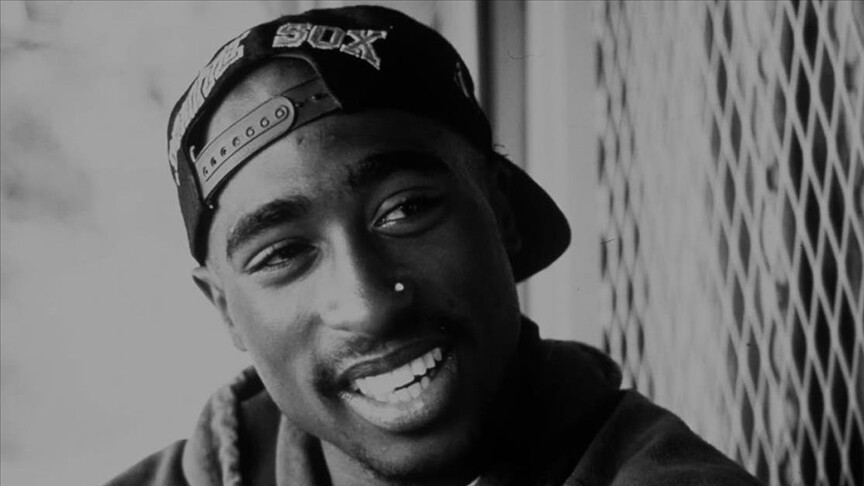
Nearly 30 years after US rapper Tupac Shakur was fatally shot in Las Vegas, Nevada, the only person ever charged in connection with his killing is set to stand trial.
Jury selection in the trial of Duane Keith Davis, known as “Keffe D,” is scheduled to begin on Monday and could last about a week.
Davis, 63, has pleaded not guilty to one count of murder with the use of a deadly weapon with the intent to promote, further or assist a criminal gang in Shakur’s death.
Prosecutors do not accuse Davis of firing the shots. They allege that he organized the retaliatory attack, obtained the gun and passed it to the rear seat of the vehicle used in the shooting.
Under Nevada law, a person who knowingly helps another commit a crime can be held criminally responsible even if they did not carry out the final act. Davis could face life imprisonment without parole if convicted.
How was Shakur killed?
Shakur, one of the most influential figures in 1990s hip-hop, attended a heavyweight fight between Mike Tyson and Bruce Seldon at the MGM Grand in Las Vegas on Sept. 7, 1996.
He later left in a black BMW driven by Death Row Records co-founder Marion “Suge” Knight. At about 11.15 p.m., a white Cadillac pulled alongside the BMW at a red light near the Las Vegas Strip and someone inside opened fire.
Shakur was struck by four bullets and died at a hospital six days later at the age of 25. Knight was wounded but survived.
Neither the murder weapon nor the white Cadillac used in the shooting has ever been recovered.
What led to the shooting?
Prosecutors say the attack was revenge for a fight inside the MGM Grand earlier that night.
Hotel footage shows Shakur, Knight and members of their entourage attacking Davis’ nephew Orlando Anderson near the casino’s elevators.
Anderson was associated with the South Side Compton Crips, while Knight and members of the Death Row entourage had links to the rival Mob Piru Bloods.
Prosecutors allege that Davis obtained a gun and joined Anderson, Deandrae Smith and Terrence Brown in the Cadillac to search for Shakur and Knight.
Authorities long suspected Anderson of firing the shots, although grand jury testimony identified Smith as the gunman.
Anderson denied involvement and was never charged. He was killed in a gang-related shootout in Compton in 1998 that police said was unrelated to Shakur’s murder.
What is the evidence?
The prosecution’s case is expected to rely heavily on Davis’ own accounts of the shooting.
Davis discussed the killing in police interviews, documentaries, media appearances and his 2019 memoir “Compton Street Legend.”
In the book, he said he was in the Cadillac and obtained the gun before passing it to the back seat. He did not identify the person who fired it.
Other evidence includes hotel footage that prosecutors say establishes a possible motive, testimony from gang affiliates and items seized during a 2023 search of Davis’ wife’s home.
A Nevada judge has ruled that prosecutors can use the memoir and a 2008 police interview in which Davis discussed the case.
Knight, who prosecutors describe as the only other surviving eyewitness to the shooting, is included on their potential witness list.
He is serving a 28-year prison sentence in California over a separate fatal hit-and-run case and has previously said he would not testify in Davis’ trial.
What will the defense argue?
Davis’ defense says he is innocent and was not in Las Vegas when Shakur was shot.
His lawyers argue that he fabricated or exaggerated his accounts to gain publicity and make money from media appearances and his book.
They are expected to highlight the lack of physical evidence, including the absence of publicly disclosed forensic evidence placing Davis at the scene.
The defense previously sought to have the case dismissed, arguing in part that an earlier cooperation agreement protected some of Davis’ statements from being used against him.
The judge rejected the request, finding that Davis had not shown that the agreement granted him immunity from prosecution.
Why did the case take nearly 30 years?
Investigators identified several people linked to the shooting early in the inquiry but struggled to gather enough admissible evidence to bring charges.
Witnesses were reluctant to cooperate, while the weapon and vehicle were never found. Anderson, Smith and Brown later died, along with other potential witnesses.
Davis spoke to investigators under a cooperation agreement in 2008, later prompting a legal dispute over whether his statements could be used against him.
The case gained momentum after he publicly repeated his account in interviews and his memoir. Police searched his wife’s home in Henderson, Nevada in July 2023 and arrested him two months later.
The defense argues that the delay has harmed Davis’ right to a fair trial because witnesses have died and evidence has disappeared. The judge, however, found no proof that prosecutors intentionally delayed the case to gain an advantage.
Why is the trial significant?
Shakur’s killing occurred during the East Coast-West Coast hip-hop rivalry, which involved Death Row Records and New York-based Bad Boy Records.
However, the prosecutors’ case focuses on gang retaliation for the beating of Anderson rather than the wider music feud.
The trial will determine whether Davis’ statements, witness testimony and circumstantial evidence are enough to establish his responsibility beyond a reasonable doubt.
A conviction would not necessarily determine who fired the fatal shots. It would mean jurors accepted that Davis knowingly organized or assisted the attack and was therefore legally responsible for Shakur’s death.