Necva Tastan Sevinc
07 October 2026•Update: 07 October 2026
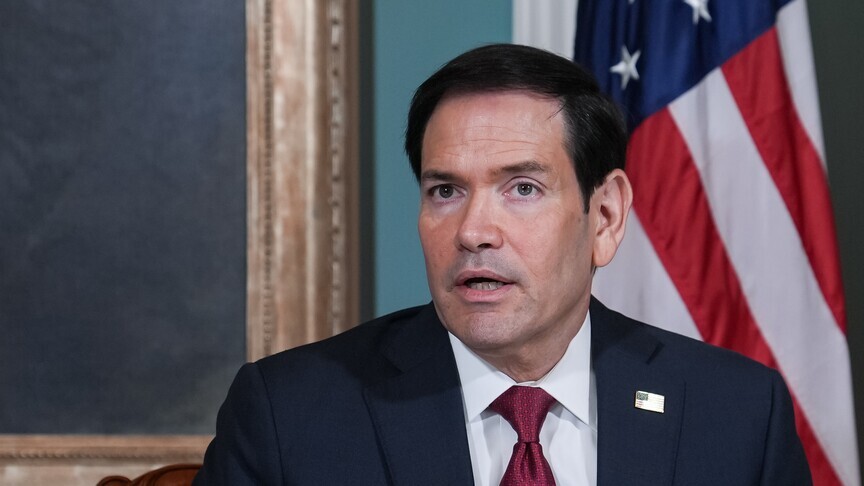
US Secretary of State Marco Rubio on Wednesday warned that weakened militaries, outsourced industries and declining confidence had left the West vulnerable as the "great-power competition" returns.
Rubio argued that Western countries allowed rivals to gain ground by surrendering control of critical industries and transferring decisions to international institutions.
“In the process, we opened our borders and outsourced our industry, and allowed our militaries to wither and to decay,” he said at the Acropolis in Athens.
As Western confidence faltered, adversaries became more assertive, building their wealth and power, he added.
“There is new competition between great powers again,” said Rubio, warning that states continued to compete for territory, technology, resources, markets and energy.
He said decisions taken in the next decade would determine whether the West retained its global position or faced decline.
Under President Donald Trump, Washington had chosen to restore control of critical supply chains, reindustrialize its economy and rebuild its defenses, he said, highlighting ambitions in artificial intelligence, advanced manufacturing, space exploration and military technology.
Europe urged to strengthen defenses
Rubio encouraged Europe to revive its ambitions, pointing to rising defense spending, expanded manufacturing and new partnerships following commitments made in The Hague last year.
“We believe that Europe can awaken from its long slumber and rekindle the fire that was lit here millennia ago,” he said.
He praised Greece as a “model ally” on defense, energy and migration, expressing hope that other European countries would follow its example.
Despite tensions between Washington and European capitals, Rubio urged both to preserve ties and strengthen an alliance capable of confronting shared threats.
He said institutions and alliances should defend the sovereignty of their members, adding that countries could recognize common interests while retaining distinct national identities.
Greenland deal presented as cooperation model
Rubio cited an agreement last month between the US, Denmark and Greenland as an example of his vision for transatlantic cooperation.
He said the deal would “reshape the Arctic and bolster the security of all of NATO,” arguing that all three partners benefited and that Europe and the US emerged stronger.
“We want to win together. We must win together,” he said.
Drawing extensively on ancient Greek history, Rubio framed his appeal around national loyalty, ambition and a willingness to defend Western civilization, saying diplomacy must be backed by military capability and the credibility to use it.