Michael Gabriel Hernandez, Darren Lyn
30 April 2026•Update: 30 April 2026
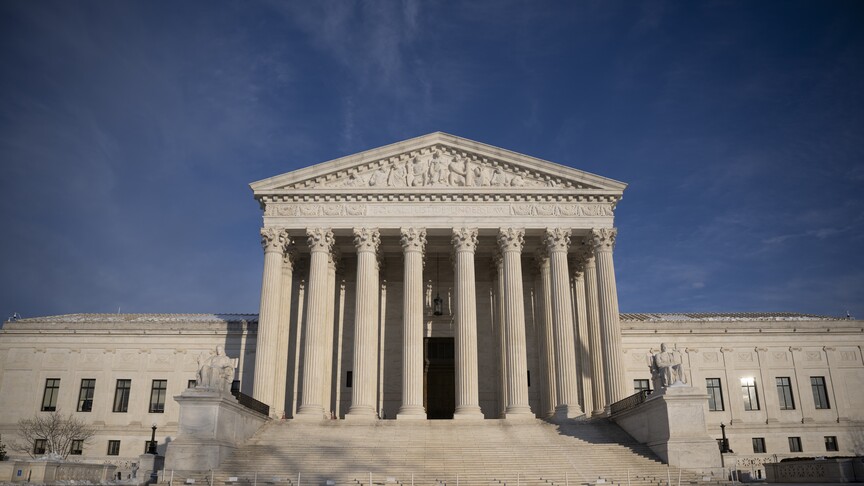
The US Supreme Court issued a ruling Wednesday that weakens a key provision of the landmark Voting Rights Act, limiting the consideration of race in drawing congressional voting maps, according to media reports.
The move could help boost Republicans' chances to keep their majority in Congress.
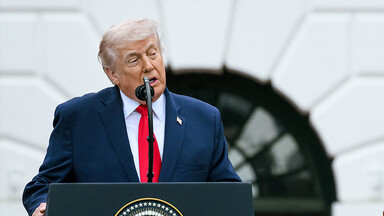
Keenly aware, US President Donald Trump lauded the decision, saying "it returns the Voting Rights Act to its Original Intent, which was to protect against intentional Racial Discrimination."
"Thank you to brilliant Justice Samuel Alito for authoring this important and appropriate Opinion. Congratulations!" Trump said on his Truth Social network.
The high court's decision could also send Republicans on a mad dash to redraw minority-majority districts, especially in the South. New districts could shift the balance of power in Congress by ousting some Black Democrats seeking reelection, possibly as soon as November’s midterms in some cases.
The ruling also scales back the last major pillar of a 60-year-old law that has long been considered one of the marquee achievements of the civil rights era. The Voting Rights Act previously banned discriminatory voting practices such as literacy tests and poll taxes and has helped greatly increase minority representation in state and federal offices.
But the 6-3 conservative majority of the Supreme Court set a new standard by creating a higher bar for the law’s powerful provision that allows states to use race to draw maps that help minority communities elect candidates of their choice.
The provision, known as Section 2, is aimed at combating discriminatory gerrymandering that weakens the power of Black, Latino, Native American and Asian voters. The Voting Rights Act directs states to consider race to some degree when redistricting to ensure that racial minority groups have an opportunity to elect representatives who reflect their priorities. But the high court said maps explicitly drawn along racial lines violate the equal-protection clause of the 14th Amendment and the 15th Amendment’s ban on racial discrimination in voting practices.
The Supreme Court found that the state of Louisiana unlawfully discriminated by race when it created a second majority-Black congressional district to comply with the Voting Rights Act.
"Section 2 of the Voting Rights Act…was designed to enforce the Constitution — not collide with it," wrote conservative Justice Samuel Alito. "Unfortunately, lower courts have sometimes applied this Court’s (Section) 2 precedents in a way that forces States to engage in the very race-based discrimination that the Constitution forbids."
The three liberal justices objected to the new provisions, citing that they would weaken the voting power of minority communities.
"Under the Court’s new view of Section 2, a State can, without legal consequence, systematically dilute minority citizens’ voting power," liberal Justice Elena Kagan wrote in the dissent.
Political experts said the ruling now puts the power in the hands of Republican lawmakers to create new congressional maps that disregard previous racial balances and guidelines. If that happens, it strengthens the chances of Republicans maintaining their majority in Congress by being able to draw congressional boundaries with even more districts in their favor.
The deadlines for most states to redraw their maps before the November midterms have already passed, but experts said it is possible that some states could push to change those rules, meaning that the Supreme Court's ruling could set Republicans up for advantages in 2028 and beyond by being able to create more congressional districts in their favor without worrying about the previous race-based guidelines.
*Michael Hernandez contributed to this report from Washington