Aamir Latif
27 April 2026•Update: 27 April 2026
Military expenditure in Asia and Oceana totaled $681 billion in 2025, up 8.1% from the previous year and the largest annual rise since 2009, according to data published Monday by the Stockholm International Peace Research Institute (SIPRI).
Overall world military expenditure reached $2.887 trillion in 2025, an increase of 2.9% in real terms over 2024.
The US, China and Russia remained the top three military spenders with a combined expenditure of $1.480 trillion, or 51% of the global total.
China, the world’s second largest military spender, increased its military spending by 7.4% to $336 billion.
This was the 31st consecutive year-on-year increase as China continued its military modernization drive.
A renewed campaign against corruption in military procurement does not appear to have constrained spending, according to SIPRI.
India, which remained the fifth biggest military spender in the world in 2025, increased its military spending by 8.9% to $92.1 billion.
Longtime rival Pakistan’s military spending increased by 11% to $11.9 billion.
Japan’s military expenditure rose by 9.7% to reach $62.2 billion in 2025, equivalent to 1.4% of its GDP—the highest share since 1958.
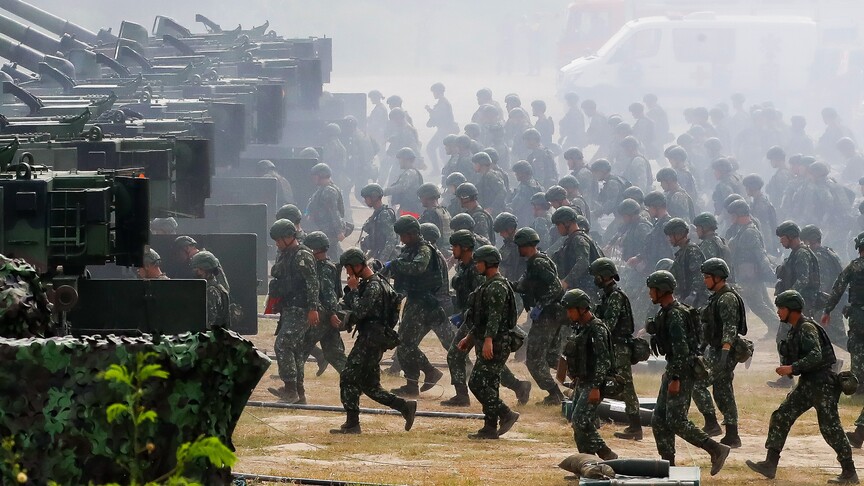
Taiwan’s military spending shot up by 14% to $18.2 billion, accounting for 2.1% of its GDP. It marked the largest annual increase since at least 1988, against a backdrop of intensifying military exercises around the island by the Chinese People’s Liberation Army.
“US allies in Asia and Oceania such as Australia, Japan and the Philippines are spending more on their militaries, not only due to long-standing regional tensions but also due to growing uncertainty over US support,” said Diego Lopes da Silva, a senior researcher with the SIPRI Military Expenditure and Arms Production Program.
As in Europe, US allies in Asia and Oceania are also under pressure from the Trump administration to spend more on their militaries, he added
Military expenditure in the Middle East reached an estimated $218 billion in 2025, just 0.1% higher than in 2024.
Besides Israel, most of the major spenders in the region increased their spending.
Israel’s military expenditure decreased by 4.9% to $48.3 billion, reflecting a reduction in the intensity of the war in Gaza after the ceasefire agreement with Hamas in January 2025. Nevertheless, Israel’s spending remained 97% higher than in 2022.