Faisal Mahmud
31 August 2026•Update: 31 August 2026
- Rescue teams from China, South Korea, india join efforts as search for missing continues on day 6
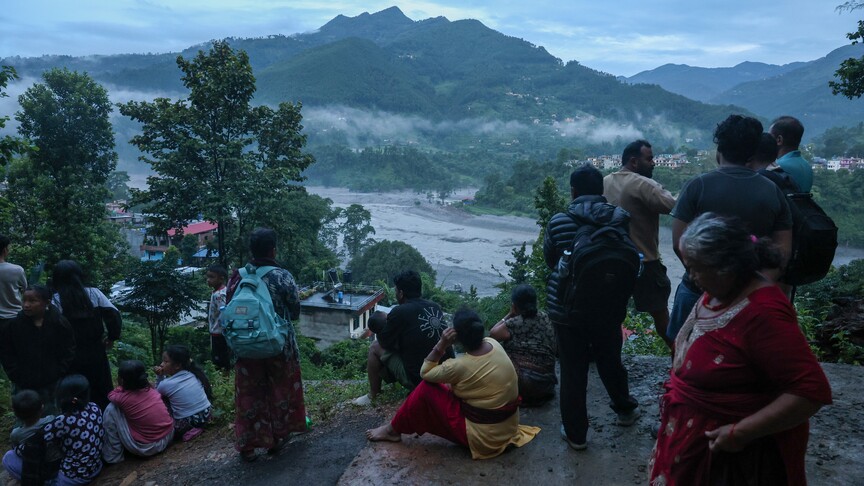
At least 933 workers are believed to be trapped at around six hydropower projects in Nepal following last week’s devastating floods, the country’s disaster agency said Monday.
Rescue efforts are underway to reach the stranded workers as relief operations continue across flood-hit areas, according to Nepal’s National Disaster Risk Reduction and Management Authority (NDRRMA).
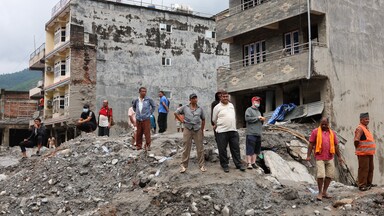
The floods have caused widespread destruction in Nepal, damaging roads, bridges and other infrastructure and cutting access to several affected areas.
Search operations are also continuing for people reported missing after flooding and landslides struck parts of the country, while authorities assess damage to hydropower facilities and other critical infrastructure.
The death toll from the devastating cross-border flash floods and mudslides has climbed to at least 919, while 4,793 people remain missing across both countries.
The NDRMMA confirmed 903 deaths and 4,247 missing, including 592 foreign nationals, among them 275 Indian and 100 Chinese citizens, as well as 933 personnel across hydropower stations.
In China's southwestern Xizang region, also known as Tibet, state-run Xinhua reported 16 deaths and 546 missing in Gyirong County, including 261 foreigners.
The disaster struck on Aug. 26 when a glacier on Nepal’s Mount Langtang Lirung fractured at an altitude of about 5,200 meters, triggering an ice-rock avalanche that developed into a massive debris flow and swept through valleys along the border.
The huge surge in water, along with mudslides, devastated Rasuwa, Nuwakot, Dhading, Kavre and the Kathmandu Valley in Nepal, and buried the Gyirong border area on the Chinese side.
‘Unimaginable disaster’
Nepal’s Prime Minister Balen Shah described the disaster as “unimaginable,” acknowledging challenges in gathering full details amid tough terrain and cut off roads and buried infrastructure.
He said over 20,600 security personnel have been deployed besides aerial rescue operations.
Specialized teams from China, India, and South Korea are coordinating with Nepalese Army engineers using heavy machinery and controlled blasting to search blocked tunnels across key sites.
Separately, India’s Ministry of External Affairs said a 19-member specialized forensics team has begun work in Kathmandu to assist with victim DNA identification of the deceased.
As search and rescue operations entered their sixth day Monday, reports from Kathmandu said authorities were facing growing challenges in managing the bodies recovered from the disaster.
“Questions have been raised about the government's decision to bury unidentified bodies” following the devastating floods “without the permission of the relatives of the deceased,” RatoPati outlet reported.