Riyaz ul Khaliq
13 April 2026•Update: 13 April 2026
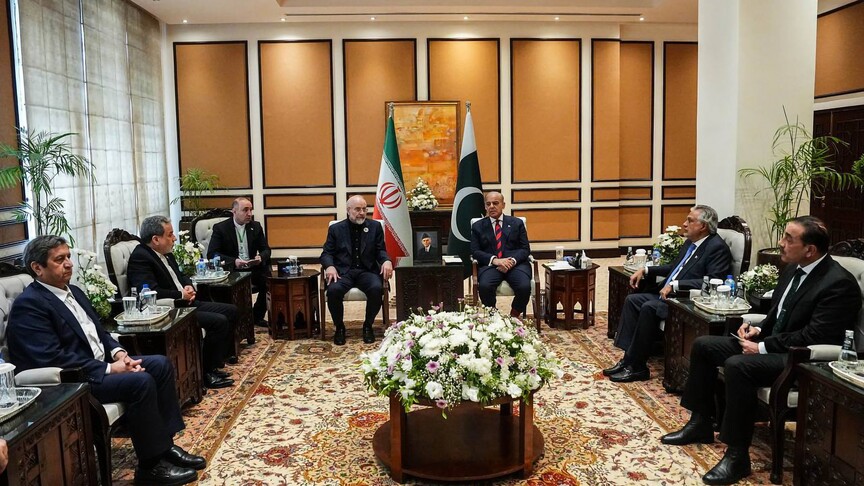
Pakistan’s Prime Minister Shehbaz Sharif on Monday said that efforts are underway to “resolve pending issues” between the US and Iran, whose senior officials met in the South Asian country over the weekend in a bid to end their conflict.
“The Islamabad Talks were a historic moment in their own right,” Sharif told a Cabinet meeting in Islamabad.
While the two-week ceasefire between the two sides remains in place, Sharif added that “all efforts are being made to resolve some pending issues” between the US and Iran.
Following joint diplomatic efforts with Türkiye, Saudi Arabia and Egypt, Pakistan on April 8 secured a 14-day ceasefire between Washington and Tehran after weeks of fighting triggered by US-Israel actions on Feb. 28.
US Vice President JD Vance and his delegation met an Iranian team led by parliament speaker Mohammad Bagher Qalibaf, who headed the 16-hour marathon negotiations known as the Islamabad Talks – considered the most significant engagement since the US and Iran severed diplomatic ties in 1979.
However, the talks ended without a breakthrough over the weekend in the Pakistani capital.
Before leaving for the US, Vance told reporters in Islamabad that Washington was seeking a commitment from Iran that it would not pursue a nuclear weapon.
“Unfortunately, we were unable to make any headway,” he added.
Qalibaf said it was now up to Washington to decide whether it could earn Tehran’s trust.
Separately, Pakistan’s Defense Minister Khawaja Asif said “no negative atmosphere was experienced” following the weekend talks.
“I do not want to speculate, but there are chances,” he told reporters when asked about the prospects for further US-Iran talks.
“More initiatives are being (made) about" possible future talks, he added.
According to US-based outlet Axios, citing sources in the US and regional governments, Pakistani, Egyptian and Turkish mediators “will continue talks with the US and Iran in the coming days in an effort to bridge the remaining gaps and reach a deal to end the war.”
“We are not in a complete deadlock. The door is not closed yet. Both sides are bargaining. It's a bazaar," the outlet reported, citing a “regional source.”
According to US media reports, the negotiating team led by Vance set several non-negotiable "red lines" for Iran, including ending all uranium enrichment, dismantling major nuclear facilities, retrieving enriched uranium, ending proxy funding and reopening the Strait of Hormuz.
The discussions also included possible sanctions relief to Iran as well as the release of its assets held by the US, according to the reports.