Aamir Latif
01 September 2026•Update: 01 September 2026
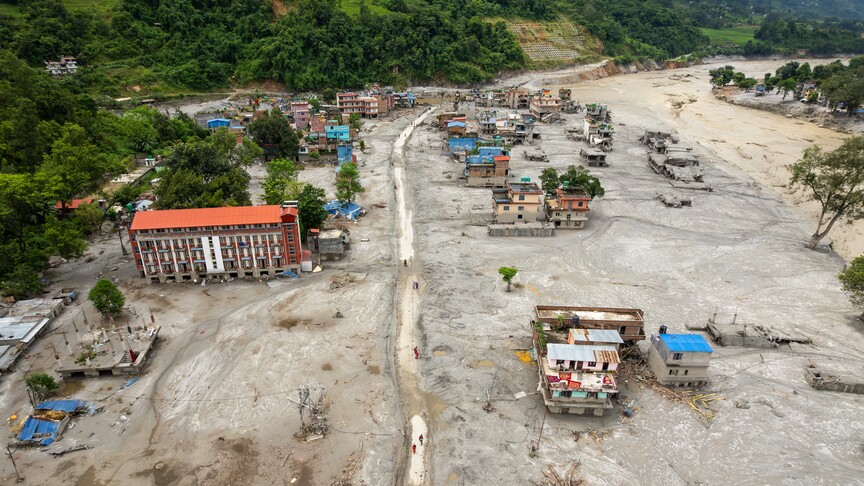
Nepalese Prime Minister Balendra Shah on Tuesday highlighted the growing risks posed by climate change as search and rescue operations continued after devastating flash floods that struck the Himalayan nation last week.
In a post on his Facebook account, Shah said the recent flash floods were one of the region's largest disasters, triggered by an avalanche of snow and rock in the Himalayan region.
"The incident indicates that the risks we face in the Himalayan region are increasing alongside climate change," he observed.
"The region must therefore remain vigilant."
He also said this was the time to strongly raise with the international community the issue of disasters Nepal is experiencing as a result of climate change.
Shah said the bodies of people who died in the floods and whose identities cannot be established are being managed through scientific procedures in accordance with the law.
The government, he went on to say, is handling only those bodies whose identities cannot be established, while preserving DNA and other evidence that could assist with their identification.
Rescuers Tuesday continued to search rivers and hydropower project tunnels for bodies and missing people.
The death toll from flash floods and mudslides in the Himalayas surpassed 1,019 on Tuesday, a week after the disaster struck the border region between Nepal and China, according to official data.
Data from Nepal and China showed that some 4,462 people, including 844 foreigners, remained missing.
Nepal's National Disaster Risk Reduction and Management Authority said search and rescue teams confirmed 84 more fatalities, bringing the death toll on the Nepalese side of the border to 1,003, while 3,916 people, including 583 foreigners, remain missing.
Chinese authorities confirmed 16 deaths, while the search continued for 546 people reported missing, including 261 foreigners.