- 'Our outlook for monetary policy to remain on pause until year’s end is unchanged,' says Oxford Economics Chief Global Economist Ryan Sweet
- 'With labor data for April fairly benign, this reinforces the Fed’s interest in standing pat for now,' says American Enterprise Institute Se
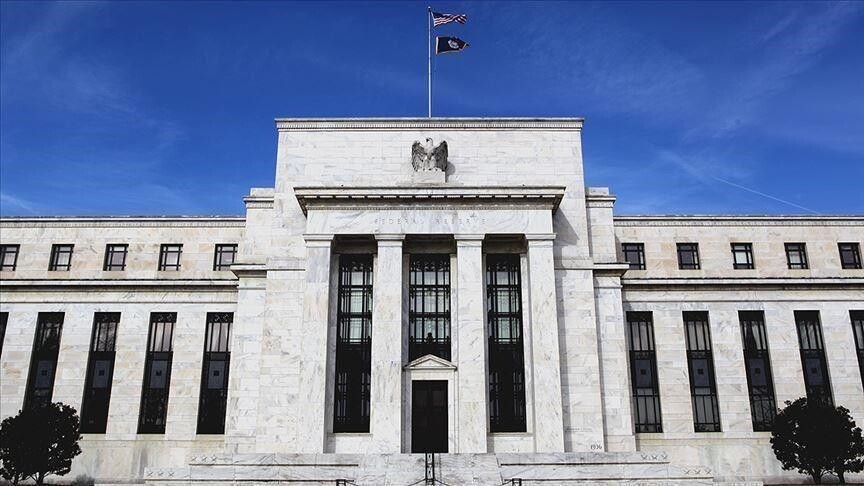
Annual inflation hitting a nearly three-year high in the US due to rising energy costs since the Iran war narrows the policy room for the Federal Reserve to continue interest rate cuts.
Recent macroeconomic data released in the country indicated that the labor market maintained its resilience while inflation accelerated on an annual basis.
These indicators made it difficult for the Fed to strike a balance between its employment and inflation targets during the presidential transition process while presenting a challenging picture for Kevin Warsh, who is set to become the next Federal Reserve Chair and is expected to lead the bank's monetary policy meeting on June 16-17.
The Consumer Price Index (CPI) in the country rose by 0.6% on a monthly basis in April, in line with expectations, according to data released by the US Department of Labor.
The CPI increased by 3.8% on an annual basis in April, exceeding estimates.
Inflation surged to 3.3% in March, reaching its highest level since May 2023 on an annual basis.
The energy index, rising by 3.8% in April compared to the previous month, accounted for more than 40% of the monthly CPI increase.
Energy costs also surged by 17.9% on an annual basis.
The core CPI, excluding volatile energy and food prices, accelerated in April and increased above expectations by 0.4% monthly and 2.8% annually.
Upward pressures, particularly in energy and some service prices, indicated that the Fed still needed to cover ground in reducing inflation to its 2% target.
This situation, when evaluated with recent data on the strong labor market, supported expectations that the Fed would not cut interest rates this year against the risk of an inflation shock.
Data released last week in the country showed that non-farm payrolls increased well above expectations by 115,000 people in April, indicating resilience in the labor market.
The US unemployment rate remained unchanged at 4.3% during the specified period.
Rising geopolitical tensions and prices, along with an environment of high uncertainty since the start of US and Israeli attacks on Iran on Feb. 28, negatively affected the spending trends of Americans.
The Consumer Sentiment Index measured by the University of Michigan in the country fell to an all-time low of 48.2 in May.
Consumers’ year-ahead inflation expectations, despite decreasing to 4.5% in May from 4.7% in April, continued to stay above the 3.4% value seen in February before the start of the war in Iran.
Differences of opinion stand out at the Fed
The Fed kept its policy rate steady in the 3.5%-3.75% range in line with expectations at its last monetary policy meeting held on April 29.
The decision passed with eight votes against four, while Fed Board member Stephen Miran cast a dissenting vote because he favored a 25-basis-point interest rate cut.
Beth Hammack, Neel Kashkari and Lorie Logan cast dissenting votes because they supported keeping the policy rate steady but objected to including an "easing bias" in the decision text at this stage.
The Federal Open Market Committee (FOMC) made its last decision involving this level of dissenting votes among members in October 1992.
The recent data largely shelved the possibility of the next step being an interest rate cut while the FOMC experienced the highest differences of opinion in the last 34 years regarding the course of the interest rate.
Money market pricing estimated that the Fed, which markets projected to make two interest rate cuts this year before the conflict in Iran began, would currently keep the policy rate constant until the end of the year.
- 'War with Iran affects timing of interest rate cuts'
ING Regional Head of Research for Americas Padhraic Garvey told Anadolu that inflation data confirmed headline inflation for April rounding up to 4% and core inflation rounding up toward 3%.
Garvey noted there is every reason to expect that solidified from the subsequent May readings, adding that with the 10-year SOFR in the 4% area, it is only marginally above where headline inflation will print.
"That tight real interest rate outcome keeps the pressure to the upside for nominal rates. Higher printed inflation and higher inflation expectations makes it extremely difficult for the Fed to even consider cutting rates anytime soon," he said.
He mentioned there is still a bias towards rate cuts down the line, but at this stage, a first cut would be much later in the year, if at all in 2026.
"Clearly, the length and depth of the war with Iran, and more pointedly, the closure of the Strait of Hormuz, affects timing. The longer the war, the longer the wait for eventual cuts," Garvey evaluated.
Emphasizing that the labor market is just about holding up, he stressed that it risks becoming more stressed should the price pressures currently being seen persist.
'April inflation does not warrant hawkish revision in monetary policy outlook'
Oxford Economics Chief Global Economist Ryan Sweet said that both the headline and core CPI were uncomfortably strong in April.
"Tariff effects and the passthrough of higher energy costs to non-energy prices were evident in the core measure, but there was also significant noise,” he said.
"Our outlook for monetary policy to remain on pause until year’s end is unchanged based on this report."
He noted that they still look for CPI inflation to peak this quarter at a pace well below its pandemic-era heights, expressing that while the core CPI will remain elevated this year, it is unlikely to move significantly higher from here.
Sweet recorded that energy-driven cost increases will spill over to the core CPI, but these effects will be tempered by ongoing housing disinflation, a lukewarm labor market, and fading tariff effects.
Noting that AI-related price pressures are showing up to a greater degree in the personal consumption expenditure deflator, not the CPI, he added: "In our May baseline, we pushed back the next Federal Reserve rate cut from June to December.
"While the April CPI reinforces the change we made to our outlook for monetary policy, it doesn’t warrant another hawkish revision to the baseline."
'These data make Fed's hawkish wing even more hawkish'
Steven Kamin, a senior fellow at the American Enterprise Institute, said inflation for April was disappointingly high.
Stating that especially concerning was the 0.4% rise in core CPI, Kamin evaluated that this indicated some bleeding of energy prices into non-energy prices, as well as effects from tariffs and other factors.
"With labor data for April fairly benign, this reinforces the Fed’s interest in standing pat for now," he said, adding: "If Warsh tries to get a rate cut in June, he’ll have a lot of problems. The hawkish wing of the FOMC will be even more hawkish after this data release."