ECB: Eurozone recovery threatened by lack of support
ECB Chief economist Praet warns that, while recovery is underway, unemployment, low productivity and a lack of investment may slow recovery.
ANKARA
Eurozone nations must take action to raise the region's economic growth potential or the recovery may slow, the European Central Bank’s chief economist has warned
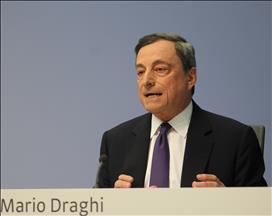
Peter Praet, was speaking on Thursday in Berlin where he said that recovery was underway in the eurozone, but that the "notable decline in [the] euro area’s potential growth rate has not been addressed."
Praet said this could be imagined as the “speed limit” of the economy – the rate at which it can grow while maintaining stable inflation.
"International institutions currently estimate the potential growth rate to be below 1 percent in the euro area, compared with above 2 percent in the United States," Praet said. Moreover, productivity in Europe has grown only 1.4 percent from 2000 to 2014, while in the U.S. it jumped 10.7 percent.
"This is due to, first, a deep and protracted decline in investment – nearly 20 percent from peak to trough – which has caused the capital stock to grow more slowly and increased its average age. Of particular concern is the growth rate of the machinery and equipment stock, the most productive component, which has slowed the most."
Further, structural unemployment (unemployment caused by a mismatch between jobs and skills) has risen in the euro area as whole, increasing from just under 9 percent in 2008 to almost 10 percent in 2014, and much more in some stressed countries, Praet said.
"Low potential growth creates a vicious circle where firms and households hold back consumption and investment due to diminished expectations, which in turn lowers potential growth further. It makes it harder for the economy as a whole to grow out of debt," Praet warned. It can lead to the permanent loss of jobs and growth.
Praet said that structural economic reforms by member states were critical to regaining potential growth.
"The incoming data suggest that the ECB’s measures are now gaining traction. The recovery is firming, and inflation expectations seem to be moving towards values more consistent with our aim. But it is only through actions by other stakeholders – governments, social partners and firms – that this cyclical improvement can be made permanent," he added.