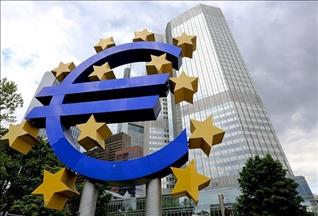
18 March 2016•Update: 19 March 2016
By Abdulselam Durdak
ANKARA
The European Central Bank’s latest monetary easing move aimed to revive the European economy, which is having a hard time pulling itself out of persistent crisis, met a mixed reaction from economists on Friday.
Economists from international financial institutions are generally doubtful about the success of the ECB’s new program, meant to stimulate inflation and growth in the Eurozone.
Last week the ECB cut its deposit interest rate to minus 0.4 percent, its policy rate to 0 percent, and marginal lending rate to 0.25 percent, to revive Europe’s economy, which is failing to show strong signs of recovery despite previous monetary stimulus measures.
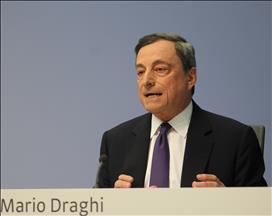
In a press conference after announcement of the new interest rates, ECB President Mario Draghi said that the bank was expanding its Quantitative Easing program to €80 billion a month, up from €60 billion, and also that the bank will start to buy assets of non-financial companies as long as they have investment-grade ratings.
Draghi also announced that starting in June, they will hold new Targeted Long-Term refinancing Operations (TLTRO) to encourage local banks to give loans to investors and consumers.
“To some extent one can say that the ECB is reaching the boundaries of what monetary policy can do. Interest rates are very low, but companies also need the confidence to decide to invest,” said ING Eurozone Chief Economist Peter Vanden Houte.
Arguing that monetary policy alone is not sufficient to build confidence, he said governments need to undertake public investments to boost confidence but their budget deficit criteria are blocking this onetime solution.
“Bottom line: the situation is probably better than without the easy monetary policy, but it isn’t sure whether the new measures will have much additional impact on inflation and growth,” he added.
However he said that further monetary easing might offer emerging market economies the opportunity to run easier monetary policies. “Given that a lot of emerging countries have seen capital flight, the fact that interest rates are becoming now more negative in Europe, is something that might stop capital flight,” Houte added.
Commerzbank Emerging Markets Manager Peter Kinsella echoed Houte’s worries, but for different reasons, noting global economic woes.
“It will be difficult to increase inflation given broader disinflationary trends – China’s overcapacity, low commodity prices, etc. So I am skeptical about whether the measures will be successful,” he said. He added that there is also risk of an increase in asset bubbles.
Kinsella also said that easy money will boost the hunt for yields and likely flow into emerging markets. But high-quality emerging market assets may get the lion’s share of the investments rather than broader capital flows to all emerging markets.
For emerging markets the outlook is mixed, as the new measures pose both positives and negative risks for these economies.
“The effects on emerging economies are rather nuanced. We’ll likely see an increasing hunt for yields which will benefit high-quality EM assets.” Kinsella said.
“However, there is also the risk that the negative rate environment deters banks and companies from investing, which has deleterious consequences for emerging economies.”
Despite the concerns mentioned by Houte and Kinsela, Berenberg Chief Economist Holger Schmieding said that the new measures would help growth rise to 1.6 percent in the region over time and prevent a further decline in core inflation.
“But neither demand nor cost pressures will be pronounced enough to bring inflation back to 2 percent before 2018,” he warned.
Regarding the increased risk of an asset bubble, Schmieding ruled out the possibility, stressing, “There is no trace of that in the Eurozone so far. Credit growth remains tepid even in the real estate market.”