Mucahithan Avcioglu
14 April 2026•Update: 14 April 2026
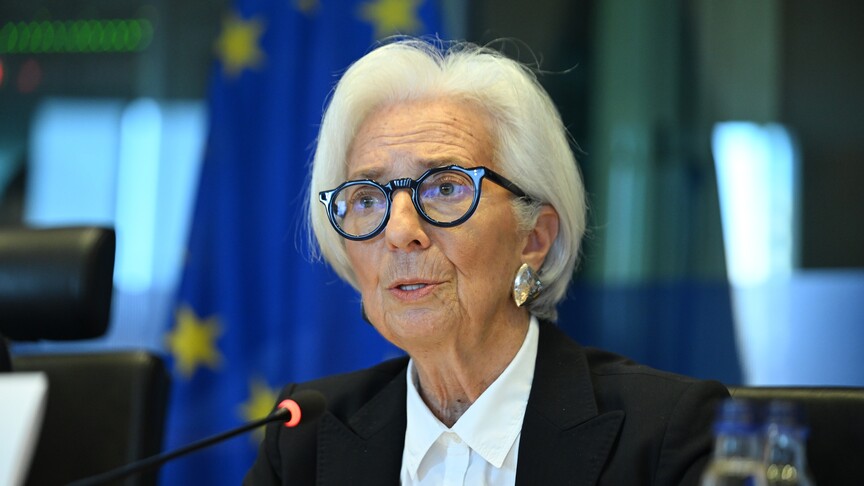
European Central Bank (ECB) President Christine Lagarde said Tuesday that higher energy costs linked to the war involving Iran have pushed the euro area economy below the ECB’s baseline outlook, though not far enough to justify a tightening bias.
“We are in between the baseline and the adverse” scenarios, Lagarde said in an interview with Bloomberg Television in Washington, DC, where she is attending the IMF Spring Meetings.
She said the shift in the outlook does not mean the ECB is now leaning toward raising interest rates.
“We have a compass which indicates price stability predicated on financial stability,” she said.
The ECB is assessing how to respond after more than six weeks of war in the Middle East sent oil prices sharply higher and weakened economic sentiment across Europe. Headline inflation in the euro area has already moved well above the ECB’s 2% target, raising concerns about how long the shock may last.
Lagarde said policymakers must remain flexible and data dependent, stressing that the current situation does not yet point clearly toward either tighter or looser policy.
“We would not hesitate to act,” she said, while adding that officials still need more data to judge whether the inflation shock will prove temporary or more persistent.
Markets are pricing in rate increases later this year, though investors do not expect a move at the ECB’s next meeting on April 29–30.
Several ECB officials have already signaled that the baseline scenario is becoming less likely as the conflict continues and shipping disruptions through the Strait of Hormuz persist.
Under the ECB’s adverse scenario, inflation would peak at 4.2%, while a severe scenario sees price growth rising above 6% alongside a short recession.