ANKARA
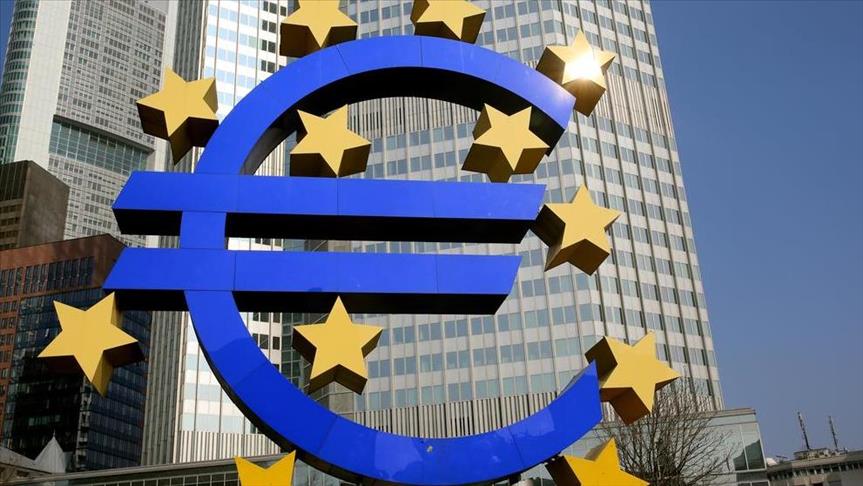
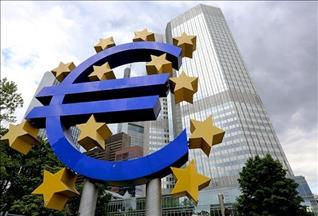
European Central Bank has announced it will extend its economic stimulus program of securities purchases to March 2017, a program which was to end in September 2016.
The central bank also cut its key deposit interest rate to 0.3 percent from 0.2 percent. The deposit rate is the rate banks receive for funds placed with the ECB. It cannot be set at a level close to the bank's other interest rates, the statement said.
The central bank left its main rate for bank lending unchanged at 0.05 percent and the rate on its marginal lending facility stayed at 0.3 percent.
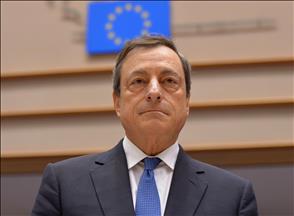
Speaking to the press after the announcement in the German city of Frankfurt, ECB President Mario Draghi outlined an extension of the economic stimulus measures -- the bank was to inject €1.1 trillion ($1.16 trillion) into the economy through securities purchases by September -- about half of that has been completed.
Now Draghi said that the stimulus will be considerably larger. He said that the stimulus will run to the end of March 2017 or beyond, until there is sustained adjustment in the path of inflation consistent with achieving close to 2 percent over the medium term.
Inflation was at 0.1 percent for the eurozone in November, unchanged from October.
Draghi also explained that principal payments from the purchased securities will be reinvested for as long as necessary. This will contribute to liquidity conditions and appropriate monetary policy stance, he added.
"Considerable liquidity will be available for a long, long time," he said.
The measures, however, were less extensive than markets had expected. Economists had predicted a larger interest rate cut, as well as a more marked increase in the stimulus program.
Draghi, however, said that a very large majority on the monetary policy committee supported this package, which they believe has been a success.
"We are witnessing a continuing recovery driven by consumption. Our policy supports this," he said.
The cost of credit fell by about 80 basis points this year, Draghi said, and this is an important signal of success. Credit volumes have also increased sharply, he added.
Draghi said that euro area inflation would be at 0.1 percent at the end of 2015, 1 percent in 2016 and 1.6 percent in 2017. But he admitted that this was a downward revision from previous projections.
Growth is also projected to be slow, he warned. The ECB’s projection is for 1.5 percent euro area growth in 2015, 1.7 percent in 2016, and 1.9 percent in 2017.
Downside risks for growth are principally from geopolitical risks and the weak global economy, Draghi pointed out.
But high unemployment and low growth will change as the ECB’s policies go to work, he said.
"Economic recovery will succeed," he insisted.
However, economists are not so sure.
"The eurozone is faced with a paradox: monetary policy has never been so accommodating, and nevertheless activity has not really taken off," Christopher Dembik, an economist with Saxo Banque in Paris, said in a note published on Nov. 30.
Unemployment for the region was at 10.7 percent in October. The lowest rate of unemployment was in Germany, where it reached 4.5 percent, closely followed by the Czech Republic at 4.7 percent, while the highest rate was seen in Greece, at 24.6 percent.
"The main positive effect of one of the ECB interventions was the depreciation of the euro. For France, a decrease of 10 percent of the euro resulted into an increase of exports, reaching up to 8 percent for the car industry and in approximately 20,000 to 30,000 new jobs," Dembik pointed out.
Then there is the question of whether the increased stimulus will lead to the eurozone exporting deflation.
"In effect, Europe has replaced the competitive exchange-rate devaluations of the 1970s and 1980s with wage compression and fiscal devaluations within the euro. The result is a policy race to the bottom that spreads deflation inside and outside the euro area," economists at Soros Fund Management said in a note published on Nov. 1.
But the bank is satisfied that its measures are adequate.
Asked by a journalist at the press conference if the bank should not have done more, given market expectations, Draghi said: "We know that what we have done was not enough, we have to do more, so we do more.
"We do more because it works, not because it fails," he said.