by Selen Tonkus
ANKARA
The Kurdish Regional Government's (KRG) announcement on the weekend that its 1.5 million barrels of oil stored in the Turkish port of Ceyhan, will now be sold without Baghdad's consent, and the signing of a deal to supply oil to Iran, demonstrates the Kurdistan region's growing confidence say analysts.
The KRG is believed to have one of the largest untapped oil reserves in the world - more than 45 billion barrels of oil, according to some estimates. In November 2013 KRG signed an agreement that would enable Kurdish oil to flow to Ceyhan.
However, Baghdad opposed the agreement claiming it would bypass the country’s national oil company SOMO (State Oil Marketing Company) and violate Iraq’s constitution. For months Irbil and Baghdad have been embroiled in a long-running row over shares of oil revenues.
In March this year, in a bid to resolve the dispute, KRG's prime minister, Nechirvan Barzani announced that his government would accept the export of 100,000 barrels of oil per day through Iraq's state-run oil company, SOMO, from April 1 as a "gesture of goodwill", while negotiations for a permanent deal with Baghdad continued.
Claiming that they couldn't receive any response from Baghdad in turn for their "gesture", Barzani unilaterally announced they will sell the stored Ceyhan oil beginning on May 2.
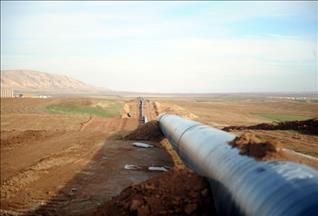
One day before this announcement, KRG signed oil and gas agreement with Iran which proposes the construction of two pipelines between the KRG and Iran. The regional government would receive refined oil fuel and natural gas in return for sending crude oil to Iran.
Experts believe these two steps show KRG wants to diversify its energy options, rather than depending on Baghdad.
Dr. Fahrettin Sumer, from American University of Iraq, said the KRG’s improved relations with Iran will help solve KRG’s problems with the central government in Baghdad since Iran has leverage with the Baghdad government. The issues over oil revenue sharing and control over the KRG’s oil exports via Turkey could be resolved.
"In the long run, this has a strategic importance for the KRG, since the KRG will not be dependent on Turkey alone for its oil exports," he added.
Baghdad may retaliate
About May 2 statement of Nechirvan Barzani, Sumer said, "If they sell the oil right after the election, before an elected and legitimate government takes over the office in Baghdad, they would try to get the new government in Baghdad to accept the 'reality' and compromise with the KRG."
Sumer further stated that depending on what kind of a government will be formed, whether Kurdish political parties take a part in the government, there is a risk of Baghdad government's retaliating with other means.
Not having your eggs in one basket approach
Dr. David Romano, from Missouri State University, said the deal between the KRG and Iran truly helps expand the KRG's options.
"Now Baghdad, Ankara and Tehran all become viable options for the KRG's energy sector strategy," he noted.
Shwan Zulal, Head of Carduchi Consulting and an energy expert of Kurdish origin, said the steps are in accordance with President Massoud Barzani's saying "not having your eggs in one basket approach".
englishnews@aa.com.tr