Fed chair reaffirms price stability commitment, avoids signaling next rate move
Kevin Warsh says US investment surge supports growth, sees AI boosting supply over medium term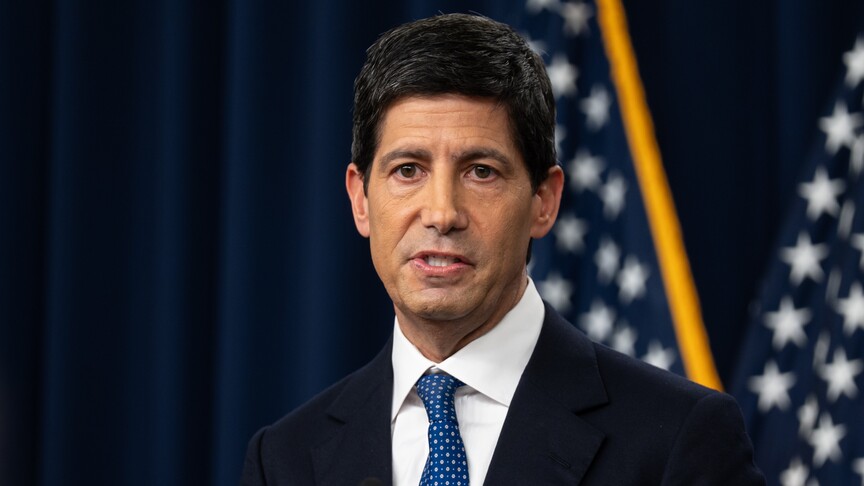
US Federal Reserve Chair Kevin Warsh reaffirmed the central bank's commitment to price stability Friday while declining to signal policy decisions at its remaining meetings this year.
Speaking with IMF Managing Director Kristalina Georgieva at the IMF-World Bank Annual Meetings in Bangkok, Thailand, Warsh said the Fed had withdrawn some monetary accommodation about a month earlier.
He said developments since the September meeting had broadly conformed to expectations, adding that policymakers would assess output, employment, and inflation when making decisions in October and December.
Warsh declined to prejudge those meetings, describing his approach as part of a new chapter at the Fed.
Investment surge supports economic resilience
Warsh said the US is experiencing a substantial investment surge, contrasting current structural growth with earlier concerns about prolonged economic stagnation.
He attributed the investment expansion to sound macroeconomic policies and strong microeconomic foundations, calling it one of the most significant positive developments in the global economy.
The surge is broadening beyond artificial intelligence, providing strength and durability to the US economy, although that momentum is not shared everywhere, he added.
Warsh said global economic resilience had exceeded what he would have anticipated five or six months earlier, given geopolitical tensions.
However, inflation remained a common challenge. He said central banks had undertaken broadly synchronized monetary tightening in recent months, with his counterparts showing determination to restore price stability.
AI could reshape monetary policymaking
Warsh described AI as potentially the most consequential economic transformation of his lifetime, saying it was boosting demand before its supply-side benefits materialized.
He said he expected the technology to deliver a positive supply shock over the medium term, raising productivity and wealth, while cautioning that the transition could be uneven.
Its employment effects over the next 12-18 months remained uncertain, alongside questions about which companies would profit from the technology.
AI could also fundamentally change monetary policymaking by helping central banks analyze information and distinguish underlying economic trends from delayed or noisy data, he said.
Warsh said a Fed task force on productivity and jobs would hold its first field hearing on Nov. 16 in San Francisco’s Bay Area to examine these issues.