12 November 2015•Update: 13 November 2015
by Vasiliki Mitsiniotou
ATHENS
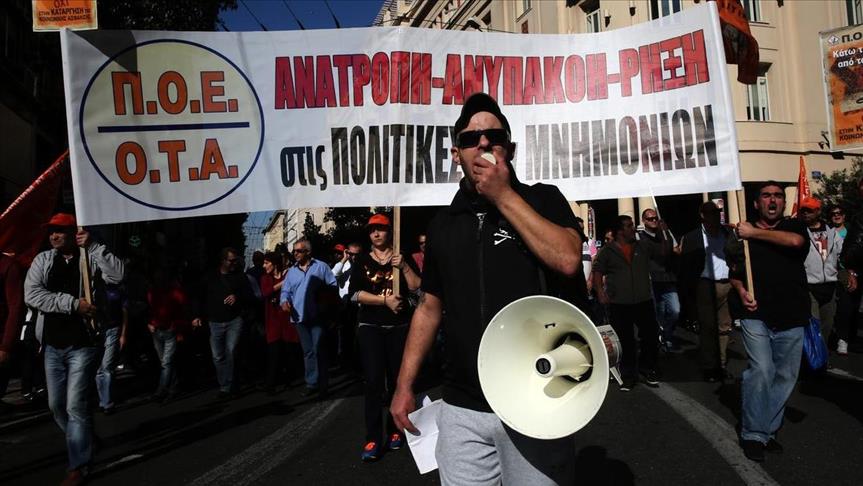
Greece was paralyzed Thursday by the first general strike organized against the austerity measures imposed by the bailout accord with the country’s creditors.
Due to the strike, all public services, are closed. Pharmacists, doctors, teachers and bank employees abstained from work. Hospitals are operating with skeleton staffs. Museums and archaeological sites are also closed. The Athenian transport system was shut throughout the day, and ferry connections between the mainland and the islands are impossible due to the Panhellenic Seamen's Federation (PNO) participation in the strike.
According to police estimates, nearly 25,000 people took part in three separate demonstrations in central Athens, and there were large demonstrations throughout the country in major cities.
The strike was called by the labor unions, the Civil Servants Confederation (ADEDY) and the General Confederation of Greek Workers (GSEE) in opposition to the economic reform measures imposed by the €86 billion ($94.4 billion), three-year bailout agreement.
The demonstrations came at the same time that representatives of the creditors are in Athens to discuss the bailout agreement with the government.
“The bailout agreement has made our worst nightmares for the future of workers and the unemployed, pensioners and young people come true,” labor union ADEDY said in a statement on Thursday.
“For the past few months many Greeks believed that Syriza would serve the people’s interests, they trusted Syriza” says a demonstrator named Lakis, a 37-year-old plumber, who holds an anti-austerity placard. “We have to fight all this because things will get a lot worse.”
“We should stop this before it’s too late, there are no education funds or decent jobs. There is no future!” said 20-year-old law students Vasso and Marina said at a demonstration in Thessaloniki.
“Syriza uses the Greek people as a means of pressure in negotiations,” says 38-year-old unemployed Vassilis Damdalis, “while it promotes the policies imposed by the creditors.”