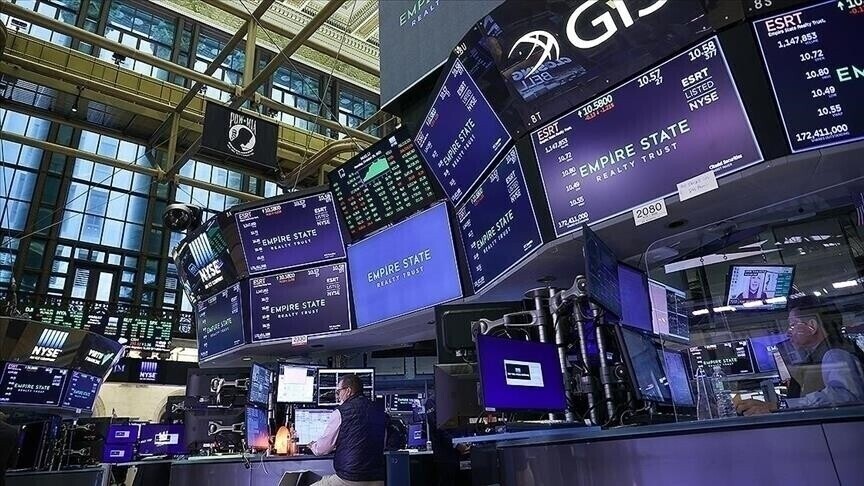
Global markets traded positively on Thursday due to sharp gains in tech stocks, raising hopes that the recent sell-off in artificial intelligence-related assets is coming to a close.
Tech stocks seeing sharp gains fueled the optimism that massive AI investments will translate to profits, while chipmaker shares also recovered some of their recent losses.
The demand for AI still appears sustainable, which suggests that the recent selloff may have been from a market overreaction to some concerns over capital spending, analysts say.
At the same time, the US economy grew below estimates by 1.5% in the second quarter, slowing down versus the first quarter.
The US personal consumption expenditures (PCE) price index, the Fed’s inflation indicator, declined 0.1% month-on-month but rose 3.7% year-on-year in June.
The core PCE excluding food and energy climbed 0.1% on a monthly basis, and 3.3% year-on-year.
The number of initial jobless claims rose to 197,000 in the week ending July 25, below market estimates.
Slowing economic growth in the US driven by declining personal spending fuel the optimism that the Fed may have a little more policy room to maintain rates for a longer period, dampening expectations of a potential second rate hike.
Meanwhile, Iran and Oman’s talks on the Strait of Hormuz raised hopes that the Middle East tensions would subside, boosting risk appetite.
The US 10-Year Treasury yield fell 3 basis points to 4.65%, and the Brent crude oil dropped 1.4% to $85.4 a barrel on Friday.
The US Dollar Index climbed 0.1% to 100.2 amid ongoing geopolitical uncertainties, while gold fell 0.5% to $4,082 per ounce at the same time.
Microsoft’s Azure cloud services saw strong revenue growth and the firm’s capital spending outlook fell short of expectations, easing some AI spending concerns, and driving its shares up 15.5%.
Meta reported a revenue growth of 28% year-on-year to $60.8 billion in the second quarter, but a net income loss of 14% to $15.85 billion. The tech giant’s shares declined 7.95% after it announced its free cash flow declined in the second quarter.
Chipmaker stocks rebounded, with Micron Technology shares rising 18.4% and AMD shares climbing 13%.
The Dow Jones Industrial Average gained 1.19%, the S&P 500 rose 1.66%, and the Nasdaq rose 2.78% on Thursday. American indexes opened Friday on a positive note.
US tech firms Apple and Amazon reported earnings after the markets closed.
Apple’s net income rose 27.1% to $29.8 billion in the three-month period ending in June but its stock fell 6.1% in after-hours trading as the firm expects a decline in sales amid supply chain issues.
Amazon posted a 244.9% surge in its net income to $62.6 billion in the second quarter, while its shares rose 10.4% in after-hours trading.
Meanwhile, European markets drove on better-than-expected corporate earnings, while gains in mining stocks also contributed to the rise, driven by the rise in precious metals.
The Bank of England maintained its policy rate at 3.75% on Thursday in a vote of six to three. Governor Andrew Bailey was among those voting to maintain rates, while the opposing side voted to hike rates by 25 basis points to 4%.
Bailey said inflation was declining faster than expected but the Middle East war continued to cause energy prices to remain high and volatile.
The eurozone’s gross domestic product grew 0.4% on a quarterly basis and 1% year-on-year in the second quarter, marking accelerating growth compared to the previous quarter.
Germany’s consumer price index (CPI) rose 0.8% month-on-month and 2.8% year-on-year in July, above estimates, while accelerating compared to June.
Germany’s economy grew 0.9% quarter-over-quarter and 0.9% on an annual basis in the second quarter, defying estimates.
Germany's DAX 40 gained 0.6%, France's CAC 40 rose 0.92%, and Italy's FTSE MIB 30 climbed 1.29%, while the UK's FTSE 100 fell 0.1% on Thursday. European indexes started Friday positively.
The sharp tech rally in the US spilled over into Asian equity markets.
South Korean tech firms SK Hynix and Samsung Electronics’ shares rose 29.7% and 25%, respectively.
The Bank of Japan maintained its policy rate at 1%, within estimates, on Friday.
The US dollar/Japanese yen exchange rate fell 3.3% to 157.97 on Thursday, while trading up 0.8% at 160.7 on Friday. Japanese economic authorities are believed to have officially intervened in the foreign exchange market to support the yen, given Thursday’s decline.
Japan’s Tokyo CPI rose 2% in July, within estimates while accelerating versus June’s figure of 1.7% rise.
Japan’s industrial production rose 1.3% month-on-month and 4.2% on an annual basis in June, above expectations, while the country’s retail sales fell 4.1% on a monthly basis and 0.5% year-on-year.
Near Friday’s close, Japan’s Nikkei 225 rose 4%, South Korea’s Kospi grew 16%, and China's Shanghai Composite climbed 0.8%, while Hong Kong's Hang Seng fell 0.1%.