ANKARA
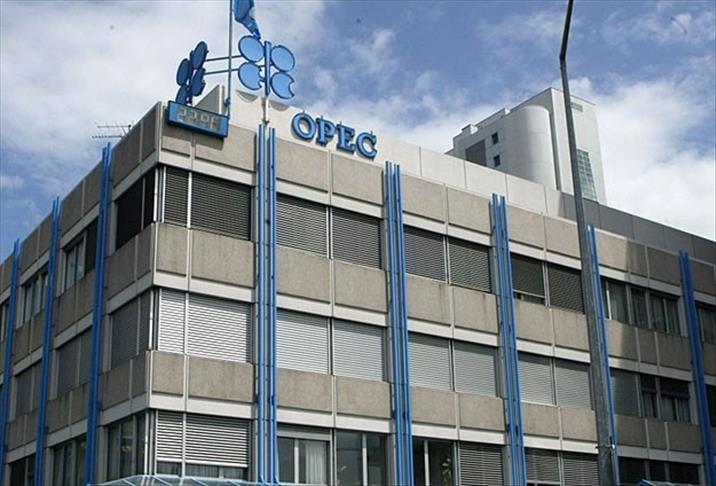
OPEC agreed to keep its oil production quota unchanged at 30 million barrels a day, the oil cartel announced Friday at the OPEC conference in Vienna, Austria.
"The conference agreed to maintain a ceiling of 30 million barrels a day,and urged member countries to adhere to it," Mohammed Bin Saleh Al-Sada, Qatar's minister of energy and industry and the alternate president of the OPEC Conference said at its 167th meeting.
"Member countries, in agreeing to this decision, confirmed their commitment to a stable and balanced oil market with prices at levels that are suitable for both producers and consumers," he said, according to a press release on OPEC's website.
In response to how member countries will act with respect to the production ceiling, Al-Sada said the 12-member group did not address individual quotas.
The Secretary General of OPEC, Abdalla Salem el-Badri, said that there is a commitment from all ministers of member countries to adhere to the 30 million barrels a day quota.
The oil cartel abandoned individual quotas on Dec. 2011, and adopted the collective quota system, in which the group set up a maximum volume for their total crude oil production.
Al-Sada said they project global GDP growth rate as 3.3 percent for 2015, and 3.5 percent for 2016, noting "world oil demand is forecast to increase in the second half of 2015 and in 2016, with growth driven by non-OECD countries."
Low global demand for oil and oversupply have been the two major factors behind the recent oil price slump.
Secretary General El-Badri said $100 per barrel oil prices are no longer around, and OPEC has to adjust to new prices.
"Now that the cycle is down, we have to accommodate ourselves accordingly. No more $100 per barrel for oil prices, we have to accept the current conditions as the fair price," he explained.
- Cartel cites role of speculators
During his opening address in the morning, Al-Sada said oil prices fell 60 percent between June 2014 and Jan. 2015, adding that some speculators played a role in that.
The energy minister said OPEC witnessed fluctuations in the global oil market since its last meeting last November with oil prices decreasing from $77 per barrel in Nov. 2014 to as low as $45 per barrel in January.
He added that global oil demand is expected to increase to 1.2 million barrels a day in 2015 from 2014's figure of one million barrels.
At its previous biannual meeting on Nov. 27, 2014, OPEC voted against cutting output despite falling oil prices, and decided to maintain a production quota of 30 million barrels a day.
OPEC agreed to hold its next meeting on Dec. 4, 2015 in Vienna, Austria.