By Gokhan Kurtaran
LONDON
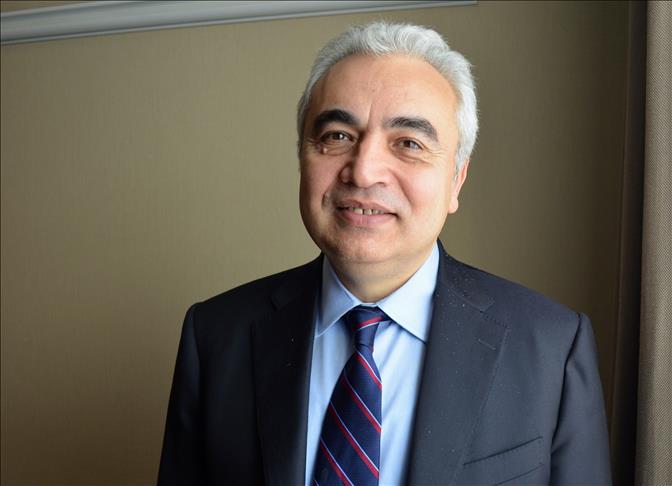
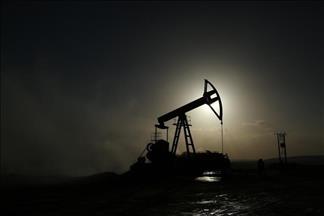
Turkey is to benefit from decreasing oil prices and can avail of at least a two year relaxing period, according to Fatih Birol, chief economist and director of Global Energy Economics at the International Energy Agency.
Birol speaking to The Anadolu Agency at the World Energy Outlook in London on Wednesday said that "the fall in oil prices would positively affect Turkey's current account deficit and relax the natural gas import market indexed to oil," adding that oil prices fell 20 percent compared to last year.
"Countries similar to Turkey, who import oil and gas, will also benefit from the oil price fall as their current deficit might rise to favorable levels," Birol said.
Global oil prices might start to increase for some time but will not last for long, according to Birol and said that one of the most important reasons for the price fall was the rise of shale oil in the U.S.
"If the oil price stays around $80, we expect a weakening in investments in the U.S. and if the price stays at this level, we expect a 10 percent fall in shale oil investments in 2015," he said.
Demand in oil will increase as the price falls, and this gain will create pressure on oil prices to rise again as U.S. oil production slows, Birol said. "There is at least a one to two year period to relax, although there might be an earlier surprise," he added.
Birol also analyzed the risks in Middle Eastern geopolitics and the effects it has over distributing the regions and Iraq's energy sources to international markets.
"The geopolitical situation in Iraq is complicated, but the establishment of a new government in the country and the more positive relations with neighbors including the Kurdish Regional Government and Turkey, compared to the previous government, make the situation seem hopeful," he said, adding "I think there is a softening between Baghdad and Erbil."
Iraqi Foreign Minister's visit to Ankara and Turkish Prime Minister's upcoming visit to Baghdad are positive developments for Turkey, Baghdad and Erbil, and if the ISIL situation in Iraq is resolved, Iraq will become a unique neighbor for Turkey, according to Birol because of the possibility of Turkey and Iraq conducting safe bilateral energy deals.
Birol, commenting on the tension between Turkey and Greece over energy sources in Cyprus and the surrounding region, said, "There are serious amounts of oil and gas reserves in the Eastern Mediterranean, but there is an important debate to be held as to who and how the resources will be extracted and how they will be introduced to international markets."
He said that his expectation is for all countries in the region to participate in the production and transfer and to enjoy the energy resources together.
Iran is one of the most important actors in the global energy market but the country cannot display its full potential as it has problems with the international community, according to Birol, although he believes this situation might change soon.
If Iran can resolve its struggle within the international community, it can once again influence oil and gas prices as an important player in the energy market. The first requirement, however, is to get a positive outcome from the P5+1 meeting in November, a group including the U.S., Russia, China, France, U.K. and Germany.
Birol said Turkey, as one of the closest neighbors to Iran and in which it shares a historic bond, can play a role in the positive changes. "It is important that Turkey's relations with Iran remain close," he said.
"Turkey will likely become an important partner in energy extraction and transfer if Iran's situation is resolved," he added.
Turkmen gas, alternative for Europe
The gas resources in central Asia are an important alternative for Europe who wants to decrease reliance on Russian gas, Birol said, adding "Turkmenistan is rich in natural gas and is an important candidate."
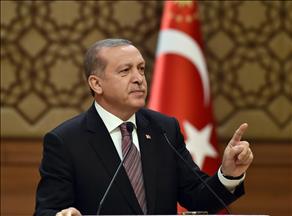
"Turkish President Recep Tayyip Erdogan's official visit to Turkmenistan and the two countries' closer relations give hope to energy politics between the two," he said.
Russia, although affected negatively by geopolitical risks in economy and the falling oil prices, will still remain important in global energy markets, according to Birol.
Russia is one of the most important energy countries in the world as it is rich in oil, gas and uranium but has both political and energy-related conflicts with Europe and other western countries.
Current sanctions on Russia have become a stumbling block for energy investments as it has two big issues. Firstly, the fall in oil prices badly affected Russia's economy as it pulls investments downward and secondly, because of the sanctions, Russia cannot avail of financial investments in energy from the international community.
www.aa.com.tr/en