09 May 2016•Update: 23 May 2016
By Gokhan Kurtaran
LONDON
Turkey has made a positive impact on the U.S.-based Standard & Poor’s with its stronger-than-expected growth performance, S&P Director and Sovereign Analyst Trevor Cullinan said Monday.
In an interview with Anadolu Agency in London, Cullinan explained Turkey’s credit rating at BB+ and upgraded outlook from “negative” to “stable”.
“We were concerned with regard to a sudden stop of external financing but it did not take place. That’s one of the main reasons why we moved the outlook back to stable,” he said.
“Turkey grew relatively strongly in 2015. Stronger than we had expected. This was despite heightened regional instability, weaker investment sentiment toward emerging markets, and a busy electoral calendar last year," he said.
Furthermore, Cullinan said the current account deficit saw considerable decline to 4.5 percent of the Gross Domestic Product because of lower oil prices.
“We reaffirmed Turkey’s BB+ foreign currency ratings. We still have a non-investment grade rating on Turkey. But, we no longer think there is a 30 percent chance of lowering the rating. Now, we believe that we will keep the rating where it is over the next 12 months,” he said.
However, he noted that the current rating was one notch below the investment grade and there was much to do before it is upgraded a notch higher, noting that such a feat was likely a medium-term target and would be difficult to achieve in the short run.
“If a sustained economic re-balancing takes place, lowering the external borrowing needs of the economy, in very basic terms, it means significantly lowering the current account deficit and possibly paying back part of the external debt,” Cullinan said.
“This is one reason why we could raise the rating in the future. But, this is a medium-term prospect for Turkey,” he added.
Highlighting the resilience of Turkey’s economy in the face of significant shocks, Cullinan said that they expect Turkey to be a destination for capital inflows from abroad in the near term even if some other economic challenges arise.
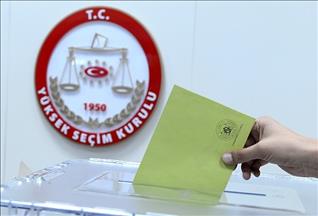
“We think the domestic political uncertainty will continue. So that’s factored into our ratings. We believe that there could be early elections, or a referendum. We think that some constitutional changes could take place by the end of this year. We expect that external investors will continue to fund the Turkish economy even given that level of uncertainty,” he said.