Alyssa Mcmurtry
12 August 2026•Update: 12 August 2026
Spain is gearing up Wednesday for the country's first total solar eclipse in more than a century, with the moon set to completely cover the sun over large parts of the country in the evening.
Beginning just before 8.30 pm local time (1830GMT), sudden darkness will cloak parts of the country, beginning in the northwestern regions of Asturias and Galicia and progressing toward the Balearic Islands in the Mediterranean within a matter of minutes.
Those at the center of the moon's shadow will not only experience the rapid onset of darkness but also a temperature drop of around 5C (9F), according to NASA.
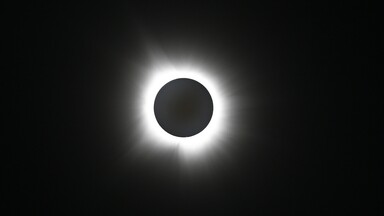
If skies are clear, observers will also be able to see the sun's outer atmosphere—the corona—which is otherwise too dim to see against the bright sun.
While the gradual covering and uncovering of the sun by the moon will last nearly two hours, totality over Spain will last less than two minutes.
Parts of Greenland, Iceland, and a small area of Portugal will also experience the total eclipse, while other parts of Spain and Western Europe will see a partial eclipse.
This is the first total solar eclipse visible from central or western Europe since 1999. The last total solar eclipse visible from peninsular Spain was in 1912.
However, those in Spain will not have to wait another century to see one, as the country is at the beginning of a rare trilogy of eclipses.
Next August, southern Spain, including the cities of Cadiz and Malaga, will experience a total eclipse. Then, in January 2028, an annular eclipse – when the moon passes directly between the Earth and the sun but does not completely cover it – will be visible over major cities including Seville, Malaga and Valencia.
Travel, fire concerns
The spectacle is also expected to put unusual pressure on Spain's roads and emergency services as large numbers of people travel to viewing locations shortly before sunset.
Spain's traffic authority has introduced special measures for Wednesday and urged people to avoid unnecessary travel by private vehicle in areas along the eclipse route. Authorities are particularly concerned about sudden stops on roads and drivers attempting to watch or photograph the eclipse from their vehicles.
Wildfires are another major concern. On Tuesday, Spain's weather agency warned of "very high or extreme" wildfire risk across a large part of the country.
Officials have warned people not to light fires or barbecues, discard cigarettes, or leave glass and other objects that could contribute to a fire. Dozens of natural areas are also being closed to reduce the risk of fires.
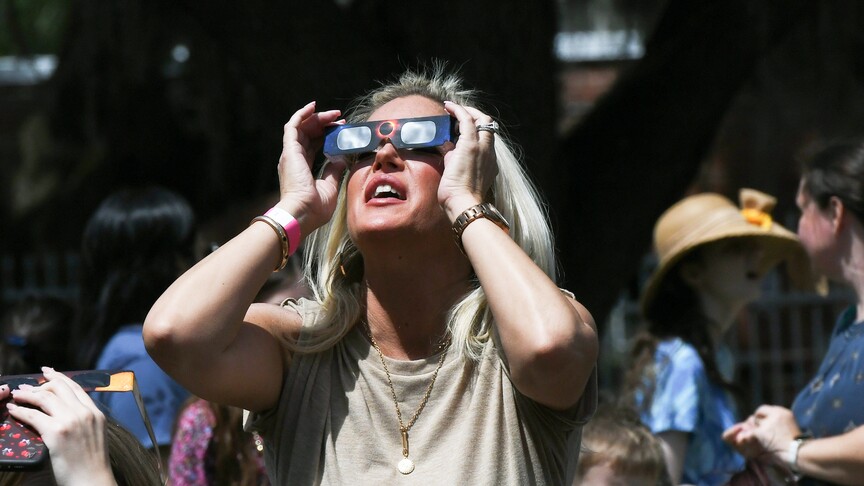
Authorities have also repeatedly stressed another safety rule: People should not look directly at the sun without certified eclipse glasses during the partial phases of the event.
Ordinary sunglasses do not provide adequate eye protection, while cameras, binoculars and telescopes require appropriate solar filters. Even so, regions including Asturias have adopted health protocols to prepare medical professionals to treat possible eye injuries.