Elena Teslova
29 May 2026•Update: 29 May 2026
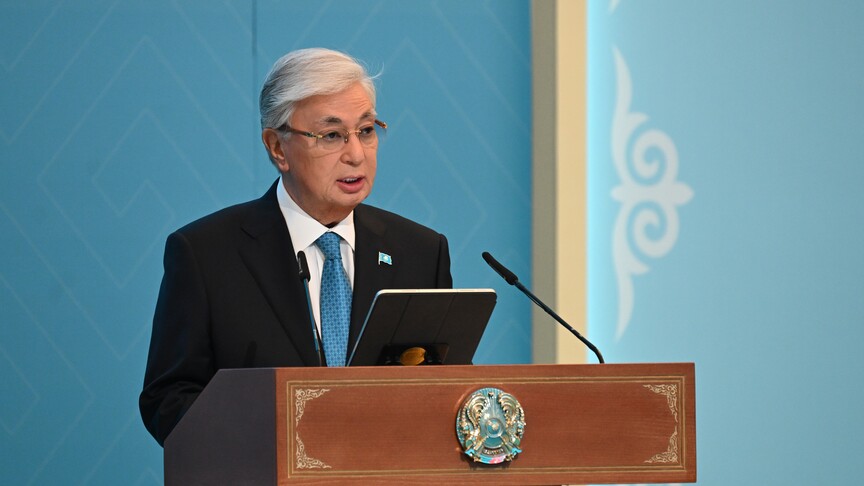
Trade turnover within the Eurasian Economic Union (EAEU) is expected to exceed $100 billion this year, Kazakh President Kassym-Jomart Tokayev said on Friday.
Speaking at a meeting of the Supreme Eurasian Economic Council in Astana, Kazakhstan's capital, Tokayev said mutual trade among EAEU member states surpassed $95 billion in 2025 despite global market instability and volatility. He said trade within the bloc is projected to grow by more than 6% this year.
“In the current year, we expect an increase in the volume of mutual trade by more than 6%, which will make it possible to overcome the $100 billion mark,” the Kazakh leader said.
Tokayev also noted that the EAEU’s combined GDP is forecast to grow by around 2.5% in 2026-2027.
Russian President Vladimir Putin said at the summit that the EAEU continues to attract growing international attention, with countries and regional organizations showing interest in expanding cooperation with the bloc.
“Many foreign states and major regional structures, such as the Commonwealth of Independent States, the Shanghai Cooperation Organization, and the Association of Southeast Asian Nations, are interested in developing ties with the ‘five,’” he said.
Putin added that negotiations on trade liberalization between the EAEU and India had intensified, while agreements had already been signed last year with Mongolia, the United Arab Emirates, and Indonesia.
For his part, Belarusian President Alexander Lukashenko urged member states to fully implement the “Eurasian Economic Path” development plan without delays or references to “objective reasons.”
“We are creating the union precisely to overcome risks and all kinds of difficulties,” Lukashenko said.
He also warned that member states face the task of preventing artificial intelligence from becoming “a weapon of mass destruction.”
Meanwhile, Kyrgyz President Sadyr Japarov said new trade agreements between the EAEU and foreign partners could create significant opportunities for producers and exporters across the bloc.
“It is extremely important that agreements within these deals do not remain on paper but actually work, simplify procedures, accelerate the movement of goods, and make markets more accessible,” Japarov said.
Meanwhile, Armenian Deputy Prime Minister Mher Grigoryan said Yerevan intends to continue participating in the EAEU while taking into account the national interests of all member states.
“We have repeatedly confirmed Armenia’s commitment to mutually beneficial cooperation within the Eurasian Economic Union,” Grigoryan said at the summit.
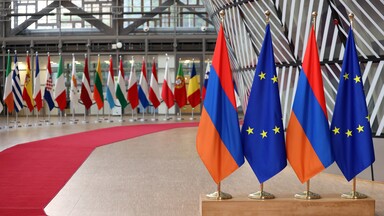
The remarks came amid growing scrutiny over Armenia’s ties with the EU and debate within the bloc over the incompatibility of Armenia's membership in both economic blocs simultaneously.
On the sidelines of the meeting, Kremlin aide Yury Ushakov told reporters that the leaders of four EAEU countries adopted a joint statement at the summit and handed it to Grigoryan.