Elena Teslova
28 May 2026•Update: 28 May 2026
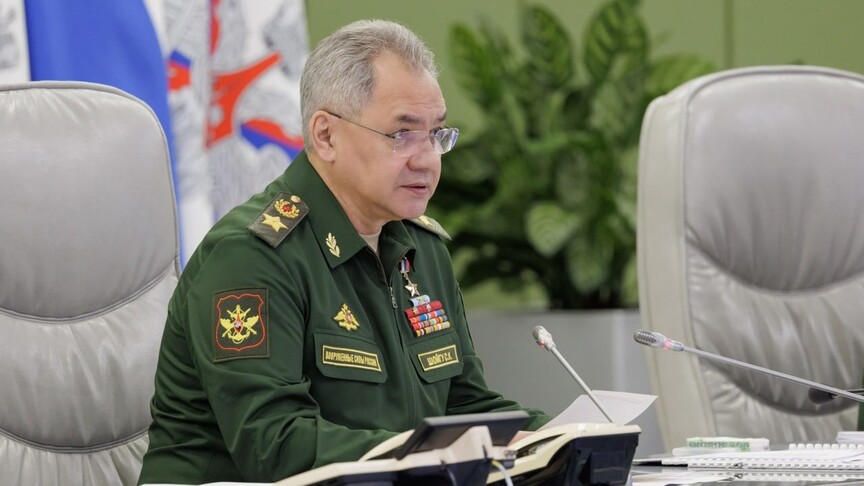
Russian Security Council Secretary Sergey Shoigu said Thursday that a strike on Kyiv, which Moscow previously warned about, could take place “at any moment.”
Shoygu said Russia had already demonstrated the capabilities it could employ in the strikes.
“We warned in advance what kind of strike could be carried out, and we have already shown the force that could be used,” Shoygu said at a news conference at the International Security Forum in the Moscow region, adding that anyone believing Russia had exhausted its military capabilities was “deeply mistaken.”
He also stressed that Russia’s warning that advised foreign ambassadors to leave Kyiv had been made “seriously and consciously.”
The remarks came amid heightened tensions following Russian strikes on Ukrainian military-industrial infrastructure, which Moscow called “a response” to Ukraine's attacks on civilian targets in Russia.
Addressing Armenia-related issues, Shoygu said Moscow saw no indications that Russia’s military base in Armenia could be closed despite recent political developments in Yerevan.
“The base is functioning and operating normally, and we do not currently see any prerequisites or threats that would lead to its removal,” he said.
Shoygu also commented on the recently signed strategic partnership framework agreement between Armenia and the US under the Trump Route for International Peace and Prosperity, or TRIPP initiative.
He suggested the agreement resembled “support for an election campaign” to the current government rather than a fully developed strategic partnership.
On May 26, Armenian Foreign Minister Ararat Mirzoyan and US Secretary of State Marco Rubio signed the agreement during Rubio’s visit to Yerevan. Armenia is due to hold parliamentary elections on June 7.
Shoygu also said Russia had drawn lessons from recent events in the Persian Gulf, particularly regarding the need to establish emergency reserves of medicines, vaccines and other critical supplies.
He warned that instability in the Middle East and disruptions linked to Western actions in the region could have global consequences, including worsening food shortages in Africa.
“Millions of people could face hunger,” he said, arguing that crises in the Persian Gulf affect international food and energy markets worldwide.