Burç Eruygur
23 July 2026•Update: 23 July 2026
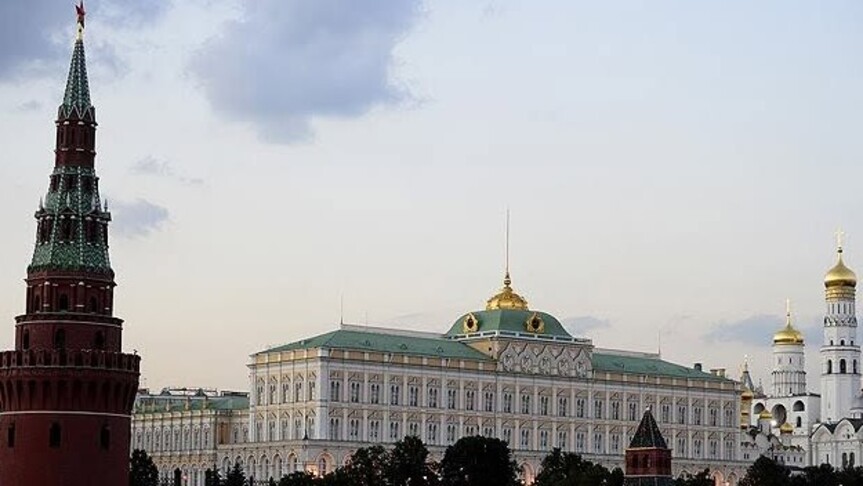
The Kremlin on Thursday denied an “acceleration” of the peace process surrounding the Russia-Ukraine war despite ongoing contacts between Moscow and Washington.
In remarks to journalists during a press briefing, Kremlin spokesperson Dmitry Peskov argued that although he would not be “overly optimistic,” contacts between Russia and the US on a settlement in Ukraine are being established.
“That's always positive, but there's no point in talking about any new momentum or acceleration right now,” Peskov said.
Peskov expressed that Moscow is continuing its dialogue with Washington through existing working channels, and that they hope to continue in-person dialogue with the US side when American negotiators are “freer.”
He reiterated that Russia remains open to negotiations on a Ukrainian settlement, but claimed Kyiv is “being further incited by European capitals to continue the war.”
“We are also continuing our ‘special military operation,’ where we are seeing positive dynamics," Peskov added.
The spokesperson’s remarks come after Russian Foreign Minister Sergey Lavrov and US Secretary of State Marco Rubio held in-person talks in the Philippines' capital Manila, which is hosting a summit of the Association of Southeast Asian Nations.
The talks in Manila were the first official meeting between Lavrov and Rubio since they met on the sidelines of the 80th session of the UN General Assembly in New York in September last year.
Meanwhile, the most recent contact between Lavrov and Rubio took place in a May phone call.
Under US mediation, Russia and Ukraine held three rounds of peace talks in January and February in a bid to find a settlement for the armed conflict, which is now in its fifth year.
Negotiations have since been paused, with Moscow and Kyiv attributing the halt to the US focus on Iran and the armed conflict in the Middle East which began on Feb. 28.
Non-proliferation
Peskov also commented about non-proliferation, saying that Russia's position in this regard is "well known."
"This applies to nuclear weapons. And everyone also knows our position on the right of every state to peaceful nuclear energy. Iran should have this right, Saudi Arabia should have this right, and so should other states," he added.
His remarks come as the US Energy Department said Wednesday that the US and Saudi Arabia had signed a nuclear cooperation agreement, commonly known as a 123 Agreement, along with a bilateral safeguards agreement.
The agreements establish the legal basis for a "decades-long, multi-billion-dollar partnership" that advances commercial ties, energy cooperation and nuclear nonproliferation objectives," according to a corresponding statement.