Beyza Binnur Donmez
01 October 2026•Update: 01 October 2026
Russia would respond to “any action” threatening its sovereignty or targeting civilians in Kaliningrad, a senior Russian diplomat said Thursday amid heightened tensions between Moscow and NATO over the Russian exclave.
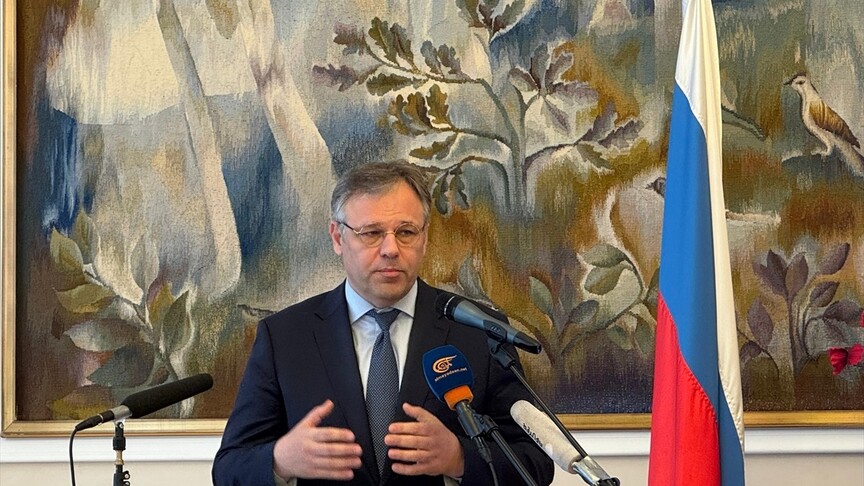
“Any threat to the sovereignty or any targeted attack against the civilian population of the Russian Federation, including in Kaliningrad, should merit a response without limits when it comes to protecting our sovereignty and our population,” Rodion Miroshnik, ambassador-at-large at the Russian Foreign Ministry, told reporters in Geneva.
“Any action that is threatening our sovereignty will be met with a rigid response,” he said at a meeting at the Russian Embassy.
Asked whether a blockade of Kaliningrad would be among such red lines, Miroshnik reiterated that “any action” against Russia's civilian population would be regarded as a threat to its sovereignty.
“Kaliningrad doesn't differ from any other region of the Russian Federation,” he said, adding that it “means the same protection as the rest of the country.”
The remarks came after Russia warned NATO that it could resort to nuclear weapons if the alliance attempted to cut off Kaliningrad, a Russian exclave on the Baltic Sea between NATO members Poland and Lithuania.
NATO Secretary General Mark Rutte confirmed Wednesday that the alliance had received a Russian communication but declined to disclose its exact contents.
He urged Moscow to “stop the nuclear threat” and stressed that NATO is a defensive alliance.
Russian President Vladimir Putin also ordered measures to ensure Kaliningrad's security, according to Kremlin adviser Nikolai Patrushev, who warned of an “appropriate and immediate response” to any aggressive action.
Separately, asked about Russia's preferences in the ongoing selection of the next UN secretary-general, Miroshnik said he could not characterize which candidate would be “more acceptable” or “less acceptable” to Moscow.
However, he said Russia “would like the next secretary-general not to act in the same way as Mr. (Antonio) Guterres.”
Guterres' second term ends on Dec. 31, with his successor set to take office in January 2027.