- 'Türkiye is still a loyal ally of Europe - Turkish troops help defend Europe’s borders,' Timothy Ash tells Anadolu
- 'Europe’s current limitations in defense and economic strategy make cooperation with Türkiye more necessary, not less,' Riccardo Gasco adds
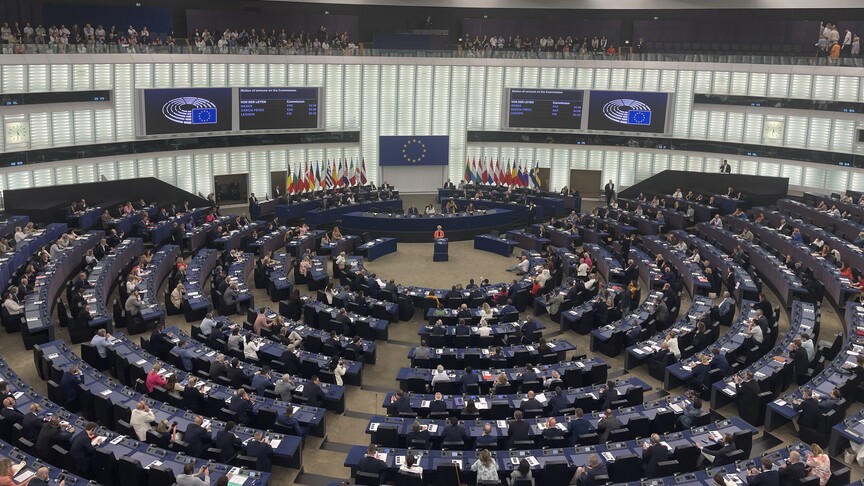
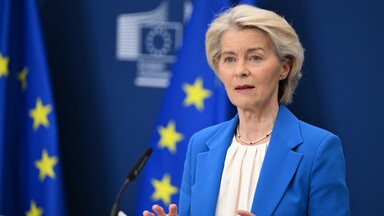
European Commission President Ursula von der Leyen's latest remarks suggesting the European Union must "complete the European continent so that it is not influenced by Russia, Türkiye, or China" have drawn widespread criticism from analysts.
Speaking at an event marking the 80th anniversary of the German newspaper Die Zeit in Hamburg, von der Leyen reiterated her support for EU enlargement while grouping Türkiye alongside Russia and China.
"We must succeed in completing the European continent so that it is not influenced by Russia, Türkiye, or China," she said.
The remarks prompted clarification from the European Commission, which stressed that Türkiye is "unquestionably an important partner" both economically and politically, and that its mention reflected its geopolitical weight rather than any direct comparison.
An EU Commission spokesperson underlined Türkiye's role in strategic areas such as connectivity initiatives, including the Trans-Caspian Middle Corridor, migration management, and its status as a NATO ally and EU candidate country, describing Ankara as a "key interlocutor."
Experts, however, expressed strong criticism over the tone and implications of the statement.
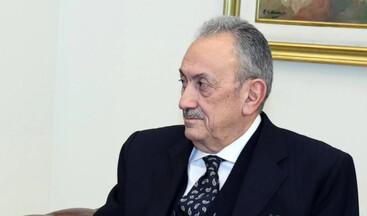
"Frankly I think this is an extraordinary statement," Timothy Ash, associate fellow at Chatham House, told Anadolu, emphasizing that Türkiye remains a loyal NATO ally and EU candidate.
He noted that Turkish forces contribute directly to Europe's security, saying: "Türkiye is still a loyal ally of Europe - Turkish troops help defend Europe’s borders."
"In an environment where Europe faces an existential threat from Russia, and the US backstop is weak/uncertain, surely Türkiye with its strong military and military industrial complex can help fill gaps in Europe's defense," Ash noted.
The European Union continues to face significant challenges in building an effective and unified defense and security capacity, limiting its ability to act independently in an increasingly volatile geopolitical environment.
Despite initiatives under the Common Security and Defense Policy, the bloc remains constrained by fragmented military structures, uneven defense spending, and divergent strategic priorities among member states.
Analysts note that the EU still relies heavily on NATO, particularly the US, for critical capabilities such as intelligence, strategic transport, and deterrence, underscoring a persistent gap between political ambition and operational readiness.
"Türkiye has the largest land army in European NATO, a well-developed military industrial complex and particular specialism in drones. It is insane for von der Leyen to insult Türkiye in such a way given Türkiye surely should be integral to Europe's defense," Ash said.
'Politically counterproductive, strategically shortsighted'
Riccardo Gasco, foreign policy coordinator at the think tank IstanPol, said the remarks reflect the EU's persistent ambiguity toward Türkiye.
While Brussels increasingly recognizes Ankara's importance in security, defense, migration, and regional diplomacy, parts of the EU continue to frame it as a geopolitical influence to manage rather than a partner to integrate.
"This is problematic because Europe’s current limitations in defense and economic strategy make cooperation with Türkiye more necessary, not less. Further distancing Türkiye would be politically counterproductive and strategically shortsighted," Gasco told Anadolu.
"Türkiye remains a candidate country, a NATO ally, and an important actor for Europe’s wider security architecture," he noted, adding that the use of dismissive language toward a country that formally retains EU candidate status is not constructive, especially as Europe debates enlargement, security and its future geopolitical direction.
Messaging within the EU appears divided, as the Commissioner for Enlargement Marta Kos recently told European lawmakers that the bloc "needs Türkiye in light of the changing geopolitical realities in Europe and the Middle East."
"They are the EU's fifth largest trading partner, with a trade volume twice as high as that with Mercosur or India. It is essential for trade routes between Europe and Asia. And any peace settlement for Ukraine will need Türkiye (NATO's second army) as we will be faced with a new security environment in the Black Sea region," Kos added.
Gasco noted that differing messages from von der Leyen and Enlargement Commissioner Marta Kos illustrate an internal duality within the EU.
One approach remains cautious and politically driven, shaped by longstanding tensions, while the other is more geopolitical and interest-based, recognizing that "cooperation with Türkiye cannot be postponed."
"This is why EU policy often appears inconsistent," he said. "Strategic necessity is pushing for engagement, while political hesitation continues to hold it back."