Catalan president fails to win parliament's support
Personal setback for Artur Mas comes after Spain's Constitutional Court stymies parliament's independence declaration
By Alyssa McMurtry
MADRID
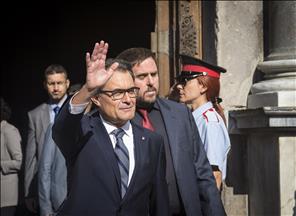
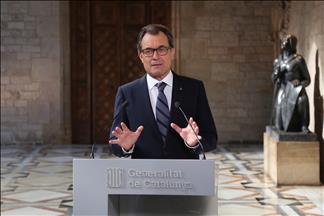
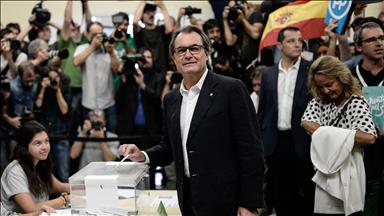
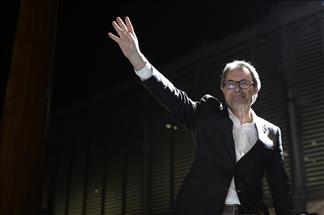
Artur Mas, the current president of Catalonia who is spearheading the region’s independence drive, has failed to form a local government with himself as the leader.
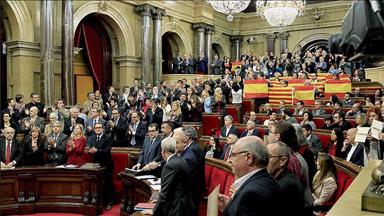
Despite presenting himself as the independence movement’s biggest asset, he failed to win majority backing after two rounds of voting in the separatist-run parliament.
His appeals were made to the Popular Unity Candidacy (CUP), a left-wing, separatist party which holds the key to Mas’ political future. However, they remained unconvinced and he lost 62-72 in Thursday’s second round of voting.
The results of Tuesday’s first round of voting were the same.
The 62 votes that Mas received were from Junts pel Si, the separatist coalition that Mas is part of. To continue being leader he needs nine votes from the CUP, which supports Junts pel Si for independence, but had promised not to vote for Mas.
Mas comes from a center-right political party which has been dealing with allegations of corruption, so the radically left CUP is reluctant to support him.
In attempts to seduce CUP’s vote, Mas said this week that, if elected, he would act only as a temporary president for 10 months while they worked on securing Catalonia’s independence. He also said he would have three vice-presidents, two of which would come from leftist parties.
“Our vote is a calm ‘no’ with the certainty that the debate won’t run out this morning,” said Antonio Banos, CUP leader.
Now the Catalan government has a two-month period to come to an agreement. If a leader cannot win the majority of votes by then, new elections will be forced – something the separatists want to avoid at all costs. The latest elections were held on Sep. 27.
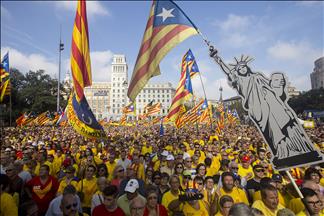
The Catalan separatists have kick-started a historic process of independence. On Monday, the regional parliament approved a motion to begin the creation of an “independent republic”.
However, this attempt has fallen foul of the Spanish Constitutional Court which on Wednesday evening unanimously decided to suspend the independence resolution, creating a legal headache for the separatist parties.