Merve Berker
11 April 2026•Update: 11 April 2026
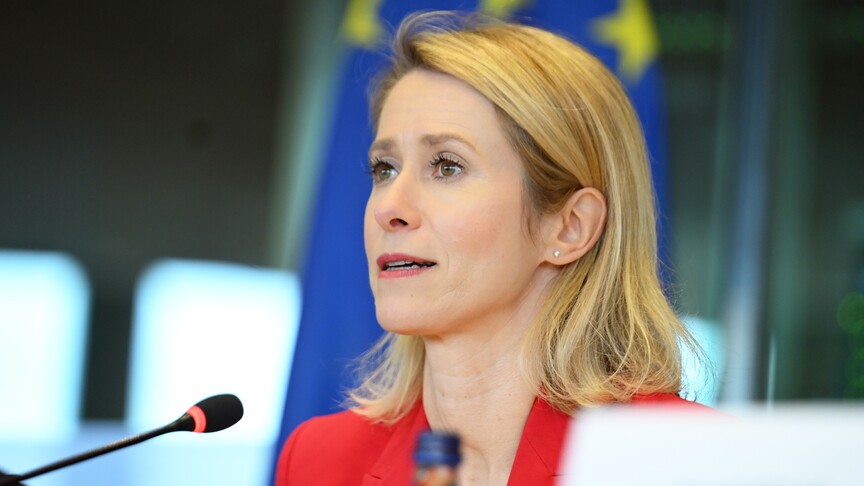
EU foreign policy chief Kaja Kallas said Europe has not received sufficient support from Gulf countries over Russia’s war on Ukraine, stressing that cooperation among allies must be mutual, not one-sided.
“We haven’t seen … the Gulf countries helping us there,” Kallas said in an interview with CNN on Friday, referring to the Russia-Ukraine war. “It can’t be only one-way street.”
Kallas said Europe neither started the US-Israeli war on Iran nor caused the closure of the Strait of Hormuz, defending the bloc’s role in regional security amid criticism of EU inaction to ease tensions.
“Let’s be honest, we haven’t created the situation,” Kallas said.
She said the EU is “doing a lot for the region,” pointing to naval operations aimed at keeping the Red Sea open, as well as support for Lebanese armed forces and backing for a two-state solution and the Palestinian Authority.
Kallas added that the EU has also contributed through air defense systems and other security measures, arguing that criticism of Europe’s role is “really unfair.”
She also noted that some countries have helped circumvent sanctions on Iran, warning such actions could have broader security implications.
Kallas said stronger coordination is needed among partners, adding that adversaries appear to be acting together more effectively.
Addressing transatlantic relations, she said NATO remains the cornerstone of collective defense.
“NATO is the strongest defense alliance there is in the world, and we need to keep it that way,” she said.
Kallas warned that internal disagreements and misunderstandings risk weakening the alliance, noting that “when we are not together, we are both weaker.”
She also highlighted Europe’s past military contributions, saying: “Hundreds of thousands of European soldiers fought … because the US asked us to,” referring US operations in Afghanistan and Iraq, describing criticism of those efforts as “not true and not fair.”
Despite tensions, however, Kallas said cooperation between the EU and Gulf countries is strengthening, particularly in the fields of security and defense.
She said ongoing dialogue has revealed “more cooperation points,” describing the partnership as “beneficial” for both sides.
Kallas emphasized that, in a volatile global security environment, maintaining unity among allies remains essential to ensuring stability and addressing shared challenges.
Regional tensions escalated after the US and Israel launched an offensive against Iran on Feb. 28.
Tehran retaliated with drone and missile strikes targeting Israel and US assets in the region, and restricting the movement of ships through the Strait of Hormuz.
Pakistan, together with Türkiye, China, Saudi Arabia and Egypt, managed to secure a two-week ceasefire between Washington and Tehran this week, 40 days after the war began.
As part of the deal, the two sides are meeting in Islamabad on Saturday for talks to negotiate a lasting peace.