Melike Pala
28 May 2026•Update: 28 May 2026
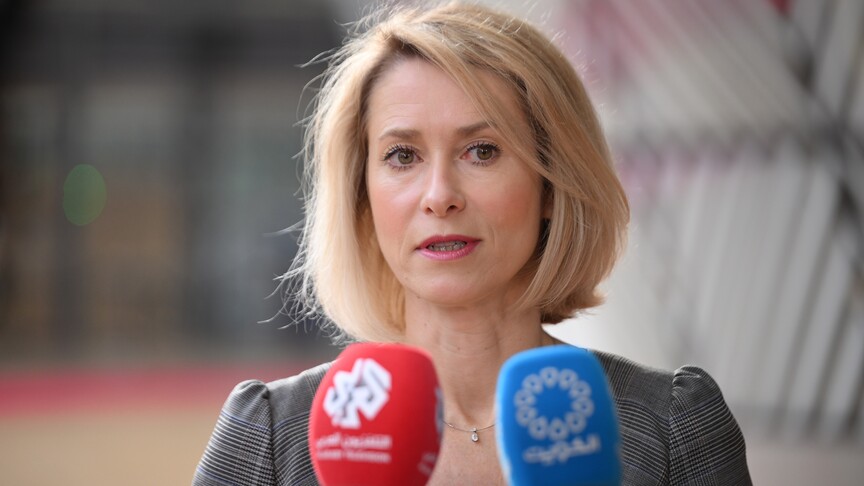
EU foreign policy chief Kaja Kallas said Thursday that Europe "will never be a neutral mediator" between Russia and Ukraine, stressing that the bloc is firmly on Kyiv's side as it seeks to increase pressure on Moscow.
"One thing is very clear: Europe will never be a neutral mediator between Russia and Ukraine because we are on Ukraine's side and we are defending our own core security interests," Kallas told reporters after an informal meeting of EU foreign ministers in Limassol, the Greek Cypriot Administration.
At the same time, she emphasized that Ukraine and Russia would ultimately need to negotiate directly.
"It is very important that we push Ukraine and Russia to talk to each other, because there are so many issues where only they can decide and nobody else. There can be countries that do this shuttle diplomacy, but in the end, it has to be them who sit down on these issues that only they can decide," Kallas said.
Kallas said that EU ministers held "really thorough discussions" on what concessions Europe could ask from Moscow and what the bloc’s "red lines" should be in any future negotiations.
"Limiting Ukraine's military while Russia re-arms, which directly threatens European security. If there are gaps for Ukraine's army, there must also be limitations for Russia's," she said.
She noted ministers also discussed ways to increase global pressure on Russia, arguing that too many countries continue doing business with Moscow while benefiting from access to European markets and investments.
"Europe must use its leverage more effectively when it comes to trade, investment, market access, and partnerships," she said, noting that the EU is preparing a new package of sanctions against Russia.
Kallas also stressed that EU efforts must remain "complementary" to those of the United States.
"We are not coming in instead of the United States, but we are actually addressing the issues that they haven't been addressing in these talks," she said.
Middle East
Beyond Ukraine, EU ministers discussed the situation in the Middle East, including tensions involving Iran, the Strait of Hormuz, Lebanon, Gaza, and the occupied West Bank.
Kallas warned that the Strait of Hormuz remains "caught in a dangerous gray zone between war and peace," while saying the EU could contribute technical expertise to any future nuclear negotiations involving Iran.
She said ministers discussed Lebanon, where the ceasefire "appears to be more nominal by the day," warning that a return to full-scale war is "a real possibility."
Kallas added that possible restrictions on trade linked to Israeli occupiers, as well as potential sanctions on some Israeli ministers, were also discussed following Israeli Cabinet Minister Itamar Ben-Gvir's ill-treatment of Gaza-bound humanitarian flotilla activists, as several member states urged the bloc to take action.
However, the top diplomat noted that the informal Gymnich-format meeting was not intended for formal decisions and that the issue would return to the agenda during the upcoming Foreign Affairs Council meeting in Luxembourg.