Voters in the eastern German state of Mecklenburg-Vorpommern on Sunday are electing a new state parliament, with Premier Manuela Schwesig’s center-left Social Democrats (SPD) and the right-wing Alternative for Germany (AfD) running neck and neck.
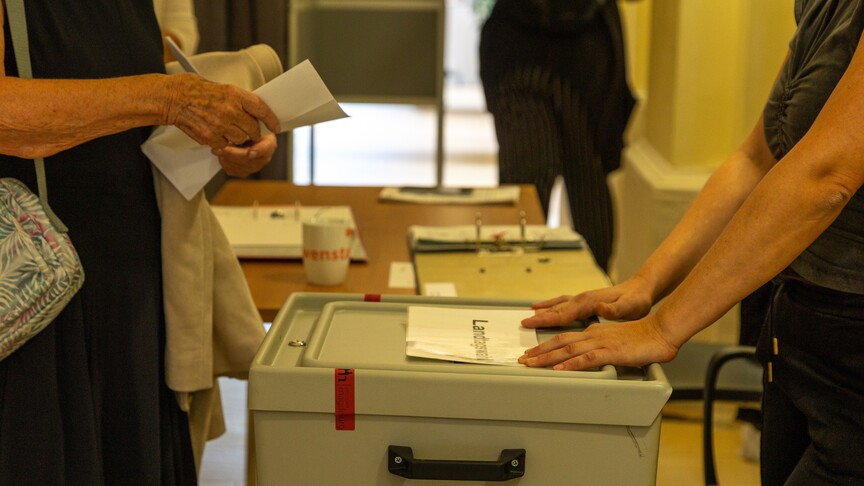
As polling stations opened, about 1.3 million people are eligible to vote, including 16- and 17-year-olds taking part in a state election there for the first time. Polling stations opened at 8 am and will close at 6 pm local time (0600-1600 GMT). First projections, based on exit polls, are due as soon as the stations close.
Turnout by 2 pm local time was running well ahead of the last state election. The local election office said 40.7% of eligible voters had cast ballots by then, compared with 32.5% at the same time in 2021 — an 8.2-point jump in a polarized contest.
The ballot comes two weeks after the anti-immigrant AfD won 43.8% in Saxony-Anhalt, its strongest showing ever in a German state. Sunday’s result will be closely watched to see whether that surge holds in another eastern region. Berlin is also holding a state parliament election the same day.
The latest pre-election poll by public broadcaster ZDF put the SPD at 37% and the AfD at 36% — a one-point lead after months in which the AfD had been ahead.
The socialist Left Party stood at 9%, and Chancellor Friedrich Merz’s conservative CDU at 6%, just one point above the 5% threshold for entering the state parliament.
The environmentalist Greens were at 5%, followed by the left-populist Sahra Wagenknecht Alliance (BSW) at 4%. Some 21% of respondents were unsure.
What’s at stake
Mecklenburg-Vorpommern is a thinly populated state on the Baltic Sea, with Schwerin as its capital. The SPD has governed there since 1998 with various partners.
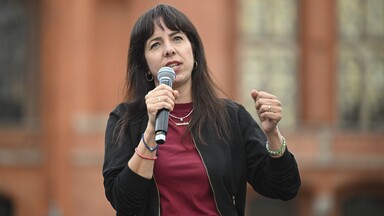
Social Democrat Manuela Schwesig has been premier since 2017. In the 2021 election, her party won 39.6% and formed a coalition with the Left Party, her junior partners in Schwerin.
Her popularity extends beyond the party’s grassroots base, and a recent ZDF survey found that 61% would back her if the premier were elected by direct vote, compared with 30% for her AfD challenger.
Schwesig has made preventing an AfD majority the centerpiece of her campaign. She has said the choice is a strong SPD and a democratic coalition, or an AfD victory that would bring “extremists to power.”
The AfD’s candidate for premier, Leif-Erik Holm, has been a member of the German parliament since 2017 and also serves as the party’s economic spokesperson.
His campaign has focused on social and economic problems, and he has often accused the SPD-led government of having a “disastrous record.”
He said 28 years of SPD rule is enough and that the state needs change under an AfD government.
The AfD program for the state is titled “Ready for the Blue Turn,” a reference to the party’s signature blue color. It promises economic relief while setting out a harder line on migration.
It urges an “admission stop” and the “remigration” of Syrian refugees living in the state — a contested term used on the far right for the large-scale returns of migrants.
The party also wants the state's own border and deportation police, more state detention facilities for people awaiting removal, and a “task force against foreign offenders.”
It would ease gun laws and drop some police paperwork for checks carried out without suspicion.
On energy, it advocates a return to nuclear power and the abolition of Germany’s carbon tax.
Possible coalition scenarios
The tight race between the SPD and AfD, together with uncertainty about whether smaller parties will clear the 5% threshold, has made coalition forecasts difficult.
Neither the SPD nor the AfD is expected to win an outright majority in the state parliament, meaning either would need partners to form a government.
If the SPD finishes first, polls suggest renewing its coalition with the Left Party would still fall short of a majority. But if the Greens clear the 5% threshold, a three-way SPD–Left Party–Greens alliance could command a majority and is widely seen as the most plausible outcome.
If the AfD comes first but falls short of a majority, its path to power is unclear. The SPD, CDU, Greens, and Left Party have all committed to a “firewall” — refusing coalition talks with the AfD.
The Sahra Wagenknecht Alliance (BSW) said it is open to negotiations, but only on the condition that an independent, nonparty premier leads the government. It is an untested approach following similar debates in Saxony-Anhalt.
Test for Merz
In Berlin, Sunday’s result will be seen as a barometer of the national mood and of whether Merz can hang on as chancellor as his support has slid to historic lows.
In Mecklenburg-Vorpommern, the CDU is polling at around 6% and risks falling below the 5% threshold needed to enter the state parliament — a result that would leave the party without seats in Schwerin for the first time since the country’s 1990 reunification.
Even if it clears the hurdle, anything under 9% would mark the CDU’s weakest-ever postwar performance in a state election. The party finished first here in both 1990 and 1994.
Merz has canceled a planned trip to New York for the UN General Assembly debate so he can remain in the capital during and after the votes.
The chancellor and senior CDU leaders are scheduled to meet at party headquarters late Sunday, with broader deliberations continuing Monday. CDU lawmakers and their Bavarian sister party, the CSU, are due to gather two days later to discuss the outcome.
Speculation about a possible leadership challenge has been building for weeks.
On Wednesday, however, all eight CDU state premiers issued a statement backing Merz ahead of the elections in Mecklenburg-Vorpommern and Berlin.
Political observers said a strong AfD showing, coupled with another historic defeat for the CDU, could still trigger a leadership fight in the coming days.
A bid to change the CDU’s leadership would not automatically dissolve the German parliament or trigger a snap election.
If party pressure forces Merz out, lawmakers could also elect a new chancellor without a nationwide vote.