Oliver Towfigh Nia and Necva Tastan Sevinc
10 September 2026•Update: 10 September 2026
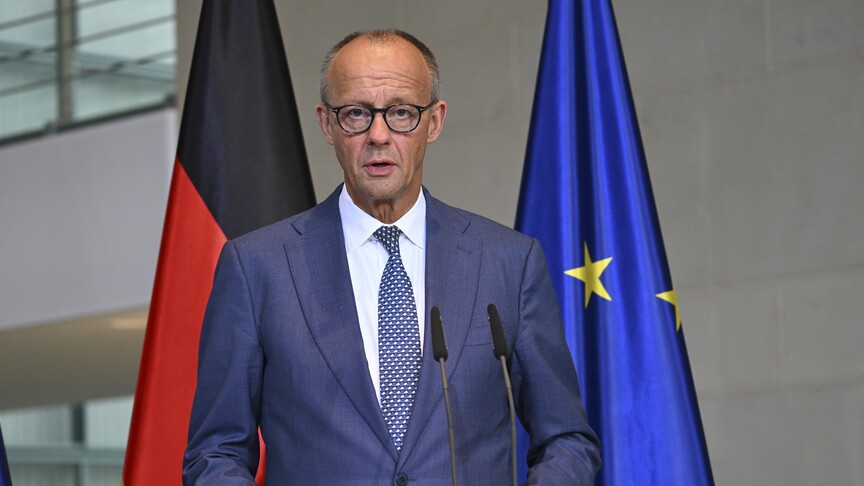
German Chancellor Friedrich Merz said Wednesday that he saw no signs that Russia was prepared to end the war in Ukraine, despite the latest US diplomatic initiative.
“At the moment, we have little indication that the Russian government or the Russian president is ready to enter into serious talks about ending the war,” Merz said at a press briefing with European Council President Antonio Costa in Berlin.
“We have been making this offer for months. The federal government—and I personally—are committed to using every means at our disposal to facilitate a diplomatic solution here. But as long as the Russian government remains closed to all requests for dialogue, negotiations and diplomatic solutions, I see relatively little chance of achieving that at the moment,” he added.
Merz vowed, however, to step up diplomatic efforts to end the war in Ukraine, saying “we will not waver in our efforts to reach a diplomatic solution here.”
“Everything we do to support Ukraine is not intended to prolong the war, but rather to bring it to an end—and our support is part of that. However, this also includes exhausting all diplomatic options currently available to us,” he added.
Germany has been one of Ukraine’s strongest military backers since the war broke out in February 2022, providing advanced weapons systems, ammunition and substantial financial aid and joining Western sanctions against Moscow.
Costa, for his part, called on Russia to end the war and reaffirmed the bloc’s long-term support for Kyiv.
“It is time for Russia to end this war, not to escalate or extend it,” he said.
“The European Union will continue to support Ukraine for as long as it is needed during the war, in any negotiations, in reconstruction, and on its path to the European Union,” he added.
Costa also condemned recent hybrid activities across Europe, including drone incidents, sabotage and attacks on cables and critical infrastructure.
He said Germany had been “on the front line of this new reality,” citing an attempted Russian drone attack at Leipzig and other recent incidents, and expressed the EU’s full solidarity with Berlin.
“Russia must understand that these threats will not change the European Union’s position on Russia’s war of aggression against Ukraine,” he said.
Costa also praised Germany’s increased investment in security and defense, saying the country plays “a fundamental part in Europe’s growing efforts to shoulder its own common defense.”