İlayda Çakırtekin
22 July 2026•Update: 22 July 2026
Italy’s foreign minister announced Wednesday that Rome will host a meeting on July 28-29 on the two-state solution for the Middle East, according to Sky Tg24.
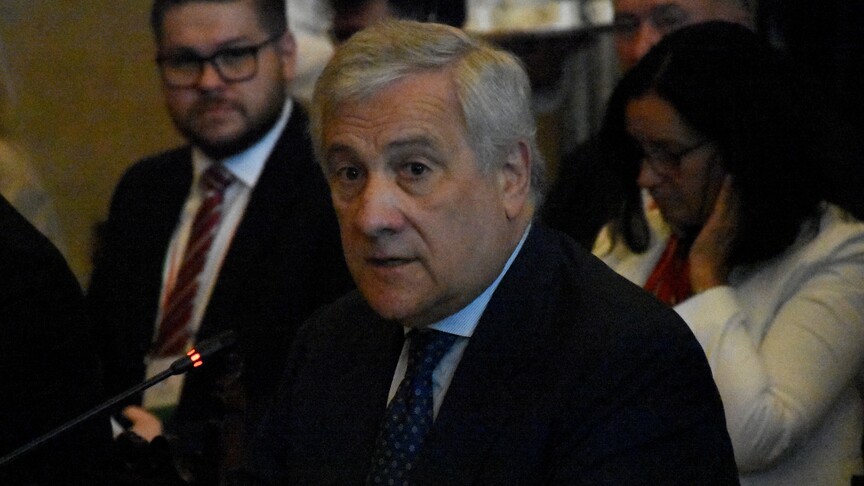
Antonio Tajani said he would co-chair the Global Alliance meeting in Rome for the two-state solution with his Saudi counterpart, aiming to give new impetus to last fall’s New York Declaration on a solution.
He said the gathering would include a strong focus on interfaith dialogue, describing it as a key element in strengthening prospects for peace.
His announcement came during his address, alongside Defense Minister Guido Crosetto, to the joint Foreign Affairs and Defense Committees on the outcome of the NATO summit in Türkiye earlier this month.
Tajani reiterated that the expansion of illegal Israeli settlements and violence by occupiers are "unacceptable."
“We continue to work at the European level to reach unanimity on proposals for sanctions against (Security) Minister (Itamar) Ben-Gvir and settlers responsible for acts of violence,” he said.
Tajani also pointed to the situation in Lebanon, highlighting Italy's "leading role" in the process.
“Last week, we hosted here in Rome the first negotiating session on the follow-up to the agreement, and on Aug. 4 we will host a new dialogue session. This is an important achievement, the result of patient foreign policy efforts that build bridges and never erect walls,” he underscored.
Saying that Italy raised security spending to 2.8% of its GDP, Tajani also reaffirmed that they aim to meet the 5% target over the next decade, in line with NATO guidelines.
Crosetto, for his part, stressed the need for Italy to contribute to strengthening deterrence on the eastern flank and play a leading role in building a strong European pillar in full complementarity with NATO.
“We must continue to support a 360-degree approach. Europe’s security is not measured only along its war-torn eastern borders, but also runs through the Mediterranean, the Middle East, and Africa,” Crosetto said.
He further underlined the need for a stronger Europe for a stronger NATO.
"Being part of NATO means being able to rely on the strength of collective defense, while fully assuming all the responsibilities that this choice entails. The alliance is measured by the concrete capabilities each country provides for common security and collective defense plans," he explained.
Crosetto further stressed the significance of deterrence as an "essential prerequisite for productive dialogue and for peace to endure."
"This is the path outlined in Ankara and the path Italy will continue to support: building a Europe that is more responsible, more capable and more aware of its role within a united, credible and cohesive NATO,” he said.