Seyma Erkul Dayanc
21 September 2026•Update: 21 September 2026
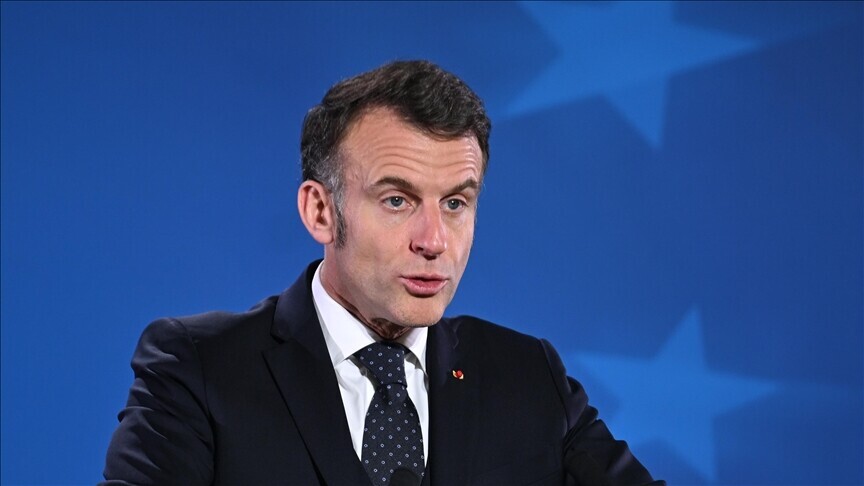
French President Emmanuel Macron has asked the European Commission to temporarily ease some EU rules on fuel to increase supply and help contain prices, while the French government prepares new measures to support people affected by higher fuel costs, broadcaster BFM TV reported on Monday.
In a letter to European Commission President Ursula von der Leyen on Sept. 18, Macron proposed temporarily easing European fuel quality specifications, allowing greater flexibility on biofuel blending in diesel and delaying some new obligations for fossil fuel importers.
Macron said the measures could “strengthen our short-term import and production capacity” and “increase the supply available on the domestic market,” according to the letter.
He said temporarily adjusting fuel quality requirements could increase refinery output by between 5% and 20%, depending on the refinery.
The specifications cover factors including fuel density, vaporization limits and desulfurization requirements.
Macron noted that diesel used on US roads can contain up to 15 parts per million of sulfur, compared with 10 ppm under EU rules.
He also proposed greater flexibility on diesel biofuel blending.
The current B7 standard allows up to 7% biodiesel, while B10 allows up to 10%.
Macron said greater use of B10 could support diesel supplies and provide additional flexibility for the market.
The European Commission has said B10 has slightly lower energy content and could result in a very small increase in consumption.
Macron also called for a one-year delay to a requirement due to take effect Jan. 1, 2027, under which crude oil, natural gas and coal importers would have to demonstrate that suppliers meet EU-equivalent requirements for measuring and controlling methane emissions.
He said the new rules could create additional litigation risks for importers.
The European Commission has recommended delaying financial sanctions under the rules until the end of 2029.
Macron said the proposed temporary measures were needed amid disruptions to global oil supplies following the near-total closure of the Strait of Hormuz since March, which he said had reduced global oil supply and changed hydrocarbon trade flows.
He said global oil stocks had fallen by more than 500 million barrels and warned that continued disruptions, including attacks targeting energy infrastructure in Russia and the Middle East and rising Asian demand, could further affect supplies.
Without the reopening of the Strait of Hormuz and the restoration of Saudi Arabia’s East-West pipeline, global crude oil supply could fall by at least another 4 million barrels per day, Macron said, potentially putting further upward pressure on prices.
Macron said Europe was particularly exposed to disruptions in refined petroleum products, with the EU relying on the Middle East for 36% of its kerosene imports and 18% of its diesel imports.
He also backed “a clear acceleration at the European level on electrification efforts” and “moderation of natural gas consumption, particularly for heating needs.”
Meanwhile, the French government is due to announce new measures Tuesday to support people affected by higher fuel prices.
The measures will be presented at a news conference at the Economy Ministry in Paris at 5 p.m. local time (1500GMT) by government ministers.
The announcement follows meetings on fuel prices at the prime minister’s office Monday.
The Elysee Palace said France was also working to facilitate the peaceful reopening of the Strait of Hormuz and secure energy supplies.