Burak Bir
24 April 2026•Update: 24 April 2026
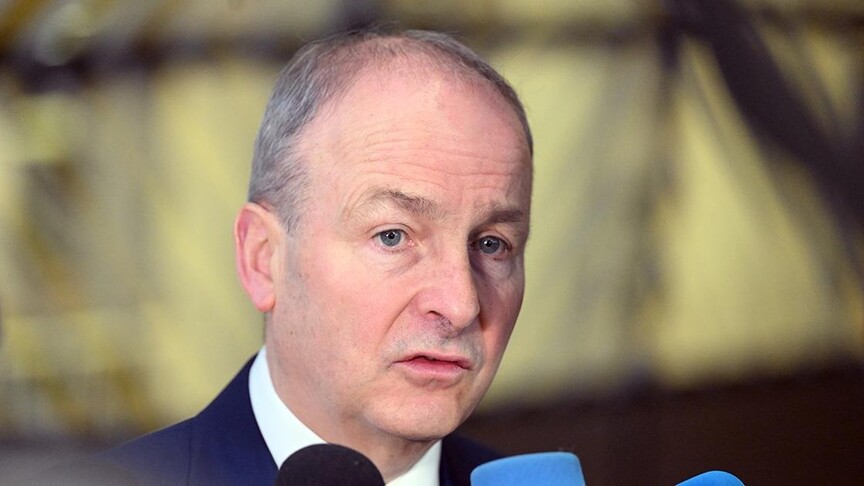
The Irish Taoiseach, or prime minister, on Friday said there is "quite a lot of pessimism" among leaders of EU countries about the potential impact of the Iran war on the global economy.
Speaking to reporters on the final day of the EU's informal summit in the Greek Cypriot Administration, Martin said EU leaders believe the Strait of Hormuz energy crisis could be "1973, 1979 and 2022" all in one in terms of the potential impact on the global economy.
"Speaker after speaker" raised the concerns during a working dinner of EU member state leaders on Thursday evening, said the Irish premier, according to broadcaster RTE.
"There is quite a lot of pessimism if there isn't an end to this war, and the European Commission and others are saying you've got to keep funding in reserve if the situation gets worse and deteriorates," he said.
He noted that "we've got to be conscious" of the fact that the impacts of this oil shock could be more medium-term to longer-term.
Saying that the Irish Department of Finance officials have predicted that "notwithstanding a worst-case scenario we'll still grow," but warned: "We're not immune to a downgrading of economic growth."
Martin also expressed caution that he "can't be overly confident" about the announced three-week ceasefire extension between Israel and Lebanon, given repeated "violations" of previous ceasefires in the conflict zone.
"I don't want to reveal everything in meeting that is discussed in a confidential way, but I did raise that Europe's relationship with Israel has to come under the microscope in terms of what I believe has been reckless behavior and shocking attacks on civilian infrastructure," he said.
Pakistan hosted the first round of talks between Washington and Tehran on April 11 and 12. The talks were held after Pakistan secured a two-week ceasefire between the warring sides on April 8.
US President Donald Trump unilaterally extended the ceasefire on Tuesday, without giving a new timeframe, hours before it was set to expire.
Since the war began on Feb. 28, Tehran has maintained control of the Strait of Hormuz, followed by the US naval blockade on April 13, hitting global energy supplies, mostly across Asia.