Mariam Ashalem De Andres
08 September 2026•Update: 08 September 2026
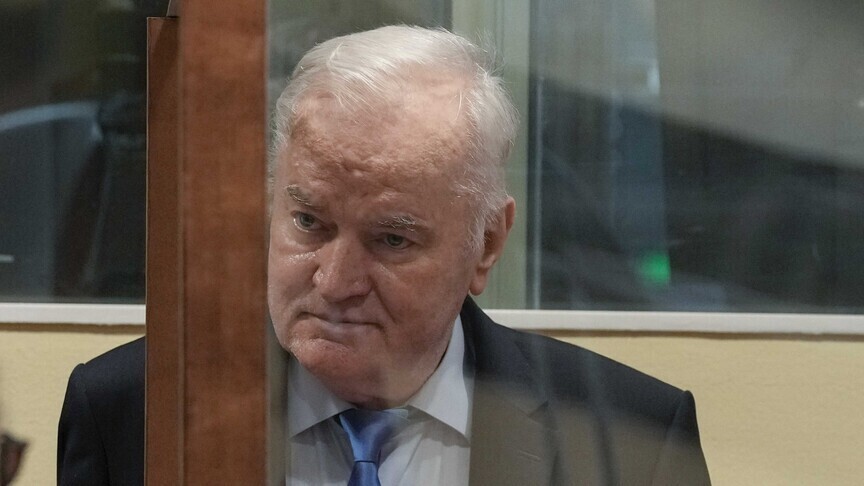
A United Nations official condemned on Tuesday the public glorification of convicted war criminal Ratko Mladic and the denial of the genocide in Srebrenica.
Chaloka Beyani, the UN under-secretary-general and special adviser on the Prevention of Genocide, said he was concerned about public expressions glorifying Mladic in Serbia and Bosnia and Herzegovina.
“The large-scale public commemoration of Mladić, including the participation of political figures and official ceremonial elements, is both deeply inappropriate and profoundly disturbing,” Beyani said in a statement.
He said the commemorations relativize serious crimes under international law and undermine the dignity of victims, survivors and their families.
Beyani also said the commemorations were incompatible with efforts to promote accountability, mutual understanding and sustainable peace in the region.
The International Criminal Tribunal for the former Yugoslavia (ICTY) and the International Court of Justice established that genocide was committed in Srebrenica in 1995.
Mladic, commander of the Army of the Republika Srpska during the Bosnian War, was convicted by the ICTY in 2017 of genocide, crimes against humanity and violations of the laws or customs of war.
He was sentenced to life imprisonment. The Appeals Chamber of the International Residual Mechanism for Criminal Tribunals upheld his convictions in June 2021.
Beyani stressed that Mladic’s conviction established individual criminal responsibility and that his crimes cannot be collectively attributed to an entire community.
“The facts established by ICTY do not get extinguished by one’s death,” he said.
His comments followed Mladic’s death. Beyani echoed a previous statement by UN Secretary-General Antonio Guterres, who urged those in positions of power to refrain from denying the seriousness of Mladic’s crimes.
The special adviser expressed concern about what he described as the persistence and rise of genocide denial, as well as the participation of public officials and institutions in the glorification of Mladic and his crimes.
“Building a society that prioritizes the prevention of atrocity crimes begins with affirming the reality and truth of what happened in the past,” said Beyani.
He said people in the region deserved a future free of fear, and that the legacy of the war should strengthen efforts to prevent similar atrocities from recurring.