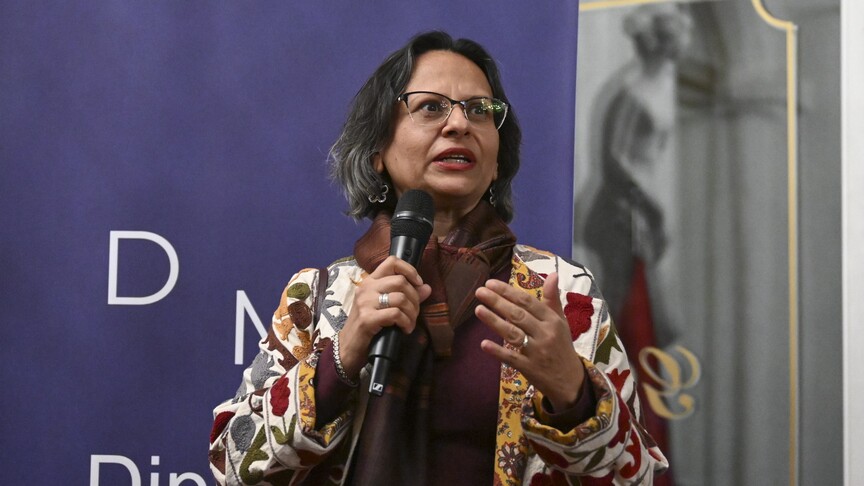
- 'Climate change is a gender equity issue that affects the rights and choices of vulnerable communities, people across the world,' UNFPA Türkiye representative Mariam A. Khan tells Anadolu
- Khan urges parties attending COP31 to include women and young people in the process of defining solutions
The UN Population Fund (UNFPA) representative to Türkiye, and country director for Azerbaijan and Georgia, Mariam A. Khan, said she expects issues affecting the most vulnerable groups, particularly women and girls, to be placed on the agenda at the UN Climate Summit COP31, which will be held in Antalya this year.
UNFPA data shows climate change is having significant impacts on reproductive health and gender equality, with rising temperatures adversely affecting maternal and newborn health. It said a 1C increase in temperature in the week before birth raises the risk of stillbirth by 6%.
Drought and climate-related disasters are increasing the vulnerability of women and girls, while longer distances to access basic services, particularly water, are driving higher risks of sexual and gender-based violence.
Limited access to healthcare and hygiene products during disasters is compounding risks to safe childbirth, while keeping girls out of school is increasing the risk of early marriage.
Climate-driven food and water insecurity is fueling displacement, deepening humanitarian crises, and increasing pressure on aid systems.
Khan spoke to Anadolu during the Zero Waste Forum, outlining her views on the social impacts of climate change and expectations ahead of COP31.
She said the UNFPA’s work on population issues means the organization always takes a people-centred approach. "The climate problem and challenge is an issue of gender equity or inequity. It’s an issue of imbalance between developed countries and those in the transition and path towards development," she said.
Khan warned that future generations could face far more severe climate-related disasters than previous generations, saying the climate crisis was a critical issue for younger people.
She said climate justice should be addressed across all layers of society, pointing to stark inequalities between those who benefit from production and consumption systems and communities with limited access to such opportunities.
Khan said waste management is an important factor in climate justice, adding: "Of the women and young people involved in managing waste, often because they have no choice, and of the communities that are suffering because of limited access to space, services, and urban infrastructure."
Climate crisis has more pronounced impact on women and children
Khan warned that climate change could become one of the biggest global injustices affecting populations in the future, saying women, young people, and children are already among the most impacted and that the effects would intensify without adequate investment and policy action.
She said recent studies show rising temperatures increase the risk of miscarriage, while air pollution has negative effects on fertility in both women and men, warning that these impacts carry broader consequences for societal wellbeing.
Khan said women facing resource constraints are more vulnerable to climate impacts, adding that the poorest and least educated women suffer the most because they often live in environments with limited access to services.
“We know that heat also increases rates of domestic violence. So it’s a public health challenge, it’s a rights challenge. And it’s a challenge in terms of being able to deliver on the responsibility that women have within their households,” she said.
Khan added that women are disproportionately affected by the climate crisis due to their caregiving responsibilities, adding that difficulties in accessing water, food, and basic services weaken their ability to support their families and negatively affect health and living conditions.
Climate-related migration leaves women more vulnerable
Khan also said climate change is influencing migration, noting that moving is often a difficult decision taken when people have no other options, as they seek better livelihoods and living conditions for their families.
Khan said women become more vulnerable during and after migration, as caregiving responsibilities increase when family members move and said women face higher risks of violence, economic insecurity, and physical safety threats during these processes, stressing the need to strengthen protection and security mechanisms.
"So, climate change is a gender equity issue. Above all, it is an issue that affects the rights and choices of vulnerable communities and people across the world," she said.
"First of all, I congratulate the government of Türkiye for hosting it. I think events such as this Zero Waste Forum on the road to Antalya towards COP31 really build very good momentum, and the range of issues being discussed is quite diverse," she said.
"From where we stand as UNFPA, it is critical that issues of public health, reproductive health, safe motherhood, and prevention of violence for women, children, and young people be part of climate conversations, because climate directly influences these challenges that vulnerable groups already face," she added.
"During COP31, we look forward to working with partners to discuss these topics and to find solutions, so that in the national NDCs (nationally determined contributions) and national action plans, there is financing and specific indicators to measure change," she said.
Khan urged parties attending COP31 to include women and young people in the process of defining solutions, stressing that any discussion of system change must include a human dimension, as climate change is, above all, a threat to people and should therefore remain centered on people.