Seyit Kurt
19 April 2026•Update: 19 April 2026
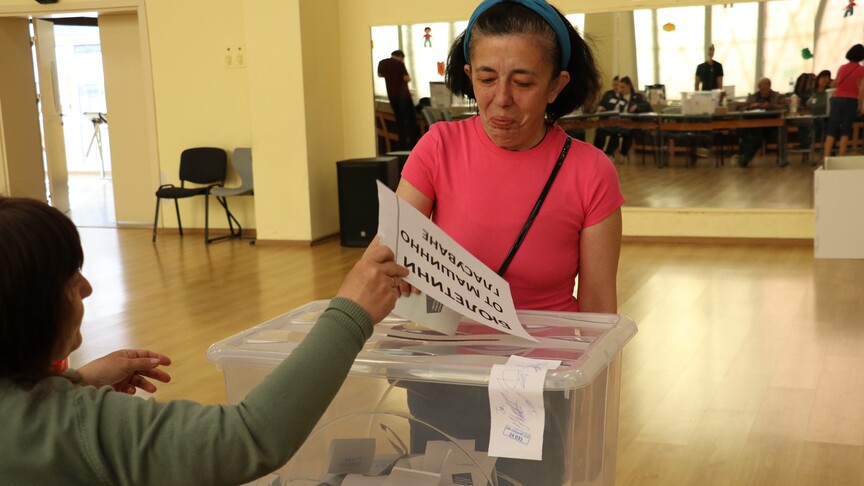
Voting is underway in Bulgaria on Sunday in a general election seen as a test to end five years of political instability.
Polling stations opened at 7 am local time, with around 6.5 million registered voters eligible to cast ballots in the country’s eighth election in five years.
A total of 14 political parties and 10 alliances are competing in the vote.
The Central Election Commission (CEC) said nearly 12,000 polling stations have been set up domestically, along with 493 stations across 55 countries abroad.
Voting is scheduled to end at 8 pm, but may be extended until 9 pm if voters are still waiting in line.
Pre-election polls indicate that at least five political groups are expected to surpass the 4% threshold required to enter parliament.
Surveys suggest that the Progressive Bulgaria Coalition, founded by former President Rumen Radev, is leading.
Other parties expected to enter parliament include the Citizens for European Development of Bulgaria (GERB), the We Continue the Change–Democratic Bulgaria alliance (PP-DB), the Movement for Rights and Freedoms (MRF), the Revival party, and the Bulgarian Socialist Party.
Turnout in the last election held in October 2024 was 38%, but recent surveys suggest participation could rise to between 50% and 60%.
In the 240-seat parliament, at least 121 lawmakers are required to form a government, and observers say a coalition administration is the most likely outcome.
Leaders cast ballots
Radev voted in the capital Sofia and called for strong voter participation.
“The only way to counter the impact of bought votes is for free votes to be in the majority,” he told reporters.
He said his coalition is open to cooperation with parties that genuinely support its program but ruled out working with GERB and the Movement for Rights and Freedoms.
MRF leader Delyan Peevski said after voting that citizens are deciding the country’s future, adding that he cast his ballot for a “state of the people.”
Vice President Iliana Yotova said the next government should play a strong role within the European Union.
“I expect high voter turnout. As citizens, we have a say in what kind of country we want to live in,” she said.
Caretaker Prime Minister Andrey Gyurov said politics should be based on ideas and policies rather than financial backing.
GERB leader Boyko Borisov said his party would not join coalitions but remains open to dialogue on geopolitical and defense issues.
CEC spokesperson Rositsa Mateva said voter turnout stood at 12.12% as of 11 am, compared to 9.55% at the same time in the October 2024 election.