Colombia's election of far-right politician Abelardo de la Espriella is the latest sign of a broader rightward shift sweeping Latin America, as voters across the region increasingly turn to hardline leaders promising to tackle crime, revive sluggish economies and challenge traditional political elites.
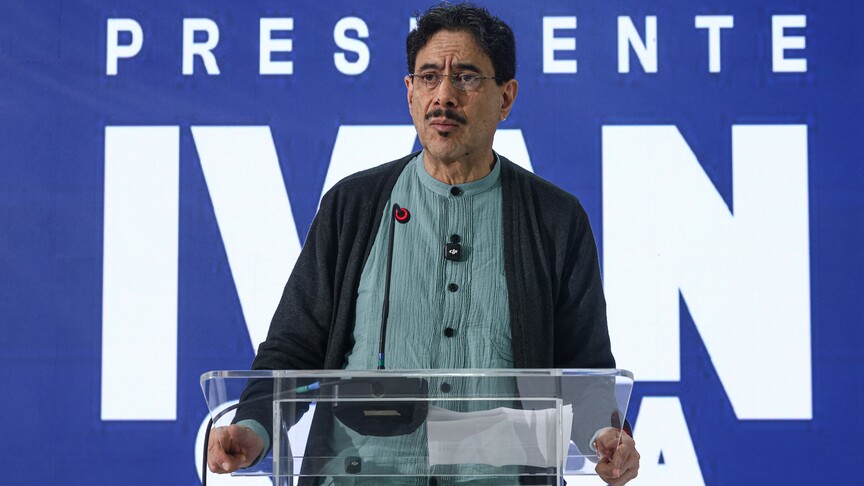
The criminal defense lawyer and businessman, nicknamed “The Tiger,” is poised to become Colombia's next president after preliminary results showed him narrowly winning Sunday's runoff election, a result that could steer the South American nation sharply to the right after four years of leftist rule.
From Argentina's libertarian President Javier Milei, who swept to power promising radical economic reforms, to El Salvador's Nayib Bukele, who secured re-election after an aggressive anti-gang campaign centered on mass arrests and mega-prisons, right-wing leaders have gained momentum across the region in recent years.
In 2025, presidential elections were held in four countries in Latin America – Ecuador, Bolivia, Chile and Honduras – and all the winners were from conservative or right-wing political forces.
In 2026, a right-wing populist movement also won a landslide victory in Costa Rica and, although official results have yet to be finalized, Keiko Fujimori of the right-wing Popular Force party appears poised to become Peru's next president.
Analysts told Anadolu that while the political dynamics vary across the region, the rise of conservative and anti-establishment candidates is being driven by a common set of concerns: crime, economic uncertainty and a growing loss of faith in traditional political movements.
"The main driver in Latin America is security," said Consuelo Thiers, a lecturer in international relations at the University of Edinburgh.
"Far-right candidates campaign on the promise to put an end to security issues affecting the population, whether that means gangs, organized crime or drug trafficking, depending on the country,” she said. "They present themselves as the only ones capable of solving these problems, often proposing easy answers to difficult questions.”
She told Anadolu deteriorating economic conditions and cost-of-living pressures have also fueled support for candidates promising lower taxes, reduced public spending and tougher law-and-order policies.
Another factor, she argued, is a broader global anti-incumbency trend, with voters increasingly punishing governing parties regardless of ideology.
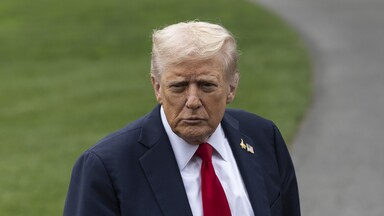
"Far-right leaders and parties are either taking power or have become a strong political force in several countries. The most emblematic case is the United States with Donald Trump," she said.
Elizabeth Dickinson, deputy program director for Latin America and the Caribbean at the International Crisis Group, told Anadolu that insecurity has become particularly important in parts of the Andes where communities have been affected by growing criminal activity and armed groups.
"The right-leaning shift reflects civilians and communities impacted by surges in organized criminal activity," Dickinson said.
In Colombia, she added, many voters remain frustrated by persistent inequality and worsening security conditions despite years of economic growth.
"Colombia has a long history of armed conflict, and what we've seen over the last decade particularly is that this conflict has fragmented and grown more atomized and localized," she said.
Thiers said traditional center-right parties have struggled to compete with more confrontational figures who present themselves as outsiders willing to challenge established institutions.
"The traditional right seems to have lost its narrative," she said.
While de la Espriella's victory fits into the broader regional trend, analysts caution that the result also exposed deep divisions within Colombian society.
According to preliminary results, de la Espriella secured 49.66% of the vote compared with 48.7% for Ivan Cepeda of the ruling leftist Pacto Historico coalition.
Outgoing President Gustavo Petro has refused to recognize the results, claiming widespread fraud and demanding a sweeping criminal investigation, while Cepeda has yet to formally concede defeat.
Dickinson said the result offers an important warning to the incoming administration.
"Neither candidate managed to get above 50% of the vote," she said.
"Perhaps the most important message for the president-elect is the level of division and polarization that we see within Colombian society."
Thiers said de la Espriella's platform represents a sharp departure from Petro's approach, which involved negotiations with armed and criminal groups.
"He enters office with a very thin mandate, a divided country and no guaranteed majority in Congress."
The region's strongest rightward shift has also coincided with the return of Donald Trump to the White House, strengthening ties between conservative leaders in Latin America and Washington.
Trump openly backed de la Espriella during the campaign and quickly welcomed his victory after preliminary results were announced.
The relationship has already proven influential elsewhere in the region. In Argentina, Milei's close alignment with Trump has been accompanied by strong US political support. The US president also suggested that continued US aid to Argentina would depend on whether Milei’s party won legislative elections in 2025, which it did.
Analysts say several conservative leaders increasingly view closer relations with the United States as both politically advantageous and economically beneficial.
According to Thiers, Trump has been very clear about what he expects from Latin American countries: cooperation on migration, drug trafficking and organized crime, and a distancing from China.
"De la Espriella has already signaled he is on board with all of that,” she said.
“On security, he has promised to end the Total Peace negotiations with armed groups and move to a military crackdown, inspired by Bukele's approach in El Salvador. On the economy, he has proposed to increase economic growth by cutting state spending considerably and taxes. On foreign policy, he has already signaled a restoration of ties with Israel and a much closer relationship with Washington."
Colombia used to be one of Washington’s closest allies in the region.
However, the partnership deteriorated considerably under Petro, who clashed with Washington over issues such as drug policy, migration, and China. In 2025, the US even revoked his visa after he attended a pro-Palestinian rally in Manhattan and urged US soldiers to disobey Trump and instead fight for humanity.
Dickinson cautioned, however, that closer relations with the US will not automatically resolve Colombia's domestic challenges.
"Balancing pressure from the US agenda with Colombia's own needs will be a primary challenge," she said.
news_share_descriptionsubscription_contact