
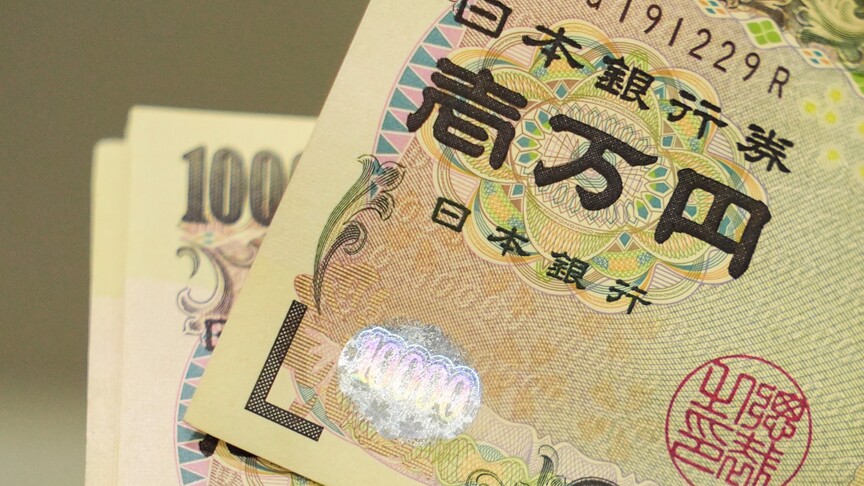
The Trump administration’s decision to join Japan in supporting the yen reflects concerns that the currency’s rapid decline could hurt US competitiveness and create risks for Treasury markets.
The two countries intervened jointly in foreign exchange markets last week after the yen weakened to around 163 against the dollar, its lowest level in four decades.
The operation helped the currency recover toward 157 per dollar and marked the first coordinated US-Japan intervention aimed at strengthening the yen since 1998.
The move came despite Washington’s longstanding criticism of countries that maintain weak currencies to support exports.
A weaker yen makes Japanese products cheaper in the US while increasing the cost of American goods in Japan.
Supporting the yen therefore serves Washington’s trade interests by limiting the dollar’s appreciation and reducing the price advantage enjoyed by Japanese exporters, said Michael Klein, an international economics professor at Tufts University.
Steven Kamin, a senior fellow at the American Enterprise Institute, said the intervention was consistent with US economic interests.
“Supporting the yen reduces appreciation of the dollar, which would reduce US competitiveness,” Kamin said.
The decision does not necessarily represent a reversal of US exchange-rate policy. Instead, it suggests Washington believed the yen had fallen too far and too quickly.
A stronger yen could improve the competitiveness of US exports and reduce pressure on other Asian economies to allow their currencies to weaken.
The yen’s weakness is primarily driven by the wide interest-rate gap between Japan and the US.
Although the Bank of Japan has moved away from years of ultra-loose monetary policy, Japanese rates remain substantially below US rates.
Higher returns on dollar-denominated assets encourage investors to sell yen and buy dollars.
The difference has also supported the yen carry trade, in which investors borrow cheaply in Japan and invest in higher-yielding assets elsewhere.
Meanwhile, the weaker currency has raised the cost of imported energy, food and raw materials, increasing inflation and reducing Japanese household purchasing power.
Japan’s government has favored policies supporting economic growth, while the central bank has remained cautious about raising rates aggressively because higher borrowing costs could weaken consumption and investment.
Currency intervention occurs when governments or central banks buy or sell currencies to influence exchange rates or calm disorderly markets.
In Japan, the Finance Ministry decides whether to intervene, while the Bank of Japan normally carries out the transactions.
To support the yen, Japanese authorities sell foreign-currency assets, usually dollars, and use the proceeds to purchase yen.
The US can intervene through the Treasury Department’s Exchange Stabilization Fund, generally using the Federal Reserve Bank of New York as its market agent.
During the latest operation, the US reportedly sold euros and bought yen, while Japanese authorities also purchased their currency.
The yen is one of the world’s most heavily traded currencies and is widely used as a funding currency by international investors.
Low Japanese borrowing costs have encouraged investors to borrow in yen and invest in higher-yielding assets worldwide.
A sharp currency move can therefore trigger rapid changes in global investment flows.
A significantly weaker yen also makes Japanese exports more competitive against goods produced elsewhere in Asia, placing pressure on other governments to prevent their currencies from strengthening.
Kamin, however, said the direct systemic importance of the yen should not be overstated.
“The yen is not that important, but future Treasury sales to strengthen the yen could have boosted US yields and destabilized global markets somewhat,” he said.
For Washington, the main concern was therefore not only the exchange rate but the measures Japan might take to defend it.
Japan is one of the largest foreign holders of US government debt, with Treasury securities valued at more than $1.1 trillion.
The securities form part of Japan’s foreign exchange reserves and can provide dollars for currency intervention.
If the yen continued to fall, Japan could sell foreign assets, including Treasuries, to obtain dollars that could then be exchanged for yen.
“If Japan sold Treasuries to finance intervention to strengthen the yen, that would have boosted US Treasury yields,” Kamin said.
Sustained sales could push Treasury prices lower and yields higher, increasing borrowing costs for the US government, households and businesses.
US participation may therefore have strengthened the intervention while reducing the likelihood that Japan would need to sell a larger volume of Treasury securities.
Klein noted, however, that yen weakness can also make US debt more attractive to Japanese investors.
“The weak yen makes US Treasury bonds more attractive for Japanese investors since they will be paid back with more yen after the dollar security matures,” he said.
The operation achieved an immediate objective by pushing the yen away from its four-decade low and showing that both governments were prepared to act.
Its longer-term impact remains uncertain.
Klein said intervention without a corresponding change in interest rates is generally effective only under specific circumstances.
“Sterilized intervention, that is, intervening in the forex market without changing policy interest rates, is typically only effective over the medium term if there was a misalignment and markets were just waiting for a signal that the misalignment would change,” he said.
“But if there are underlying fundamental reasons for the currency to be weak, then intervention is less likely to have any medium-term or longer-term effects.”
The main force behind the weak yen remains the gap between Japanese and US interest rates.
“No, without monetary support, yen gains will be temporary,” Kamin said.
A sustained recovery would probably require further Bank of Japan rate increases, lower US rates, or both.
news_share_descriptionsubscription_contact

contact_the_ombudsman
is_there_an_error_in_this_story