“Make sure you don’t get sick, because there are no supplies.”
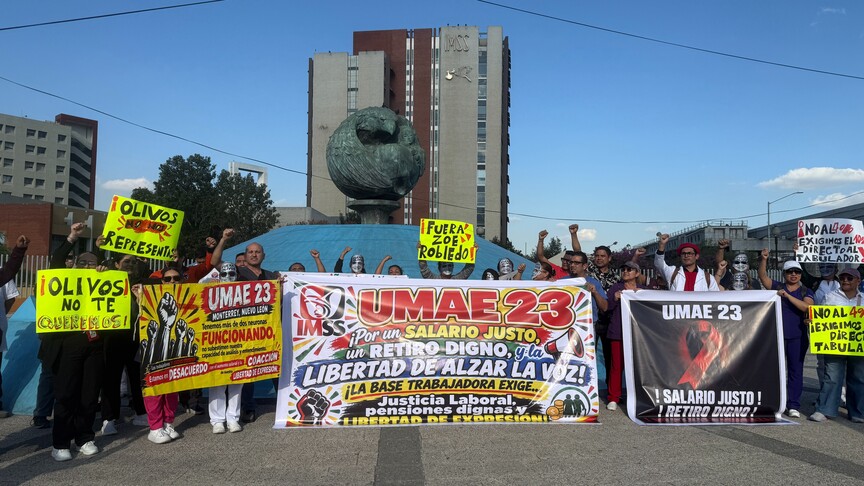
The warning rang out on the streets of Monterrey, where dozens of doctors, nurses and other healthcare workers blocked major avenues to protest conditions at Mexico's largest public healthcare provider.
Chanting “The COVID heroes have come out again,” the protesters, including lab technicians and administrative staff, brought traffic to a standstill for more than an hour on Oct. 21, demanding higher wages, more personnel and an end to persistent shortages of medicines and medical supplies.
Their demonstrations have continued despite a new government action plan aimed at addressing longstanding problems at the Mexican Social Security Institute (IMSS).
Smaller protests were held in Mexico City and Monterrey last week, with workers vowing to continue until their demands are met.
IMSS Director Zoe Robledo has announced a 12-point emergency plan running through February 2027, including an 8% wage increase, equipment upgrades, facility maintenance and measures to ensure medication supplies.
But for many workers, the promises fall short.
“We have reached a breaking point,” said Jose Rosales, a specialist in pathology and molecular biochemistry who joined the Monterrey protest. “Over the years, we have endured many deficiencies, ranging from inadequate pay and a lack of necessary supplies to a retirement system that is no longer appealing,” he told Anadolu.
Holding banners and handmade placards, protesters gathered outside an IMSS-managed gynecology hospital, saying deteriorating working conditions were driving medical professionals away from public healthcare.
“At this stage, working for the institution is simply not attractive to physicians,” Rosales added.
Healthcare workers have staged demonstrations across Mexico, demanding additional staffing and action to address widespread reports of medical shortages in IMSS hospitals and clinics.
During a national consultation in mid-October, workers rejected an offer of a 2.9% pay rise and a 3.9% increase in benefits, demanding instead a direct increase to their base salaries no less than 10%.
For Alejandro Ramirez, a general assistant, the proposal was insufficient.
“With the inflation expected next year, it will not be enough to cover our own expenses or those of our families,” he denounced.
Mexico spends about 5.9% of its gross domestic product on health care, below the OECD average of 9.3%.
On Oct. 21, shortly before fresh demonstrations began, Robledo proposed an 8% increase, which protesting workers immediately rejected.
“It’s a mockery,” Rosales responded.
Workers say inadequate salaries are pushing doctors toward the private sector, placing additional strain on public facilities already struggling with staff shortages, long waiting times and insufficient supplies.
The frustration also extends to their union leadership.
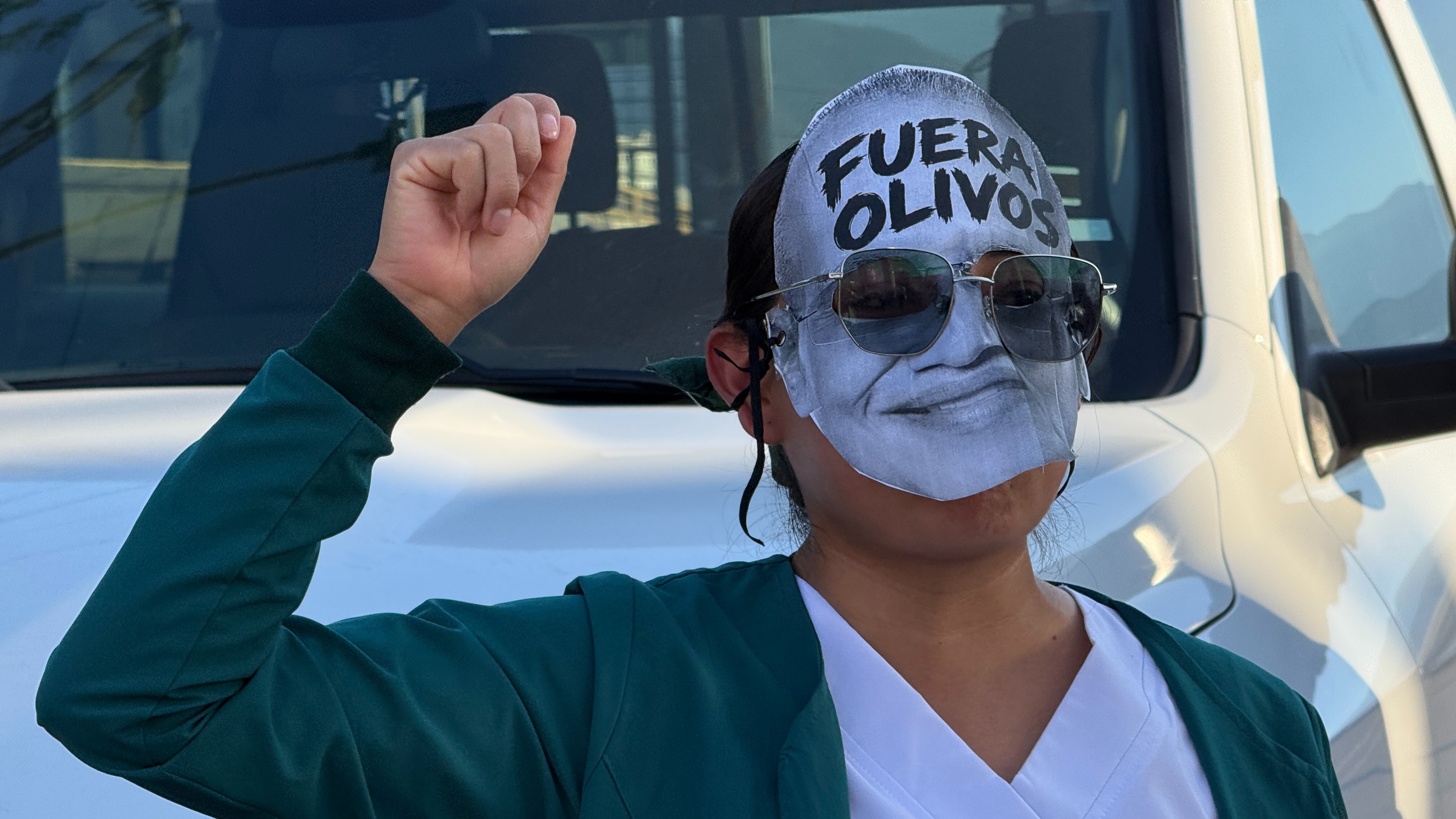
Wearing face masks depicting Rafael Olivos Hernandez, head of the National Social Security Workers Union (SNTSS), protesters demanded his resignation, accusing the organization of failing to defend their interests.
Elsa Gonzalez, who has worked as an IMSS nurse at a specialty clinic for more than 20 years, echoed those concerns.
“They are turning their backs on us, so here we are — relying on our own resources, without any help from the union — continuing the fight,” Gonzalez said.
Workers are demanding an extraordinary union congress, which Ramirez said would give them an opportunity to ensure that President Claudia Sheinbaum and IMSS management hear their concerns.
He also criticized the gap between workers' wages and the salaries of senior officials.
“They (high-profile officials) are earning vast sums and lining their own pockets, while the very people who keep this country running are left without medication, without medical appointments, and without access to hospital care across various services,” Ramirez affirmed.
Sheinbaum has acknowledged the legitimacy of IMSS workers' demands and said the government is addressing them, while urging unionized employees to show flexibility in negotiations.
Mexico's healthcare system is heavily fragmented, with access to services largely determined by employment status.
The IMSS, the country's largest public healthcare provider, is jointly funded by the federal government, employers and employees through payroll contributions.
Although Mexico is working toward a unified healthcare system, patients continue to face long waiting times, delayed appointments and deteriorating hospital infrastructure and equipment.
Outside the emergency room at IMSS Clinic 17 in Monterrey, it is a common to see dozens of families sit on chairs along the sidewalk, waiting for visiting hours.
Many stay for more than 24 hours and stay despite the elements.
For 23-year-old Cesar Castillo, the wait has become a daily routine over the past three months.
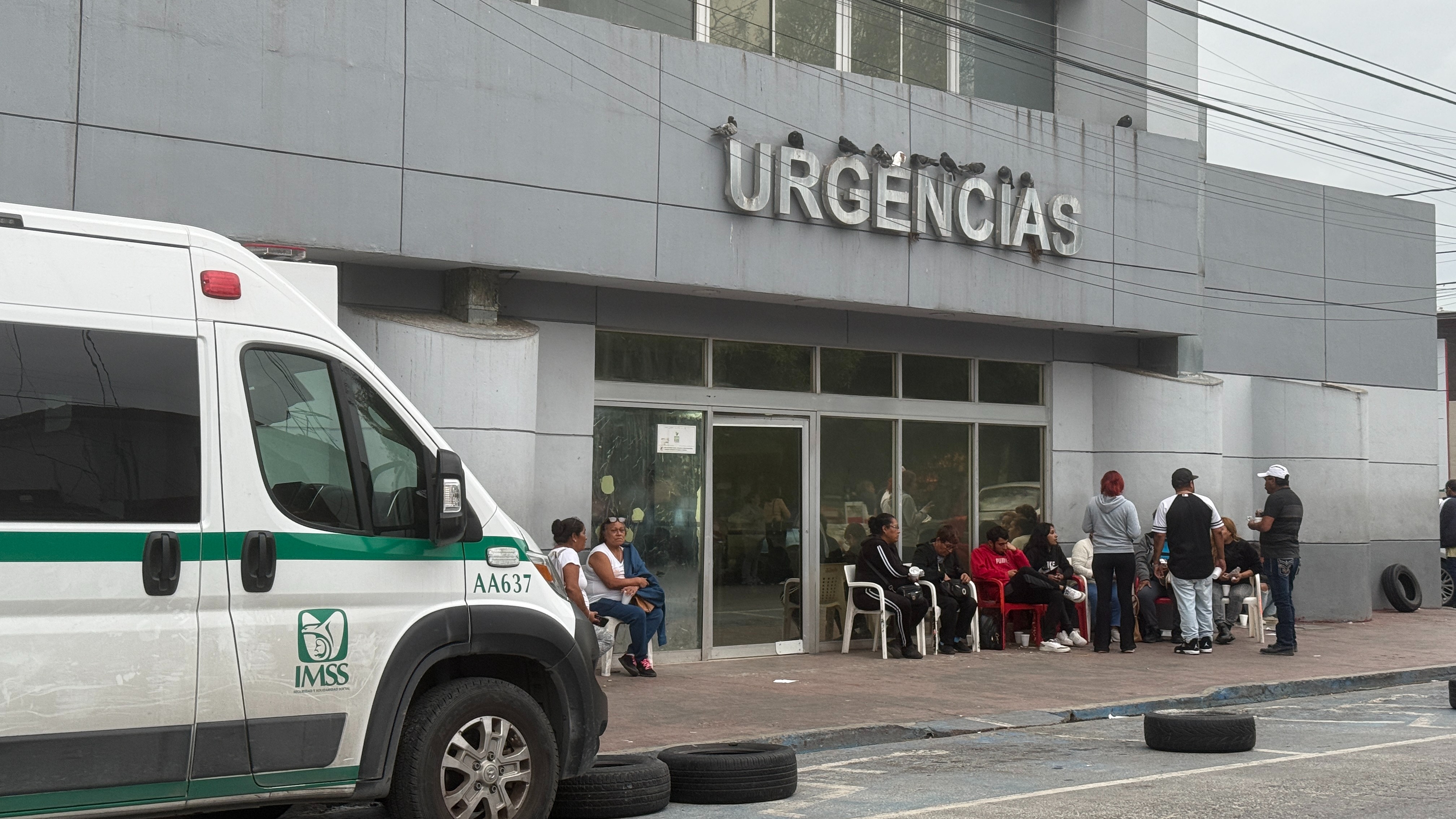
He recently quit his job to care for his mother, who has been hospitalized for three months with a bile duct infection following gallbladder surgery.
Castillo said his mother suffered an injury to her bile duct during a procedure to remove a small stone. The resulting complications, combined with long waits and slow medical responses, have taken a toll on her physical and mental health, he said.
“We thought my mom was going to leave us,” he said.
His family has filed an official complaint alleging medical negligence and lengthy delays, while continuing to wait for signs of improvement in her condition.
For now, Castillo said, severe medication shortages mean his mother is receiving only paracetamol, which is used commonly to treat mild to moderate pain and reduce fever.
“They just tell us there’s a shortage,” he said. “In other words, there’s no medication available at all, except for paracetamol. That is the only thing they can offer us for the time being.”
Healthcare workers and IMSS beneficiaries are demanding reliable supplies of medicines and medical equipment in public facilities.
Sheinbaum has acknowledged the need to improve the distribution of medicines and medical supplies to hospitals.
Arely Reyes, a clinical nurse with 12 years of experience at IMSS, said inadequate infrastructure and shortages also place considerable strain on patients' families.
“All the family members are outside. Rain or shine, even in low temperatures, they are out there wrapped in blankets,” she said.
Reyes also criticized the deployment of the National Guard to hospitals to prevent theft and diversion of medical supplies and medicines.
On Oct. 20, Deputy Health Minister Eduardo Clark acknowledged that medicines intended for public hospitals were being stolen and sold illegally, but rejected petty theft as the main cause of shortages at IMSS facilities.
“There are no supplies, there’s nothing — but there is a great deal of corruption,” Reyes denounced. “Everyone assumes it’s the workers who are committing petty theft, but this starts at the very top.”
To cope with shortages, many families say they have little choice but to purchase medicines themselves.
Keyla Gonzalez had to buy insulin outside the hospital for her grandmother, who has diabetes and hypertension and was hospitalized with low sodium levels.
Although her family could afford the medication, Gonzalez said many others cannot.
Out-of-pocket payments account for approximately 41% of Mexico's total healthcare expenditure, placing a substantial financial burden on families.
Gonzalez praised the quality of care at Clinic 17 compared with the facility near her home on the outskirts of Monterrey.
Other families waiting outside the hospital also described the difficulties of traveling into metropolitan areas to access better medical services.
“There’s a clinic near us, but the quality is much worse — you arrive, and they don’t even attend you,” Gonzalez said. “If they do, they just send you home with some medication without performing the necessary tests.”
Obed Leija said his mother has received better care during her current hospitalization than on previous visits, but believes the hospital's infrastructure needs significant improvements, particularly its air conditioning and ventilation.
Leija, who cares for his mother at night, said witnessing the long hours and heavy workloads of hospital employees had strengthened his support for their demands.
“I think their demands are fair. I can understand that it’s due to an excessive workload and long shifts,” Leija said.
Workers argue that hiring additional medical personnel is essential to easing those pressures and improving care for patients.
With further demonstrations expected, protesters say they will continue pushing for better wages, staffing and supplies.
Gonzalez, the veteran nurse, stressed that the struggle is not just about improving conditions for healthcare workers but also about protecting the patients who depend on them.
She said workers would continue protesting “as long as our bodies can hold out.”
Ramirez echoed that determination, saying employees simply want authorities to listen and take their demands seriously.
“The problems currently being experienced in hospitals nationwide must be addressed,” Ramirez added. “There are no stretchers, no medications, no appointments, and no medical professionals. Where is all this heading?”

contact_the_ombudsman
is_there_an_error_in_this_story