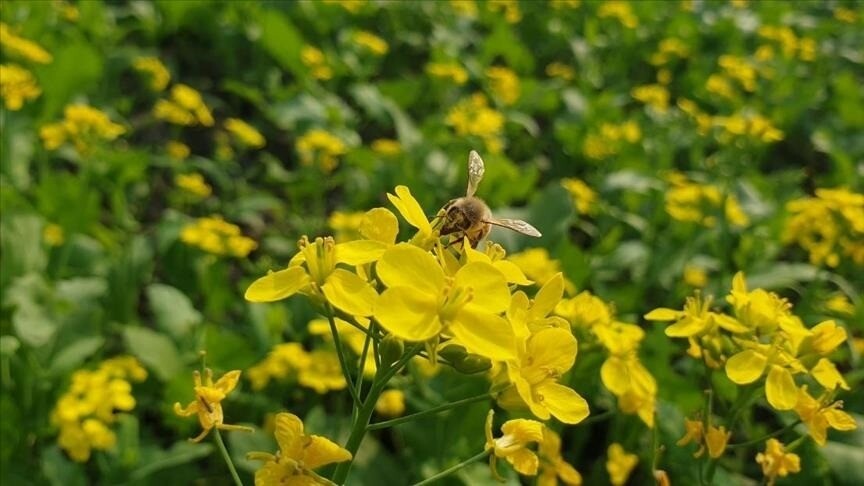
- Pollinators among them disappearing faster, scientists warn
Drivers across Europe began noticing that their windscreens were staying cleaner after long summer journeys. The observation became widespread enough to earn a name, the “windscreen phenomenon”, prompting researchers to ask whether it reflects a real decline in insect populations or simply changes in car design — and what it could mean for food security.
Long-term, standardized counts from Denmark and nationwide UK citizen science data both show insect splats have plunged by roughly half to over 90%, depending on location and timeframe.
In the British county of Kent, a 2019 survey by Kent Wildlife Trust asked volunteers to attach counting grids to their car registration plates and record how many insects they struck per kilometer. The results showed 50% fewer insects. By 2021, the annual Bugs Matter survey recorded a 72% decline from that 2004 figure. In 2024, the count fell a further 63% from 2021 alone.
Researches confirmed that modern vehicles actually strike slightly more insects than older models, which proves that the cleaner windscreens were not a product of automotive design.
In Denmark, researcher Anders Pape Moller conducted 1,375 standardized surveys of insects killed on car windscreens between 1997 and 2017 along fixed routes at fixed speeds. Controlling for temperature, wind, time of day and season, the study found an 80% decline in flying insect abundance on one transect and 97% on another.
'10% of wild bees in Europe are at risk of extinction'
Adam Vanbergen, research director at the French National Institute for Agriculture, Food, and Environment (INRAE), told Anadolu that the evidence base has improved substantially over the past decade.
The proportion of wild bee species in Europe considered data-deficient fell from around 50 to 60% in 2014 to 14% recently, but filling in those gaps has not changed the overall picture.
"We've basically reconfirmed that there are 10% of wild bees in Europe that are at risk of extinction," said Vanbergen, who is also lead author of a 2014 report on the status and value of pollinators.
Butterflies have fared worse. According to Vanbergen, the most recent evaluation showed that 15% of butterfly species face extinction compared to a 2010 baseline. A 2022 assessment found 37% of hoverflies in Europe were at risk of extinction.
"Many of those butterfly species are endemic to Europe. That would be a significant loss for conservation purposes," he said.
New soon-to-be-published findings from the Safeguard project have refined the scientific understanding of the windscreen phenomenon.
Standardized experiments across several countries examined pollinator communities along major roads, minor roads and urban routes.
The key finding, Vanbergen said, was a significantly lower insect pollinator biodiversity alongside motorways, potentially due to vehicle collisions but also perhaps the volume of air displaced by fast-moving traffic driving insects away from roadside vegetation.
Greening efforts on motorway verges are therefore likely to have limited benefit for pollinators, but restoring pollinator habitat along minor roads and urban routes offers far greater potential, Vanbergen said.
Climate change: ‘a squeeze from both ends’
Two studies published in Science in 2015 and in 2020 analyzed bumblebee populations across Europe and North America using more than a century of observational records from approximately 423,000 and 550,000 georeferenced occurrences, respectively.
Despite substantial warming across both continents, bumblebee species had not expanded northward as most species do under warming conditions.
At the same time, they were losing ground at their southern range limits, retreating by up to 300 kilometers (186 miles).
Critically, both effects were shown to be independent of land-use change and pesticide application.
"Extreme heat events lead to a higher extinction risk for bumblebees … they also make it harder for these bumblebee species to spread into new areas and colonize.
“Climate change is really, very much squeezing that particular group of pollinator species quite badly," Vanbergen said.
Agriculture: pressure and consequence
Insecticides affect pollinators both directly and through sublethal effects like shortened lifespans in honeybees.
Neonicotinoids are systemic insecticides that move through plant tissues and can be found in pollen and nectar. Studies have shown they can reduce bumblebee colony growth and the production of new queens.
The EU banned the outdoor use of three major neonicotinoids on flowering crops in 2018, but pollinator declines have continued.
Habitat loss compounds the chemical pressure. Monoculture farming reduces the floral diversity pollinators need across a full season, and the hedgerows, meadows and field margins that once sustained them between crop cycles have been progressively removed from European agricultural landscapes.
The consequences reach directly into food production. According to the UN food agency, approximately 87.5% of flowering plants globally are pollinated by animals. Around 75% of cultivated crops depend on animal pollination, and approximately 100 crops feeding 90% of the global population are pollinated predominantly by bees.
"There's clear evidence that pollination services to those crops have economic value. They improve the yield and also the marketable quality of those crops — how round they are, how large they are, how much of a particular vitamin is inside the fruit," Vanbergen said.
Monitoring and policy
The EU Pollinator Monitoring Scheme (EU-PoMS) was rolled out to member states in 2025, providing the first standardized pan-European framework for tracking pollinator abundance over time. Vanbergen described it as "a world first" — at last delivering the population-level baseline that scientists had long identified as the critical missing piece.
The scheme is directly tied to the Nature Restoration Regulation, which entered into force in August 2024 and sets a binding legal target to reverse pollinator decline by 2030.
Many active European research programmes are running in parallel. AGRI4POL, coordinated by Vanbergen and launched in 2024, is examining how farming systems can become more supportive of pollinator communities.
“The key is implementation,” Vanbergen said. “It’s how they do it, where they do it, what kind of actions they take, which habitats they focus on.”