Naim Berjawi and Lina Altawell
21 September 2026•Update: 21 September 2026
- Public prosecutor Mohammed Saab submits prosecution's 270-page opinion to investigative Judge Tarek Bitar
- Beirut Bar Association lawyer Shukri Haddad says indictment expected before end of year, with trials to follow
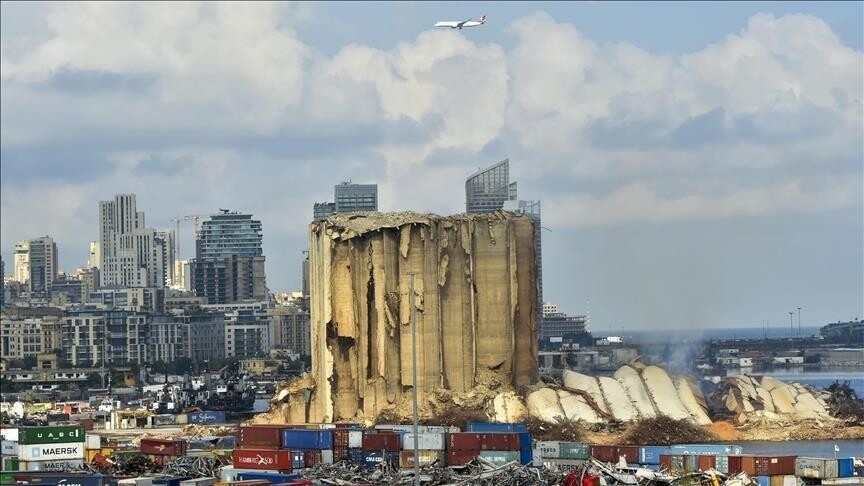
Six years after the deadly Beirut port explosion, the case is approaching a crucial stage with an indictment expected after prosecution recently completed its opinion.
The blast struck Beirut port on Aug. 4, 2020, killing at least 235 people, injuring over 7,000 others and causing widespread destruction across the capital.
Lebanese authorities attributed the explosion to a fire of unknown origin at the port, where large quantities of highly explosive ammonium nitrate had been stored without adequate safety precautions.
270-page opinion
Public Prosecutor Judge Mohammed Saab submitted his completed opinion in the Beirut port explosion case to investigative Judge Tarek Bitar last week, according to state news agency NNA.
The opinion runs 270 pages and sets out the public prosecution's requests regarding the investigations conducted into the port explosion.
The prosecution completed its assessment five months after receiving the case file from Bitar, who concluded his investigation in late March and referred it to prosecutors for their opinion.
Bitar has charged more than 70 people in the case, including politicians, security and military officials, and public employees.
Indictment draws closer
The submission brings the case closer to an indictment by Bitar, Shukri Haddad, rapporteur of the Beirut Bar Association's prosecution office handling the port explosion case, told Anadolu.
"The public prosecution's opinion is the first official document to provide a comprehensive judicial assessment of the facts, and its importance lies in presenting the first judicial account of what happened on Aug. 4," Haddad said.
“The opinion and the findings it contains are not binding on the investigative judge, who may accept or reject them, as the final decision rests with Bitar through his indictment.”
Former president mentioned in case
“The prosecution's opinion remains confidential and may only be reviewed by the Court of Cassation lawyer and the investigative judge,” Haddad said. “The final decision rests with Bitar, who determines whether to indict any individual or official regardless of whether that person's name appears in the prosecution's opinion,” he added.
Lebanese news website Asas reported that the public prosecutor held former President Michel Aoun directly criminally responsible for the explosion, citing his knowledge of the ammonium nitrate and his alleged failure to take appropriate action.”
Aoun filed a judicial complaint over what he described as the “fabrication of falsehoods, defamation and disclosure of confidential investigation information.”
According to the complaint, Aoun argued that circulating and promoting false reports distorts the facts, obscures the identity of those actually responsible and creates a media-driven conviction outside the judicial process.
Indictment and trial
Trials in the case are expected to begin after the indictment, which is likely to be issued before the end of this year, after which the entire case will be transferred to the Judicial Council, Haddad said.
Lebanon's Supreme Judicial Council is the country's highest special court for cases involving crimes affecting state security, including political assassinations, terrorism and other offenses referred to it by the Cabinet as threats to national security.
According to observers, Saab's opinion details how a 2,750-ton shipment of ammonium nitrate arrived at Beirut port in 2013, was unloaded and transferred to Warehouse 12, where it remained until the 2020 explosion.
The prosecution's opinion summarizes thousands of pages of correspondence, investigation records, confessions and witness testimony and identifies administrative, security, military and judicial responsibilities, without itself constituting an indictment or formal charge.
The investigation has repeatedly stalled amid Lebanon's political divisions, particularly after Hezbollah called for Bitar's removal in 2021, accusing him of politicizing the case. The investigation eventually came to a complete halt in 2023.
Bitar resumed his investigation after Joseph Aoun was elected president in early 2025 and Prime Minister Nawaf Salam formed a new government, while families of the victims have continued to demand accountability for the explosion.