Naim Berjawi and Tarek Chouiref
01 June 2026•Update: 01 June 2026
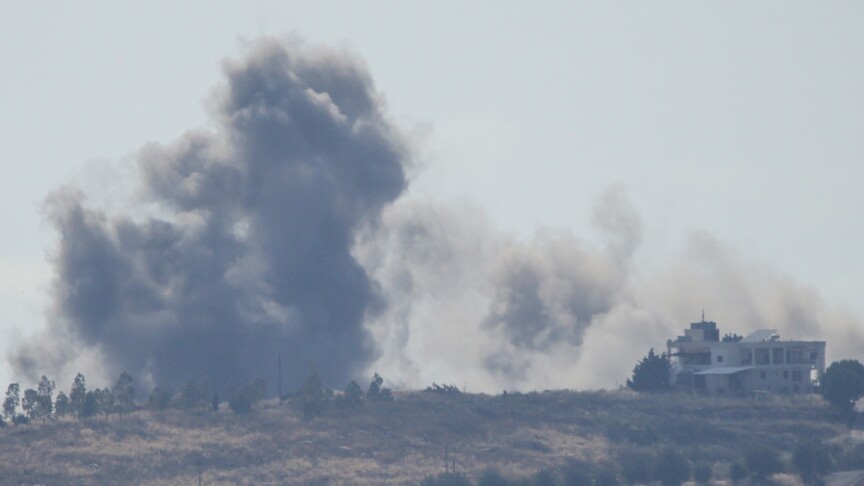
Israel’s capture of Beaufort Castle in southern Lebanon has placed a renewed focus on the future direction of its ground offensive, with military experts warning that the strategic fortress could become a launching point for deeper operations beyond the Litani River and a new source of leverage in negotiations with Lebanon.
The Israeli army announced Sunday that its forces had taken control of Beaufort Castle, known in Arabic as Qalaat al-Shaqif, and the Wadi al-Salouqi area in southern Lebanon following an operation that began several days earlier.
The move came days after Israeli Prime Minister Benjamin Netanyahu said Israeli forces had crossed the Litani River, while the army expanded evacuation orders to areas stretching far deeper into southern Lebanon than previously declared.
More than a castle
Retired Brig. Gen. George Nader told Anadolu that Israel’s control of Beaufort Castle marks a major turning point in the ongoing fighting against Hezbollah in southern Lebanon because of the site’s military, symbolic and psychological significance.
Perched atop a hill overlooking vast areas south of the Litani River, the fortress provides a commanding view of Nabatieh, illegal northern Israeli settlements and the Mediterranean coast.
Beyond its military value, Nader said the castle carries strong symbolic weight due to its long association with conflicts in southern Lebanon.
He noted that images released by Israeli media showing soldiers raising Israeli flags over the fortress were intended to project a morale boost for the army and reinforce the significance of the operation.
A gateway beyond the Litani
Nader said the seizure of Beaufort Castle could be a prelude to further Israeli advances toward Nabatieh and potentially the Zahrani River.
Any move toward those areas would represent Israel’s deepest push into Lebanon in decades and place large parts of southern Lebanon under direct military pressure, he said.
Nader also argued that recent battlefield developments could affect ongoing talks between Lebanon and Israel in Washington, giving Israel an additional bargaining chip after rejecting Lebanon’s calls for a ceasefire.
He said Israel appears to be seeking security arrangements with the Lebanese state before discussing any cessation of hostilities while using territorial gains to strengthen its negotiating position.
Pressure on negotiations
Retired Brig. Gen. Hisham Jaber told Anadolu that Israel’s objectives extend beyond its stated goal of removing threats against northern Israel.
He argued that Israel is attempting to increase pressure on the Lebanese government to secure concessions in negotiations.
“Every kilometer gained on the battlefield is likely to become a bargaining chip at the negotiating table,” Jaber said.
He added that Israeli forces could seek to expand their presence toward the area between the Litani and Zahrani rivers, particularly the elevated terrain overlooking southern Lebanon.
Jaber expressed doubt that current negotiations would succeed under mounting military pressure, saying previous rounds had failed to produce meaningful results.
He also accused Netanyahu of having little interest in ending the offensive, arguing that continued military escalation remains central to Israel’s current strategy.
A fortress at the heart of conflict
Beaufort Castle is one of southern Lebanon’s most significant historical landmarks. Over the centuries, it changed hands between Crusader, Ayyubid and Mamluk rulers before emerging as a strategic military position in modern conflicts.
In modern times, the fortress became one of southern Lebanon’s most contested sites. It was used by Palestinian fighters during the 1960s and 1970s and witnessed heavy battles during Israel’s 1982 invasion of Lebanon.
Israeli forces occupied the site until their withdrawal from southern Lebanon in 2000.
Hours after Israeli troops seized the fortress on Sunday, Netanyahu described the move as a decisive moment.
“Today we returned to Beaufort Castle in a different way. We have returned united, determined and stronger than ever,” he said.
Israel began expanding its ground operations in southern Lebanon on May 26, moving beyond the so-called “Yellow Line,” an area it had controlled during the latest war that began against Hezbollah on March 2 which extended up to 12 kilometers (7.45 miles) from the border.
Israel has continued its attacks on Lebanon despite a ceasefire that took effect on April 17 which was extended for 45 days beginning May 17 following indirect talks mediated by the United States.
Israeli attacks since March 2 have killed more than 3,400 people across the country, according to the Lebanese Health Ministry.
*Writing by Tarek Chouiref