Anadolu Ajansı © 2026


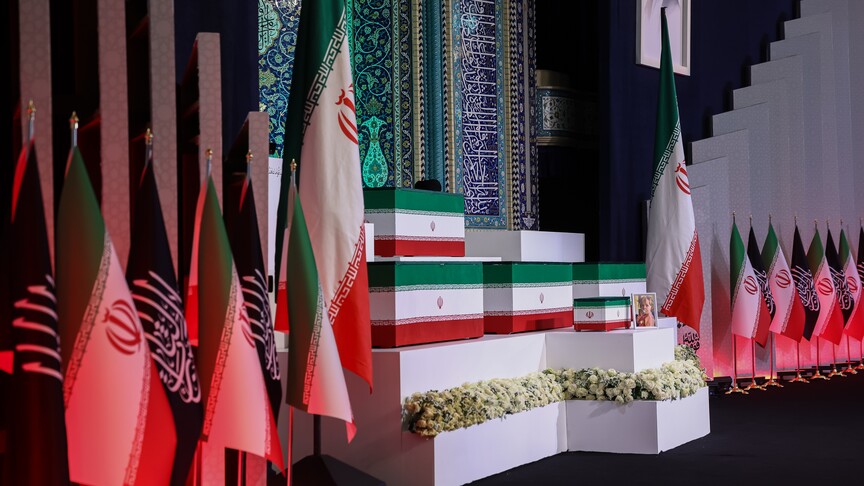
Iran is preparing for an extensive multicity funeral ceremony for former Supreme Leader Ayatollah Ali Khamenei that authorities say will draw millions of mourners and foreign delegations.
Iran's former Supreme Leader, Ayatollah Ali Khamenei, and four members of his family, who were killed in a US-Israeli strike in Tehran on February 28, will be laid to rest more than four months after the war broke out.
Spanning several days and extending across multiple cities in Iran and Iraq, the ceremonies are set to become one of the most extensive logistical, diplomatic, religious, media, and security operations the country has undertaken in decades.
Authorities say more than 10 million people are expected to gather in Tehran alone over the three days beginning on Saturday, while millions more are expected to travel to Qom and Mashhad to take part in the ceremonies there.
Senior political and military officials have issued separate messages calling for a large public turnout, describing the ceremonies as a historic display of national unity and resolve.
The official ceremonies begin on Friday, with a state tribute ceremony in Tehran, where senior Iranian officials, foreign dignitaries, and special guests will pay their respects to Ayatollah Khamenei and meet members of his immediate family.
High-ranking foreign officials, including presidents, parliamentary speakers, prime ministers, foreign ministers, and special envoys, are expected to attend, with official ceremonies continuing into the evening.
Beginning at 6:00 a.m. local time on Saturday, July 4, public farewell ceremonies will be held at Tehran's Imam Khomeini Mosalla, one of the world's largest mosque complexes, which regularly hosts Friday congregational prayers as well as major international exhibitions.
Public mourning will continue at the Mosalla on both Saturday and Sunday, allowing hundreds of thousands of people – both from across Iran and other countries – to pay their final respects before the funeral procession through the capital on Monday.
The main procession in Tehran will take place on Monday, July 6, followed by a second procession in the central Iranian city of Qom on Tuesday, July 7. The body will then be transferred to Iraq for official ceremonies in the cities of Najaf and Karbala on July 8.
In Qom, the proceedings will begin at the shrine of Hazrat Masoumeh and proceed toward Jamkaran Mosque, with the final route will be determined according to crowd conditions and security arrangements, according to officials.
The final burial ceremony will be held on July 9 at the shrine of Imam Reza in the northeastern city of Mashhad, bringing to a close a week-long series of commemorations.
Officials described the events as one of the largest international gatherings organized by the Islamic Republic.
Tehran Governor Mohammad Sadegh Motamedian said all three branches of government have coordinated extensively to ensure the smooth arrival, accommodation, and safe departure of millions of visitors traveling from across Iran and the wider Islamic world.
Authorities have planned transportation from visitors' arrival points to accommodation sites and departure points, with operations monitored around the clock. Particular attention has been given to public health in light of the soaring summer temperatures.
Three major medical universities in the capital – Tehran University of Medical Sciences, Shahid Beheshti University of Medical Sciences, and Iran University of Medical Sciences – are reportedly working closely with the Armed Forces, the Islamic Revolutionary Guards Corps (IRGC), the Army, the Iranian Red Crescent Society, and private healthcare providers to establish an integrated emergency healthcare network during the funeral ceremonies.
Field hospitals have been deployed throughout the city, while hundreds of ambulances and ambulance buses have also been put into service to provide rapid medical response.
Emergency agencies, including the Iranian Red Crescent Society, Emergency Medical Services, and the Tehran Fire Department, have developed multiple operational contingency plans to manage both traffic flow and any emergencies arising from the exceptionally large crowds expected during the ceremonies.
A national transportation committee, chaired by the Minister of Roads and Urban Development, has coordinated countrywide transport operations to facilitate the orderly movement of millions of visitors.
Officials said 420 service stations have been established across Tehran to provide food, logistical assistance, first aid, and other essential services along major highways, city entrances, transportation corridors, and public squares.
Accommodation has also been arranged at 1,635 locations throughout the capital, including mosques, Friday prayer venues, schools, sports halls, and other public facilities, enabling the city to host the unprecedented influx of mourners expected over the coming days.
The National Security Council has held a series of meetings in recent weeks to prepare for the ceremonies, while the Supreme National Security Council has conducted specialized coordination sessions in Tehran, Qom, and Razavi Khorasan Province – three cities where processions would take place.
Military, law enforcement, intelligence, and emergency agencies have all been placed on full alert to ensure the week-long commemorations proceed without any security threats.
According to the authorities, security measures will include extensive operational patrols, enhanced surveillance, protection of key transportation corridors, strict monitoring of entry and exit points, and continuous coordination among the armed forces, police, intelligence agencies, and emergency services throughout the week.
In recent days, senior Iranian military commanders have also issued veiled warnings to Israel against any "miscalculation" during the ceremonies, as tensions remain high in the aftermath of the recent war.
Interior Minister Eskandar Momeni said Iran has organized the participation of official delegations from more than 40 countries, while political, academic, religious, cultural, and scientific figures from over 90 countries have also confirmed their attendance.
Foreign Ministry spokesman Esmaeil Baghaei earlier said the total number of participating countries is expected to approach 100, represented by heads of state (presidents and prime ministers), parliamentary speakers, foreign ministers, special envoys, scholars, religious leaders, and public delegations.
Special arrangements have also been made for representatives of Iran-aligned groups from Lebanon, Palestine, Iraq, and Yemen through coordination by the IRGC Quds Force, according to officials.
High-profile participants confirmed so far include Tajik President Emomali Rahmon, Pakistani Prime Minister Shehbaz Sharif, Iraqi President Nizar Amidi, Armenian Prime Minister Nikol Pashinyan, Turkish Vice President Cevdet Yılmaz, Bangladeshi Prime Minister Tariq Rahman, Speaker of Iraq's Council of Representatives Mohammed al-Halbousi, Speaker of Azerbaijan's National Assembly Sahiba Gafarova, Cuba's Minister of Higher Education Walter Baluja García, Deputy Chairman of Russia's Security Council Dmitry Medvedev, and Chairman of Turkmenistan's People's Council Gurbanguly Berdimuhamedow, among others.
Authorities also expect hundreds of religious delegations from Europe, Central Asia, East Asia, the Arab world, and other regions, underscoring the scale of the ceremonies.
According to organizers, at least 14,000 journalists, photographers, documentary filmmakers, and other media professionals have registered to cover the events.
Among them are more than 900 foreign media representatives, including approximately 300 journalists from international news organizations, 350 correspondents representing foreign media outlets based in Iran, and nearly 300 foreign bloggers and social media influencers.
Momeni said approximately 800 foreign journalists are expected to report from the ceremonies in three Iranian cities.
Organizers have designated a dedicated media center for foreign journalists at Tehran's Imam Khomeini Mosalla, equipped with high-speed internet and broadcast facilities.
A source familiar with the preparations also dismissed reports suggesting that internet restrictions would be imposed during the three-day ceremonies in Tehran.
According to Iran's cultural attache in Iraq, the Iraqi government has established a high-level committee to organize the funeral programs in Najaf and Karbala in response to requests from Iraqi citizens, tribal leaders, religious scholars, clerics, and other public figures.
The body of Ayatollah Khamenei is scheduled to arrive at Najaf International Airport on the evening of July 7, where it will be received in an official ceremony by senior Iraqi officials.
On Wednesday, July 8, the procession in Najaf will begin at 6 am local time (0300GMT) near the shrine of Imam Ali, proceeding from Kufa toward Thawrat al-Ishreen Square.
A second procession will be held later that day in Karbala, beginning at 4 pm local time (1300GMT) on Abu Mahdi al-Muhandis Street and concluding at Bayn al-Haramayn, the passageway between the shrines of Imam Hussain and Hazrat Abbas.
The Iraqi program will also include the ceremonial circumambulation of the coffin within the shrines of Imam Ali, Imam Hussain, and Hazrat Abbas, the three revered figures for Shia Muslims, accompanied by special religious rites and commemorative ceremonies.
The final chapter of the week-long farewell ceremonies will unfold in Mashhad, where the last public funeral procession will take place on Thursday, July 9, before Ayatollah Khamenei and members of his family are laid to rest at the shrine of Imam Reza.
The shrine also serves as the resting place of former Iranian President Ebrahim Raisi, who was buried there following his death in a helicopter crash in May 2024.
Both were natives of Mashhad and spent their formative years in the city. According to reports, Ayatollah Khamenei expressed in his final will his wish to be buried at the shrine of Imam Reza, bringing to a close his lifelong journey in the same city where it began.
news_share_descriptionsubscription_contact