- Iran, allied groups have carried out at least 172 attacks on non-military infrastructure, according to conflict monitor ACLED
Modern wars are increasingly fought not only against armies but against the infrastructure that keeps societies functioning.
For military planners, attacking critical infrastructure can weaken an opponent's ability to sustain a war. For civilians, it can disrupt electricity, water, transportation, communications and economic activity.
The conflict involving Iran, the US and Israel has expanded beyond conventional military targets to steel mills, petrochemical complexes, transport networks, power plants and digital infrastructure.
The shift reflects a broader trend in modern warfare, where infrastructure that supports a country’s economy and security is increasingly viewed as strategically important.
US-Israel attacks shift toward economic infrastructure
The conflict, which began on Feb 28, initially focused mainly on military-related targets.
US and Israeli operations focused on nuclear facilities, missile sites, Revolutionary Guard installations, radar systems and command centers, while Iranian response was towards Israeli military positions and US bases across the region.
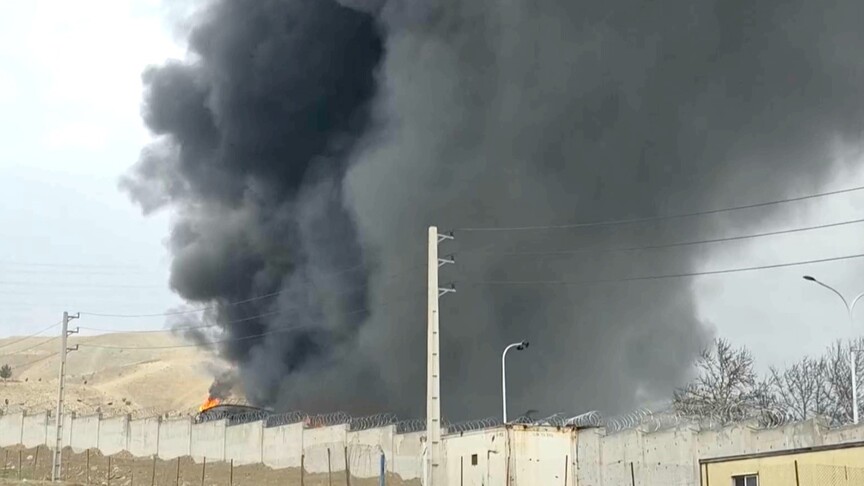
By late March, the scope of US-Israeli strikes had expanded to include infrastructure linked to Iran's industrial and energy sectors, including Mobarakeh Steel Company in Isfahan, Khuzestan Steel Company in Ahvaz and petrochemical facilities in Tabriz, Mahshahr, Bandar Imam, Asaluyeh and Shiraz. Strikes also hit railways, highways and bridges.
The broader target list was accompanied by a shift in US rhetoric.
In April, President Donald Trump warned that unless Iran reached an agreement with Washington, US forces would strike "each and every one" of its electricity-generating plants and "bring Iran back to the Stone Age."
Iran expands its list of targets
Iran has said its response was linked to the expansion of US and Israeli operations inside the country, and said that companies providing technological, financial or logistical support should no longer be viewed as purely civilian entities.
Local media published lists of American companies and infrastructure that Tehran said supported US military operations or Israel.
They named technology companies including Microsoft, Google, Oracle, Nvidia and Palantir, defense contractors such as Lockheed Martin and Boeing and multinational companies including Amazon Web Services, ExxonMobil and JPMorgan Chase.
They identified Gulf steel producers as potential targets, while senior military officials warned that refineries, petrochemical complexes, energy infrastructure and desalination plants could also be attacked.
Iranian Foreign Minister Abbas Araghchi said any attack on Iran's infrastructure would trigger "a powerful and decisive response."
According to conflict monitor ACLED, Iran and allied groups carried out at least 172 attacks on non-military infrastructure across Gulf Cooperation Council countries between Feb. 28 and July 30, accounting for 18% of all Iranian land attacks.
Nearly half targeted energy infrastructure, while airports, ports, industrial facilities, financial centers and data centers accounted for much of the remainder.
The UAE and Kuwait recorded the highest number of attacks, followed by Bahrain and Saudi Arabia, while Qatar and Oman experienced comparatively fewer incidents.
According to the ACLED, Gulf states that support US military operations through bases and logistics, such as Kuwait and Bahrain, are likely to remain more exposed in the event of continued attacks.
At the same time, Gulf countries that decide to engage in direct action against Iran are likely to face greater risk during escalation.
Energy, water, data become strategic assets
The widening target lists show how modern conflicts increasingly seek to disrupt the systems that keep economies functioning, both in the conflict region and beyond.
Energy is the clearest example.
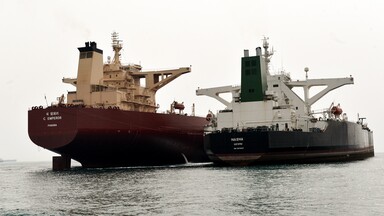
Much of the world's spare oil production capacity lies in the Gulf, while Qatar is among the largest exporters of liquefied natural gas. Attacks on production, export facilities and shipping routes have sent shockwaves through global markets.
Earlier this month, semi-official Fars News Agency listed Gulf energy facilities it said were within range of Iranian missiles in the event of another US attack.
They included Saudi Arabia's Ghawar oil field and Abqaiq processing plant, the UAE's Ruwais refinery, Qatar's North Field gas reserve and Ras Laffan LNG export terminal, Kuwait's Burgan oil field and Bahrain's Sitra refinery.
The agency said that attacks on the sites would reverberate far beyond the region. It also cited Iran's strike on Qatar's North Field gas processing infrastructure after its own South Pars gas field came under attack.
Water infrastructure presents another critical vulnerability. Gulf countries depend heavily on desalination, with Dubai, Abu Dhabi, Doha and Kuwait City relying on it for most of their freshwater.
Iran has also reported attacks on its desalination plants, most recently saying a US strike in July left around 10,000 people without water.
Digital infrastructure has emerged as another new battlefield.
During the conflict, reports said US-Israeli strikes hit data centers in Tehran, including one at Sharif University of Technology that Iranian media said supported the national artificial intelligence platform.
Iranian drone strikes also reportedly damaged Amazon Web Services facilities in the UAE and Bahrain in what some analysts described as among the first known physical attacks on commercial cloud infrastructure.
Experts say data centers are both vulnerable to attacks and increasingly central to national economies.
The infrastructure now underpins banking, logistics, telecommunications, government services and AI development, meaning even localized disruptions can ripple across industries.