Rania R.a. Abushamala
07 May 2026•Update: 08 May 2026
For Bassel Farran, the Tishreen Military Hospital in Damascus was not a facility for medical care, but a place for detention, torture and execution under the former Syrian regime of Bashar al-Assad.
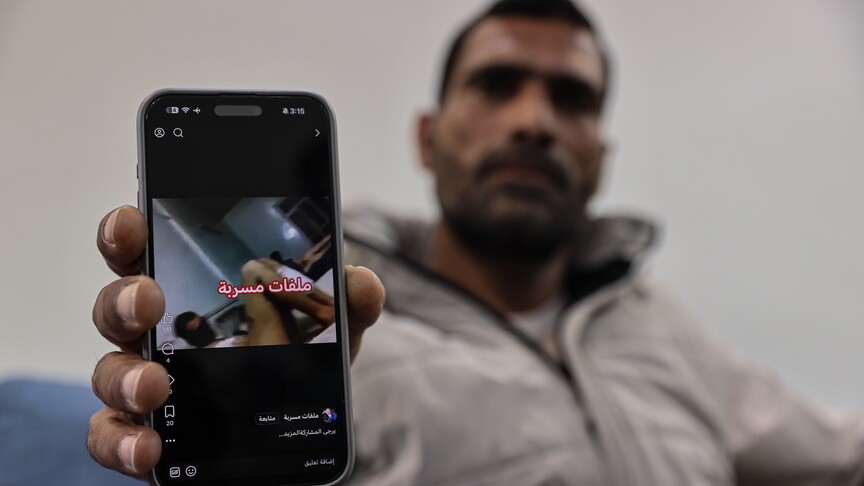
Speaking to Anadolu, Farran recounted his nine-month detention at the hospital after his arrest in 2013.
Farran said he was wounded during shelling and initially received treatment at a private hospital to avoid arrest.
After completing treatment, however, he was detained by regime forces and transferred to Tishreen Military Hospital in Damascus.
He said detainees were held in an old building known as the “trauma section,” which had been converted into detention wards for people arrested by different security agencies.
Farran said his 12-year-old brother disappeared in 2011, while his father died in 2014 in the notorious Sednaya Prison, widely referred to by activists and rights groups as a “human slaughterhouse.”
“We were brought here not for treatment but for execution. There was no treatment,” he said.
According to Farran, four detainees were shackled to a single bed, while executions were carried out at night “to reduce the numbers.”
“Most detainees in those wards would lose their lives within a few months,” he said. “The maximum time some could survive was around three months, after which they would die either from illness or torture.”
Killing of children
Farran recalled the death of 15 children inside the notorious hospital.
“They did not stay long,” he said. “Two or three guards would press on a child’s neck until he died. They were executed collectively.”
The Syrian man further recounted the case of an elderly detainee who took his own life after enduring severe torture and humiliation.
Farran said a prison official identified as Khaldoun, nicknamed “Azrael,” was responsible for picking up detainees for execution.
“One day before my release, he told me to prepare for the night he would be on duty, which meant I would be executed that night,” Farran said. “But I was transferred to another prison a day before his shift.”
Farran said surviving detention requires being mentally disconnected from the outside world.
“If you did not do that, you could lose your mind,” he added.
Farran remained detained at the hospital for about nine months before being transferred to another hospital in the Adra area, northeast of Damascus, where he stayed for an additional five months.
He said he was released in 2014 and immediately fled to Jordan, where he continues to live with the psychological impact of the experience.
He said he recently recognized himself in one of the circulated videos while sitting with his wife, reviving traumatic memories.
“It took me a long time to process what I saw because all the details came back to my mind,” he said.
“Now everyone has seen the truth with their own eyes,” he said. “We were not lying.”
*Writing by Rania Abushamala in Istanbul