Mohammad Sio
23 June 2026•Update: 23 June 2026
Iran announced early Tuesday the conclusion of technical talks with the US in Burgenstock, Switzerland, as part of Qatari- and Pakistani-mediated negotiations aimed at ending the US-Israel-Iran war.
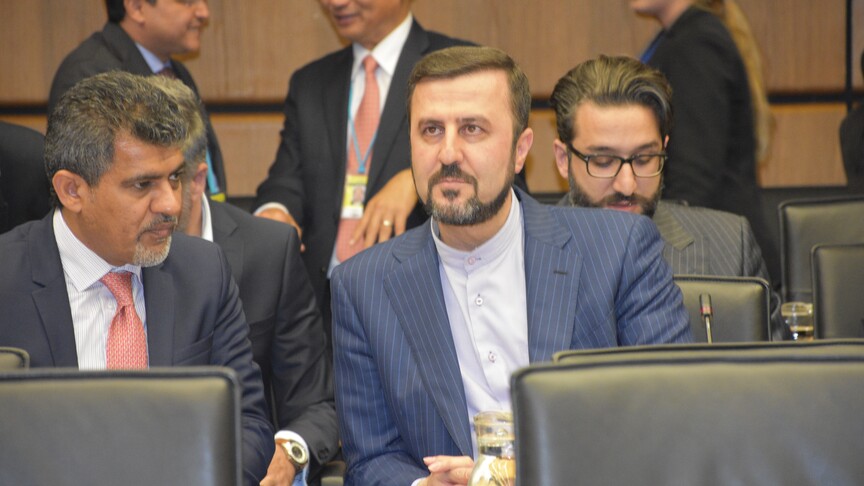
Deputy Foreign Minister Kazem Gharibabadi, who led Iran's technical negotiating team, said the four-party talks concluded with an agreement on arrangements for future negotiations, including working groups and implementation mechanisms, Iran's official IRNA news agency reported.
Gharibabadi said the discussions followed a high-level committee meeting held Sunday to monitor implementation of the Islamabad Memorandum of Understanding — a framework agreement to end the war signed virtually by the US and Iranian presidents on June 17 — which continued into Monday.
“Technical discussions were held to determine the implementation mechanisms of the memorandum of understanding and the statement issued at the conclusion of the high-level meeting, and the necessary understandings were reached,” he said.
Under the arrangements agreed upon, future negotiations will be conducted under the supervision of the high-level committee, attended by Iranian Parliament Speaker Mohammed Bagher Qalibaf and Foreign Minister Abbas Araghchi, US Vice President JD Vance, Pakistani Prime Minister Shehbaz Sharif, and Qatari Prime Minister Mohammed bin Abdulrahman, Gharibabadi noted.
The parties agreed to establish four working groups dealing with sanctions removal, nuclear-related sanctions, reconstruction and economic development, and monitoring and implementation, he added.
According to Gharibabadi, participants also agreed to establish "a contact point" among the member states, develop a memorandum of understanding to guarantee the safe passage of commercial vessels through the Strait of Hormuz, and create a Lebanon "conflict-prevention unit" involving the participating countries as well as Pakistan and Qatar.
The heads of the four technical teams will report to the high-level committee and oversee the activities of the working groups and newly established units, he outlined.
Gharibabadi also said the technical talks addressed procedures related to the issuance of a general license for Iranian oil, petroleum and petrochemical exports and related services, as well as arrangements concerning the release of frozen Iranian assets.
He said the US had issued a general license covering the sale of Iranian petroleum and petrochemical products and related services, adding that the authorization had been published on the website of the Office of Foreign Assets Control (OFAC).
The deputy foreign minister further said the parties agreed on the immediate implementation of arrangements for the release of $12 billion in frozen Iranian funds.
Iran and the US announced on June 14 that they had reached a 14-point understanding mediated by Pakistan, aimed at ending the war and addressing outstanding disputes through dialogue and negotiations.
The memorandum, known as the Islamabad Understanding, entered into force on June 18 after being electronically signed by Iranian President Masoud Pezeshkian and US President Donald Trump.
The agreement includes provisions related to ending the war, including in Lebanon, reopening the Strait of Hormuz, and lifting the US naval blockade imposed on Iran.