Sahin Demir
26 June 2026•Update: 26 June 2026
Iran on Friday condemned a joint statement issued by the US secretary of state and Gulf Cooperation Council foreign ministers, describing it as "interventionist, irresponsible and provocative."
In a statement, the Iranian Foreign Ministry criticized positions outlined in the joint communique issued after the GCC-US ministerial meeting in Bahrain on June 25 and warned against what it called continued hostile and interventionist behavior in the region.
Tehran dismissed Washington's stated "enduring commitment" to the security of GCC member states as "mere rhetoric" and a distortion of reality, arguing that the US military presence in the region has become a source of insecurity and division.
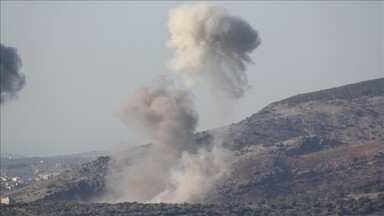
The ministry said the recent use of military bases and facilities in regional countries during US and Israeli strikes on Iran demonstrated that Washington did not value the security of its regional partners.
It urged regional states whose territory and facilities were allegedly used during the conflict to reconsider their positions, saying they had obligations under international law and the principle of good neighborliness to prevent third parties from using their territory to carry out hostile acts against Iran.
Iran also rejected repeated accusations regarding its peaceful nuclear program, calling them fabricated by the US and Israel, and urged GCC member states to cooperate with Tehran on establishing a nuclear weapons-free zone in West Asia.
The statement also condemned references in the GCC-US communique to Iran's missile and drone capabilities, saying Tehran would not show "the slightest leniency" in defending its sovereignty and military deterrence.
Iran also criticized the GCC for aligning with Washington and Israel in describing Palestinian and Lebanese resistance groups as "Iranian proxies," arguing that the only "proxy" in the region is Israel.
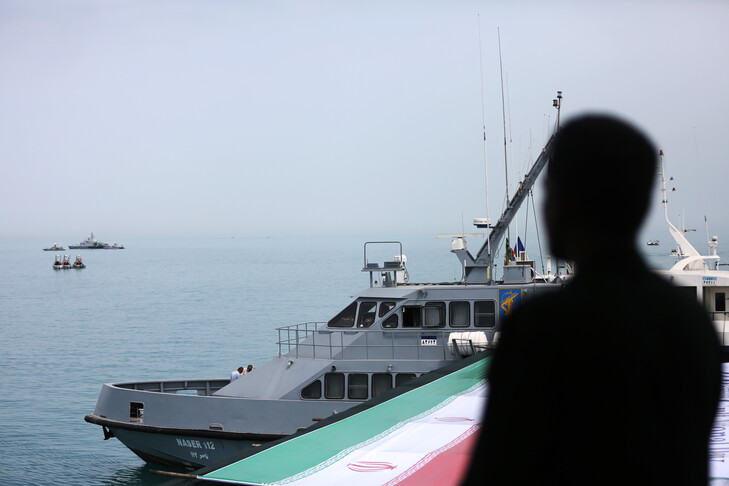
On the Strait of Hormuz, Tehran said security disruptions in the waterway were the direct result of recent US and Israeli military actions and accused some regional states of complicity.
The ministry reiterated that the Strait of Hormuz lies within the territorial waters of Iran and Oman and said shipping management there would be governed by Article 5 of the recently signed war-ending memorandum of understanding.
Iran called on GCC member states to reassess their regional security approach, insisting that collective security could only be achieved through cooperation among regional countries without foreign intervention.
On Thursday, the US and Gulf Cooperation Council countries called for the reopening of the Strait of Hormuz, stressing that free navigation through the strategic waterway remains "essential" to regional and global security.
In a joint statement issued after a US-GCC ministerial meeting in Manama, the two sides emphasized "free, unconditional, and unrestricted navigation," including the right of transit passage under international law, and rejected "any tolls, fees, or attempts to assert control" over the Strait of Hormuz.
The ministers also stressed the need to maintain unity as US-Iran negotiations move toward a more permanent end to hostilities while citing the shared objective of preventing Iran from developing or acquiring a nuclear weapon.
They welcomed the recently signed memorandum of understanding between the US and Iran and recognized the mediation roles of Pakistan and Qatar.
The statement also said any trade and investment with Iran would be "conditional and reversible," depending on Tehran's compliance with the memorandum and any final agreement, as well as ending what it called Iran's "destabilizing behavior."