
Anadolu Ajansı © 2026


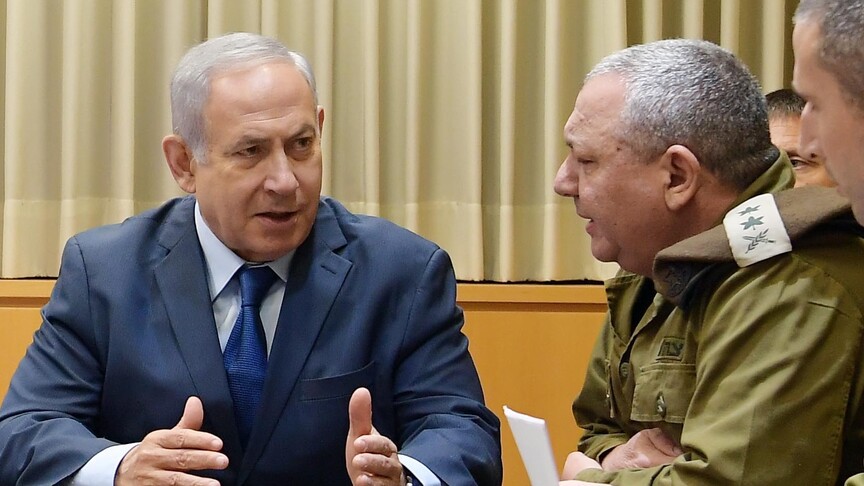
Israel’s leading opposition party is polling ahead of Prime Minister Benjamin Netanyahu’s Likud ahead of the Oct. 27 general election, but surveys suggest the race remains highly dependent on smaller parties and post-election coalition choices.
Gadi Eisenkot’s Yashar is the narrow favorite to emerge as the largest party in the 120-member Knesset, polling at 22-25 seats compared with 20-21 for Likud in surveys published between Sept. 3 and Sept. 8.
However, winning the most seats and forming the government are two different things in Israel’s parliamentary system.
Yashar could finish first while Netanyahu remains prime minister if he succeeds in assembling the support of at least 61 lawmakers. Conversely, opposition parties could collectively win more seats but fail to form a government if they cannot agree on coalition partners or outside support.
A new Maariv poll published Tuesday gives the opposition its clearest route yet to a majority, projecting 57 seats for opposition parties and four for a new party led by Yoaz Hendel and economist Yaron Zelekha. If the Hendel-Zelekha alliance joins the opposition, the bloc would reach 61 seats, the minimum needed to form a government.
Hendel and Zelekha, however, have not yet indicated which political bloc they would support if their party enters parliament.
While the recent polls disagree over which camp is ahead, they point to the same broader picture: Netanyahu’s bloc remains below a majority, while the opposition’s path depends heavily on smaller parties and coalition arithmetic.
The polls published by Maariv on Sept. 4, Channel 13 on Sept. 3 and Maariv again on Sept. 8 placed Yashar ahead of Likud.
A poll conducted by the Lazar Research Institute and published by Maariv on Sept. 4 projected Yashar to become the largest party with 23 seats, while Likud received 20.
A separate poll conducted by the Index research center and published by Israel’s Channel 13 on Sept. 3 put Yashar at 22 seats and Likud at 21, leaving only a one-seat difference between them.
The Sept. 3 Channel 13 figures represented a narrowing of Yashar’s lead. The broadcaster’s previous poll, published on Aug. 27, had projected Yashar to win 24 seats compared with 19 for Likud.
The latest Maariv poll, published Tuesday, showed Yashar strengthening to 25 seats, while Likud remained at 20.
A poll published by the Israeli Public Broadcasting Corporation KAN on Sept. 6 did not provide Yashar’s individual result in the figures cited, but showed Likud falling by one seat to 20.
The surveys therefore suggest that Yashar is more likely to finish first, although the small differences between parties in some polls and the margins of error mean that Likud could still narrow the gap before election day.
Eisenkot also leads Netanyahu when voters are asked whom they prefer as prime minister.
Maariv’s Sept. 4 poll showed 48% preferring Eisenkot compared with 39% for Netanyahu. Channel 13’s Sept. 3 poll similarly placed Eisenkot ahead by 47% to 37%.
Former Prime Minister Naftali Bennett also led Netanyahu by 43% to 39% in the Maariv poll.
These figures demonstrate Netanyahu’s political vulnerability but do not directly determine who becomes prime minister, as the position depends on which candidate can build a parliamentary coalition.
The polls published between Sept. 3 and Sept. 8 present different pictures of the contest between Netanyahu’s allies and the opposition.
The Maariv poll published on Sept. 4 produced a strong result for the Jewish opposition, giving it 57 seats compared with 51 for Netanyahu’s bloc. Arab parties received the remaining 12 seats.
Despite holding a six-seat advantage over Netanyahu’s camp, the opposition was still four seats short of the 61 required to govern without outside support.
The Sept. 4 Maariv poll was conducted by the Lazar Research Institute among 600 Israelis and had a margin of error of 4.4 percentage points.
Channel 13’s poll, published on Sept. 3, showed Netanyahu’s bloc and the Jewish opposition tied at 53 seats each, with Arab parties receiving 14 seats.
That represented a significant change from the broadcaster’s Aug. 27 poll, which had placed the opposition on 57 seats and Netanyahu’s bloc on 48. Arab parties had received 15 seats in the earlier survey.
The Sept. 3 Channel 13 poll was conducted by the Index research center among 940 Israelis, with a stated margin of error of 4.3 percentage points.
KAN’s poll, published on Sept. 6, placed Netanyahu’s bloc narrowly ahead with 52 seats, compared with 51 for the camp led by Eisenkot. Arab parties received 13 seats, while a new alliance between Hendel and Zelekha secured four.
The newest Maariv poll, published Tuesday, showed Netanyahu’s bloc falling to 47 seats, while the opposition parties received 57. The Hendel-Zelekha alliance received four seats, meaning the opposition could reach 61 if the new party joins its bloc.
The Tuesday Maariv poll was conducted by the Lazar Research Institute among 600 Israelis and had a margin of error of four percentage points.
Taken collectively, the polls put Netanyahu-aligned parties at 47-53 seats and the Jewish opposition at 51-57. Arab parties receive between 12 and 14 seats, while the Hendel-Zelekha alliance is projected at four seats in some polls.
The most important point is therefore not whether Netanyahu’s bloc receives 47, 52 or 53 seats. It is that every poll leaves it below 61.
The sharp movement between the recent polls is largely linked to smaller parties crossing or falling below the electoral threshold.
Ofer Winter’s Amcha Yisrael received four seats in the polls published by Channel 13 on Sept. 3 and Maariv on Sept. 4, while Bezalel Smotrich’s Religious Zionism received between five and six.
Channel 13’s Aug. 27 poll had placed Netanyahu’s bloc at only 48 seats. After Winter’s party and Religious Zionism crossed the threshold, his camp rose to 53 seats in the broadcaster’s Sept. 3 poll.
However, Maariv’s latest Tuesday poll showed Netanyahu’s bloc losing ground after Winter’s far-right Amcha Yisrael party failed to win any seats. Religious Zionism was projected at five seats, while Likud received 20, Otzma Yehudit eight, and the religious parties United Torah Judaism and Shas seven each.
This shows how Netanyahu’s prospects could change quickly depending on whether smaller right-wing parties cross the threshold. If they fail, a considerable number of right-wing votes could be left without representation, sharply reducing his coalition options.
The Hendel-Zelekha alliance could also prove decisive. The latest Maariv poll projects it at four seats, enough to give the opposition a 61-seat majority if it joins the anti-Netanyahu bloc. But if it remains neutral, refuses to recommend either side, or backs Netanyahu, the opposition may again fall short.
The parties’ candidate-list decisions have intensified this uncertainty.
Winter rejected an alliance with Smotrich and submitted an independent list, prompting criticism from the Religious Zionism leader. On the opposition side, Eisenkot also decided that Yashar would run separately rather than merge with the Together alliance led by Bennett and including candidates from Yair Lapid’s Yesh Atid.
news_share_descriptionsubscription_contact

contact_the_ombudsman
is_there_an_error_in_this_story